




Trump’s Tariff Return: Strategic Pause or Economic Downturn?
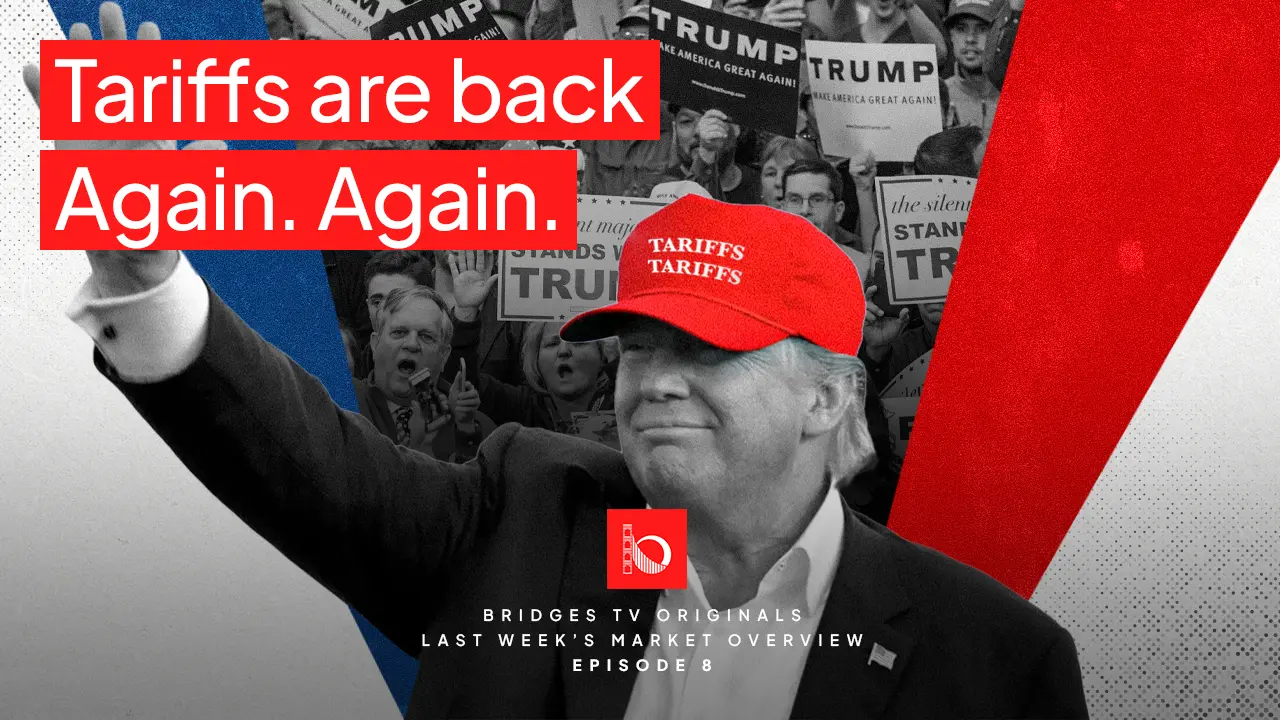
On July 7, President Trump announced an extension of the U.S. tariff pause that was originally set to expire on July 9, pushing the deadline to August 1 (White House, 2025). This decision temporarily delays the reinstatement of trade penalties outlined in the “Liberation Day” earlier this year. However, this delay should not be interpreted as a de-escalation of tensions. Alongside the extension, the White House sent letters to 14 countries, including major allies like Japan and South Korea, informing them of new tariff rates that will range from 25% to 40% (White House, 2025). These rates are largely consistent with those announced in April, but Trump emphasized their flexibility, stating that they could adjust “upward or downward depending on our relationship with your country” (Williams, 2025). He also stated that they will send letters to “a minimum of 7 countries” as well and that this delay will be the last one. This message was widely viewed as a political signal: countries that do not secure new trade agreements with the US may face higher costs. In addition, a 50% tariff on copper imports and a 200% tariff on pharmaceuticals are also planned to take effect on August 1 as scheduled. (Williams, 2025). Copper is a strategic commodity, used in various sectors including electronics, electric vehicles, and housing. This move is likely intended to pressure foreign producers while benefiting domestic miners. This tariff strategy is part of a broader effort to shift U.S. supply chains away from geopolitical rivals, reward compliant nations, and enhance influence in upcoming trade negotiations. Recent deals, such as the US Vietnam trade agreement announced on July 2, indicate that some countries are already adapting to these new realities.
Despite the aggressive tone of the announcement, markets reacted with unexpected calmness, supported by investor confidence in tech stocks and a belief that significant disruptions are unlikely. On the other hand, US copper prices jumped 13% to a record high on 8 July following President Trump’s announcement of a 50% tariff on copper imports (Geldard, 2025). Yet, markets showed no other significant reactions. Investors seem to believe that the enforcement of tariffs will be limited or that countries will negotiate before the August deadline. This reaction resembles previous trade episodes where markets initially dipped but quickly recovered when expectations of compromise or delay emerged. However, the current environment is different in one key respect: the Federal Reserve is not in a rate-cutting cycle, meaning that investors cannot rely on policy easing due to possible inflationary pressures.
While stock indices remain steady, underlying risks are increasing. For investors, this creates a mixed picture. Broadly speaking, sectors sensitive to tariffs, such as industrial, retail, and electronics, might underperform if enforcement increases or if retaliation occurs. For businesses, the implications are more immediate. Tariffs create uncertainty in how companies buy materials and set prices, especially for import-heavy industries. Firms sourcing from Japan, South Korea, and Southeast Asia must now consider whether to change suppliers, absorb the added costs, or raise prices. While large international firms may have the flexibility to adjust, small and medium sized firms are much more vulnerable. Richmond Fed President Thomas Barkin had warned on June 26 that the new wave of tariffs is very likely to raise prices for goods. He had also noted that, unlike in previous rounds of tariffs where businesses absorbed some of the costs, companies today seem more willing and prepared to pass those costs on to consumers. On the other hand, domestic commodity producers, particularly in the metals and mining sectors, may benefit as U.S. buyers turn away from imports and rely more on local suppliers. Companies like Freeport-McMoRan (FCX) and Southern Copper (SCCO) are seen as potential winners in this scenario (O’Brient, 2025).
For consumers, the impact will likely be gradual but unavoidable. While inflation remains moderate for now, a combination of higher tariffs and persistent supply chain issues could lead to rising prices by Q3. Items most at risk include smartphones, laptops, household appliances, and new vehicles. Although these are not daily essentials, their prices can influence consumer sentiment, especially during the fall shopping season. For governments, the situation carries both strategic and hostile implications. Countries that comply with U.S. demands may be able to secure better trade terms, as Vietnam has done. However, long-standing allies like Japan and South Korea are being penalized, suggesting that diplomatic loyalty no longer guarantees economic protection. This trend could further undermine multilateral institutions like the World Tade Organization and spark new rounds of retaliation, particularly from Japan and Brazil. However, this calmness will not last forever. The market is underestimating how quickly these tariffs can disrupt supply chains, especially if enforcement is strict, and exemptions are limited. The August 1 deadline may not cause immediate disruption, but it could create ripple effects across consumer goods, logistics, tech, and energy by September. If inflation rises and the Federal Reserve delays rate cuts as currently discussed, stocks may experience renewed pressure. Additionally, if countries like Japan or Brazil retaliate, a new round of currency volatility and retaliatory tariffs could emerge by Q4. The risk goes beyond inflation; it also encompasses the fragmentation of the global trade system.
German Companies Mobilize €350 B Investment Initiative: Momentum or Just Repackage?
On July 6, a group of more than 30 major German corporations, reportedly including Siemens, Deutsche Bank, RWE, SAP, Volkswagen, Mercedes, BMW, and Rheinmetall, announced their intention to invest over €350 billion by 2028 (Gattringer, 2025). These investments, mainly linked to ongoing projects, are designed to enhance confidence in Germany’s economy and support Chancellor Merz’s initiative for tax reductions, increased defense spending, and infrastructure development. A formal meeting with Chancellor Merz and Finance Minister Klingbeil is anticipated on July 21 to finalize the details.
The initiative reflects a renewed optimism regarding Germany’s economic direction, especially in
key sectors like infrastructure, energy, and defense. Although a significant portion of the announced funding includes previously planned projects, presenting them as unified effort may enhance collaboration between government and industry, speed up approvals, and attract additional private and foreign investment. This might result in improved financial outcomes for companies engaged, particularly those involved in large-scale development projects. Nevertheless, the overall effect on economic growth is expected to be limited unless these investments are accompanied by more profound structural reforms. While the initiative could support financial stability in the short term, lasting benefits will rely on effective execution, transparency, and whether the program encourages new activity instead of simply rebranding existing commitments. To wrap up, while the initiative provides a much-needed boost in confidence, it is not a game changer. True momentum requires new, innovative investment rather than merely repackaging previously announced initiatives. The official meeting on July 21 may disclose fresh commitments. This will be crucial in determining whether the €350 billion represents a true turning point or just a short-term PR move. Investors should monitor forthcoming announcements, bond yields, and private sector involvement for indications of genuine growth.
Nvidia’s $4 Trillion Moment: Tech Leadership or Possible Bubble?
On July 9, Nvidia briefly became the first publicly traded company to reach a $4 trillion market valuation, with its stock rising to about $164, roughly 22% up so far this year (Chauhan, 2025). The enthusiasm in the market is driven by Nvidia’s leading position in AI chips, which are essential for data centers, software development, and innovative technologies such as generative AI. Investor confidence spiked following Nvidia’s achievement. The Nasdaq increased by almost 0.9%, while the S&P 500 rose 0.6%, and the Dow gained 0.5%, enabling most indices to reach all time highs. Nvidia’s recent achievement highlights the essential role of AI in influencing valuations within the tech sector. Investors are progressively favoring growth stocks that focus on AI infrastructure. The majority of analysts categorize Nvidia as a “buy,” with a stock price target set at approximately $174 (Market Watch, n.d.). For tech companies, this surge emphasizes the significance of AI investments and could boost capital investments in chip manufacturers, cloud services, and software platforms reliant on Nvidia’s technology. Nevertheless, Nvidia’s price-to earnings ratio currently stands at 32, which is marginally lower than its three-year average of 37 (Chauhan, 2025). This high valuation indicates that any decline in AI demand or failure to meet projections could lead to significant market corrections. To wrap up, the $4 trillion market valuation underscores Nvidia’s significant position in the AI sector; however, if valuations become detached from underlying fundamentals, any disruption in AI chip demand, changes in the macroeconomic landscape, or regulatory challenges might trigger a market correction. Investors should closely monitor earnings reports, trends in AI spending, and geopolitical events for indications of ongoing momentum.
References
Chauhan, S. (2025, July 9). Nvidia becomes first company to clinch $4 trillion market value. Reuters. Retrieved July 10, 2025, from https://www.reuters.com/world/china/nvidia becomes-first-company-clinch-4-trillion-market-value-2025-07-09/
Gattringer, C. (2025, July 9). German corporations promise ‘psychological’ economic boost: €300 billion investment by 2028. Brussels Signal. Retrieved July 10, 2025, from https://brusselssignal.eu/2025/07/german-corporations-promise-psychological-economic boost-e300-billion investment-by-2028/
Geldard, R. (2025, July 10). US tariff update fails to rattle global markets, and other finance news to know. World Economic Forum. Retrieved July 10, 2025, from https://www.weforum.org/stories/2025/07/markets-stocks-new-trump-tariff annoucement-and-other-finance-news/
Market Watch. (n.d.). NVIDIA Corp. Analyst Estimates. Retrieved July 10, 2025, from https://www.marketwatch.com/investing/stock/nvda/analystestimates
O’Brient, S. (2025, July 9). Trump sent copper prices soaring to records with talk of new tariffs. Morgan Stanley flags 2 companies set to benefit. Business Insider. Retrieved July 10, 2025, from https://www.businessinsider.com/copper-prices-trump-tariffs-commodities-trade war-fcx-scco 2025-7
The White House. (2025, July 7). Fact Sheet: President Donald J. Trump Continues Enforcement of Reciprocal Tariffs and Announces New Tariff Rates. Retrieved July 10, 2025, from https://www.whitehouse.gov/fact-sheets/2025/07/fact-sheet-president-donald-j-trump continues-enforcement-of-reciprocal-tariffs-and-announces-new-tariff-rates/
Williams, K. (2025, July 9). Trump delays Liberation Day 2.0, but threatens new tariffs. Money Week. Retrieved July 10, 2025, from https://moneyweek.com/economy/global economy/trump-liberation-day-new-tariffs