




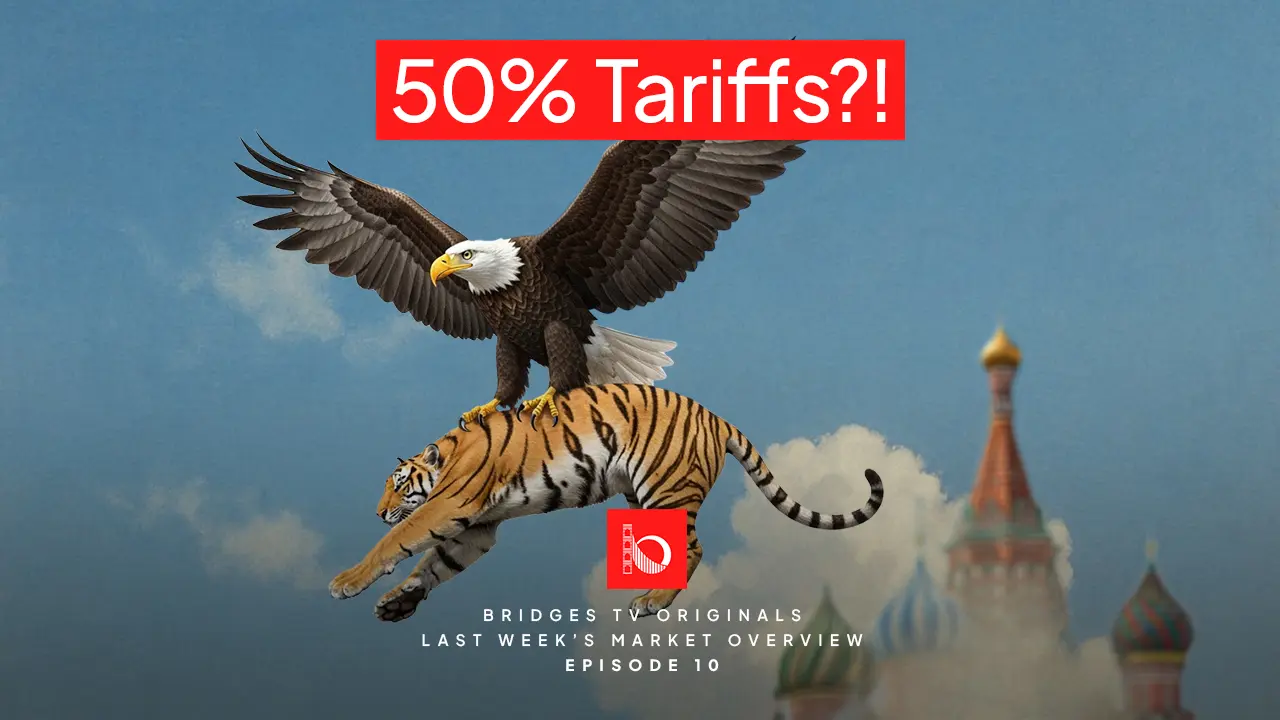
In early August, the US threatened to increase tariffs on Indian imports to 50%, up from 25%, accusing New Delhi of continuing to buy cheap Russian oil and then reselling it at a profit as a violation of global price caps and a challenge to U.S. strategic interests (Inamdar, 2025). The US stated that this situation gives India an unfair trade advantage. Likewise, the announcement, according to U.S. officials, is part of Washington’s broader push to pressure countries it sees as enabling Russia’s wartime economy and undermining Western sanctions. India quickly pushed back. Officials from the Indian government called the move “politically motivated and unjustified” and accused the US, along with several EU countries, of double standards, pointing out that Western firms have been importing Russian goods through third parties. India warned that the tariff threat breaches WTO rules and mentioned possible retaliation if the issue is not resolved diplomatically. On August 6, Trump said India has 21 days to stop buying Russian oil to avoid the new tariff.
News of the U.S. hiking tariffs on Indian imports to 50% did not go unnoticed by markets. In India, stocks saw a decline, with the Sensex dropping roughly 300 points and the Nifty 50 declining to 24,500 points, logging their third straight day of losses in early trading on August 7 (Sethi, 2025). Later on, Indian stocks regained their points, showing how overoptimistic investors might be despite the current uncertainty. Export-driven sectors were hit hardest, particularly chemicals, textiles, gems, and auto components (Agarwal, 2025). Oil prices initially declined due to concerns about global demand, particularly as India is a major buyer, but they rebounded shortly afterward (Shalal & Kumar, 2025). Foreign investors also pulled back, continuing a trend that has already seen close to $900 million in net outflows this month (Rajeswaran & Kumar, 2025). U.S. markets were mostly unmoved by the tariff threat, with investors appearing to discount the immediate impact on corporate earnings or supply chains and instead focusing on stronger-than-expected earnings. For now, a lot of investors are in wait-and-see mode, holding off on new positions while watching whether diplomacy can cool tensions, or if a deeper correction might offer a better entry point.
While Indian and U.S. markets have held steady for now, history suggests that investor resilience may not last if the conflict deepens. The Eurozone offers a cautionary example: after initially preparing retaliation against U.S. trade policies, the EU ultimately agreed to a deal that many economists see as one-sided. Since then, investor confidence has eroded. A similar pattern could emerge in India if economic retaliation gives way to quiet compromise, leaving domestic industries exposed and investors disillusioned. The US is India’s largest export market, accounting for 18% of its goods exports and around 2.2% of its GDP, with nearly all of India’s $86.5 billion in annual exports to the US (Inamdar, 2025). If the 50% tariffs stick, economists warn it could decrease India’s GDP by 0.2-0.4 percentage points and push annual growth below 6%. Most exporters say they cannot absorb cost increases beyond 10–15% (Inamdar, 2025). In the US, markets have not shrunk yet after President Trump unexpectedly fired the head of the Bureau of Labor Statistics just days after disappointing jobs numbers. But behind the calm surface, there are deeper concerns about institutional credibility going on. When political leaders start interfering with data agencies, it becomes harder for the Fed to make sound decisions and for investors to trust the numbers they depend on. As a result, if the political situation in the US worsens, investor confidence may decline despite resilience over trade conflicts. For businesses, the message is becoming clearer by the day: trade unpredictability is back. Companies with supply chains tied to India, especially those importing from the Indian market, may soon have to navigate higher costs, thinner margins, or new regulatory complications. If India retaliates, companies exporting to India may be affected as well. Consumers might not feel it right away, but if tariffs push up input prices, that cost will eventually show up at the checkout counter. More broadly, this episode adds to a fragile economic backdrop where policy uncertainty is once again a central risk for anyone trying to plan for the future.
The US–India tariff fight seems under control for now, but it is sitting on shaky ground. If trust between the two countries breaks down, or if India shifts closer to Russia or China in response, it could turn into something much bigger. Right now, markets are hoping that the tension will ease without escalation, but that kind of optimism does not last forever. If Washington keeps using tariffs as a political tool while undermining its own credibility at home, investor confidence could decline quickly just as it has in Europe. Long-term investors should not be bothered as markets almost always rebound in the long run. Short term investors should watch closely for whether this escalates or turns into another unequal trade deal. Either way, the risks are back on the table.
Bank of England Cuts Rates: Proceeding with Caution
On August 7, to fight against a slowing economy, the Bank of England lowered its key interest rate by 0.25 percentage points to 4%, the fifth cut in just a year and the lowest level since early 2023 (Wearden, 2025). The decision was far from unanimous: the Monetary Policy Committee was split 5-4 and even required a revote for the first time in its history, highlighting how divided policymakers are under global instability. The central bank pointed to easing wage and price pressures as justification for the recent cuts, but also warned that inflation, driven by rising food and energy costs, is expected to peak around 4% in September, up from 3.6% (Strydom, 2025). That means any future rate reductions will need to be approached very carefully. Markets handled the news calmly and continued moving forward without panic or big volatility, but the split vote led to confusion. The pound jumped about 0.5%, while two-year gilt yields edged higher, signaling that investors are now dialing back expectations for further cuts through the end of the year (Strauss & Smith, 2025). After the announcement, investors dialed back expectations for more BoE cuts this year. Markets now see the next move, possibly down to 3.75%, coming no sooner than February, according to LSEG data (Schomberg, 2025). Additionally, the FTSE 100
dropped roughly 0.8% as market optimism weakened (Strydom, 2025), reinforcing a growing belief that this marked more of a cautious pause than the start of a fast-relief cycle. The BoE’s rate cut offers only limited relief for investors. While lower rates typically support equities and risk assets, the market reaction suggests that uncertainty is taking the lead, not enthusiasm. With inflation expected to rise again and the vote so narrowly split, the central bank appears hesitant to move further, making it harder for investors to confidently price in growth or monetary support. Gilt markets also reacted accordingly, and currency traders saw the move as a pause rather than a pivot. For businesses, particularly in retail and housing, lower borrowing costs may offer some short-term relief. But the broader message is mixed: demand remains soft, and inflation is far from under control. For consumers, the rate cut may eventually lead to slightly lower mortgage or loan rates, but with inflation still rising, any real boost to purchasing power is likely to be limited. Overall, the move reflects a central bank that is trying to do just enough to support the economy without falling behind on inflation.
The Bank of England is stuck between a trade-off. On one hand, the economy is slowing and needs support. On the other hand, inflation is rising again, and cutting rates now risks making that worse. By easing policy before a projected inflation peak, the BoE is making a calculated bet that growth is weak enough to justify the move. But if inflation turns out to be stickier than expected, the bank could be left with fewer tools to deal with that. For now, investors are treating this as a one-off adjustment, not the start of a bigger shift. But if price pressures keep building or global risks escalate, the BoE may soon be forced to choose between protecting its credibility and boosting the economy, with very little room to do both simultaneously.
Lyten Rescues Europe’s Fallen Battery Star
On August 7, U.S. battery startup Lyten announced it will acquire nearly all remaining assets of Northvolt, the Swedish battery maker that collapsed earlier this year after running out of cash (Mannes, 2025). Lyten already took over Northvolt’s Cuberg battery manufacturing facility in California in November 2024 and Northvolt’s energy storage system operations in Poland just last month. Lyten (2025) stated that the new deal includes key Northvolt facilities in Sweden and Germany, specifically the large-scale factory Northvolt Ett (Skellefteå, Sweden), the R&D hub Northvolt Labs (Västerås, Sweden), and the future gigafactory site Northvolt Drei (Heide, Germany). The acquisition will be funded entirely with fresh equity, over $200 million that Lyten recently raised, and the company plans to restart battery production immediately and resume deliveries by 2026 (Mannes, 2025). Many former Northvolt employees are expected to be rehired. Lyten also shared its plan to acquire Northvolt Six in Quebec, Canada, later on. They stated that their motivation behind these acquisitions is to become a local battery leader in North American and European markets. The move gives Lyten a strong manufacturing base in Europe at a time when Western governments are racing to secure battery supply chains and reduce dependence on China and other Asian rivals. It also offers a second life to Northvolt’svision of building a local EV battery industry in Europe, with new leadership and U.S. capital behind it. Financially, the deal is a calculated risk. Lyten is pouring over $200 million in fresh equity into assets that had already failed once, but the upside is significant. If production restarts on schedule, Lyten could unlock access to billions in EU green subsidies, establish a strategic position in Europe’s EV supply chain, and secure early ground just as global demand for batteries accelerates. Analysts see the deal as a bold signal that the US is not just competing in EV tech but expanding into the heart of Europe’s industrial strategy. Still, execution will determine everything. Lyten will need to move quickly, manage high costs in Germany and Sweden, and prove it can scale where Northvolt could not. If it succeeds, this could be a turning point, not just for Lyten but for how the West reshapes clean tech ownership in the post-China era.
References
Agarwal, N. (2025, August 7). What Trump’s 50% tariff means for stock market investors; should Nifty bulls worry? The Economic Times. Retrieved August 7, 2025, from https://economictimes.indiatimes.com/markets/stocks/news/explained-what-trumps-50 tariff-mean-for-stock-market-investors-and-should-nifty-bulls worry/articleshow/123156042.cms?from=mdr
Inamdar, N. (2025, August 7). India has 20 days to avoid 50% Trump tariffs – what are its options? BBC News. Retrieved August 7, 2025, from https://www.bbc.com/news/articles/c1w83j35jjjo
Lyten. (2025, August 7). Lyten to Acquire All Remaining Northvolt Assets in Sweden and Germany [Press release]. Retrieved August 7, 2025, from https://www.lyten.com/2025/08/07/lyten-to-acquire-all-remaining-northvolt-assets-in sweden-and-germany/
Mannes, M. (2025, August 7). US startup Lyten to buy bankrupt European battery maker Northvolt. Reuters. Retrieved August 7, 2025, from https://www.reuters.com/business/energy/us-startup-lyten-buy-bankrupt-european battery-maker-northvolt-2025-08-07/
Rajeswaran, B., & Kumar, V. M. (2025, August 7). Indian benchmarks erase losses as hopes of U.S.‑Russia talks arrest tariff‑led slide. Reuters. Retrieved August 7, 2025, from https://www.reuters.com/world/india/indian-benchmarks-erase-losses-hopes-us-russia talks-arrest-tariff-led-slide-2025-08-07/
Schomberg, W., Milliken, D., & Abdulla, S. (2025, August 7). Bank of England cuts rates to 4% after narrow 5‑4 vote. Reuters. Retrieved August 7, 2025, from https://www.reuters.com/markets/rates bonds/bank‑england‑cuts‑rates‑4‑after‑narrow‑5‑4‑vote‑2025‑08‑07/
Sethi, V. (2025, August 7). Trump’s tariffs on India: Experts unveil this strategy for Indian stock market investors. Livemint. Retrieved August 7, 2025, from https://www.livemint.com/market/stock-market-news/trumps-tariffs-on-india-experts unveil-this-strategy-for-indian-stock-market-investors-11754536622452.html
Shalal, A., & Kumar, M. (2025, August 7). Trump imposes extra 25% tariff on Indian goods, ties hit new low. Reuters. Retrieved August 7, 2025, from https://www.reuters.com/world/india/trump-imposes-extra-25-tariff-indian-goods-ties hit-new-low-2025-08-06/
Strauss, D., & Smith, I. (2025, August 7). Bank of England cuts rates to 4% in tight vote. Financial Times. Retrieved August 7, 2025, from https://www.ft.com/content/a38ff4e1 72ab-4189-9e1f-141910e7a769
Strydom, M. (2025, August 7). Business live blog: August 7, 2025 — as it happened. The Times. Retrieved August 7, 2025, from https://www.thetimes.com/business money/companies/article/live-latest-news-uk-companies-ftse-100-shares-tariffs-interest rates-lmhpwllbv
Wearden, G. (2025, August 7). Another Bank of England rate cut this year less likely given inflation fears and split vote – as it happened. The Guardian. Retrieved August 7, 2025, from https://www.theguardian.com/business/live/2025/aug/07/bank-of-england-interest rate-decision trump-tariffs-trade-war-business-live-news-updates