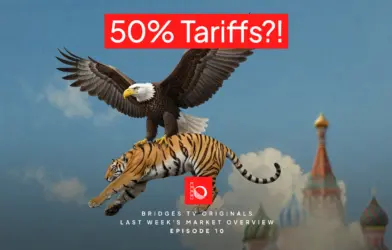




On July 27, the United States and the European Union reached a significant trade agreement in Scotland. This deal established a uniform 15% import tariff on most EU goods to the US, replacing the earlier proposed higher rate of 30% (Gray & Shalal, 2025). In return, the EU agreed to buy $750 billion worth of U.S. energy and military equipment and promised to invest $600 billion in U.S. infrastructure, manufacturing, and technology over the next three years (White House, 2025a). Although the agreement covers sectors like cars, pharmaceuticals, and semiconductors, it does not provide tariff relief for certain industries, such as steel, aluminum, and copper. These will still face tariffs of 50%, and discussions about supply chain resilience are ongoing (White House, 2025a). Both parties view the deal as a way to prevent a bigger trade conflict. The US appears to have benefited more from the trade deal, securing $750 billion in energy and defense purchases from the EU, along with $600 billion in investments. In contrast, the EU agreed to a uniform 15% tariff, which is higher than what it had initially wanted. This outcome reflects the stronger bargaining power of the US and provides greater immediate advantages for U.S. industries.
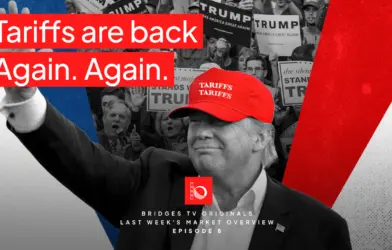
Following the US – EU trade deal, President Trump signed a wide-reaching executive order on July 31, which reintroduces and expands tariffs for many U.S. trading partners, effective from August 7. In total, 68 countries without a current bilateral agreement received specific tariff rates ranging from 10% to 41% (White House, 2025b). These rates depend on how the US views their “trade practices, currency behavior, and national security alignment”. The following are some key examples of the new tariffs: Canada – 35%, India – 25%, South Africa – 30%, Switzerland – 39%, Turkey – 15%, Myanmar – 40%, and Syria – 41%. Nations that signed bilateral agreements with the US before August 1 could access lower rates, with specific terms varying by country and sector. The US justified the tariff order by citing ongoing “trade imbalances” and a perceived lack of cooperation on issues, such as enforcing intellectual property rights, border security, and drug trafficking.
Financial markets initially reacted positively to the US – EU trade agreement, seeing it as a relief from the risk of a global trade war. On July 28, U.S. stock markets rose sharply, with the S&P 500 and Nasdaq Composite reaching record highs. This was driven by strong gains in the energy, defense, and industrial sectors, which are expected to benefit from EU purchases and investments. Meanwhile, the euro fell 1.3% against the U.S. dollar, and 10-year Treasury yields increased by 4.4% (Wall Street Journal, 2025). However, this optimism faded quickly. After new tariffs on 68 countries were announced just days later, market sentiment became cautious. On August 1, major U.S. stock indices fell, with the S&P 500 dropping 1.77%, the Nasdaq declining by 1.61%, and the Dow Jones Industrial Average down 1.16% (Sor, 2025). Investors moved capital into safer assets like U.S. Treasury bonds, pushing 10-year yields below 4.25%. This was due to renewed worries about global trade issues, rising input costs, and slower international demand. Sectors relying on global supply chains, including semiconductors, autos, and materials, struggled, as concerns grew that the new tariffs might damage profit margins and corporate earnings soon. In addition to the tariffs, the Federal Reserve announced on July 30 that it would keep interest rates steady at 4.25 – 4.50%. They highlighted that their decisions are based on current data, particularly due to ongoing policy uncertainty. Just two days later, the July job report from the Bureau of Labor Statistics raised concerns, revealing that only 73,000 jobs were added, significantly below the expected 100,000. Additionally, the previous two months’ job figures were revised downward by a total of 258,000 jobs (Sor, 2025). As a result, the unemployment rate rose to 4.2%. These developments complicate the Fed’s outlook. Typically, weak labor data would lead to rate cuts; however, inflation risks arising from new tariffs and disruptions in the global supply chain make it difficult for the central bank to make such a decision. By the end of the week, markets were predicting an over 80% chance of a rate cut in September (CME Group, n.d.), indicating that investors are more worried about slow economic growth than potential inflation from the tariffs. The current economic landscape in the US presents a fragile balance between short-term relief and renewed uncertainty. The trade agreement with the EU has provided temporary clarity and a boost, particularly for the energy and defense sectors. However, reimposing tariffs on 68 countries has reintroduced global trade tensions, increasing costs for businesses reliant on international suppliers. For investors, this situation has resulted in quick gains followed by sharp declines, especially in industries tied to global supply chains. The current market volatility seems to persist in the near and mid-term future. Consumers may soon notice higher prices as companies raise prices to offset rising material costs. Furthermore, the Federal Reserve’s decision to maintain steady interest rates, despite weak job growth and increasing unemployment, highlights the difficulty of controlling inflation linked to tariffs while addressing signs of a slowing economy. Currently, the economy faces challenging trade conditions and limited support from monetary policy, leading markets, companies, and households to adopt a more cautious approach as they deal with high uncertainty and potential growth obstacles.
The US is entering a risky period as protectionist trade policies collide with weakening economic fundamentals. If tariffs persist and job growth remains slow, the Federal Reserve may need to lower interest rates despite the risks of inflation. Investors should prepare for ongoing volatility, as short-term gains in certain sectors may be offset by overall pressure on profits and demand. If policy direction does not stabilize soon, confidence across markets and business planning could diminish, increasing the likelihood of a mild economic downturn by early 2026.
European Banks Pass Stress Test, Yet Real Economy Risks Remain
On August 1, the European Banking Authority (EBA) published the results of its 2025 stress test, which covered 64 major EU banks, including 51 lenders from the eurozone. The assessment simulated a severe economic downturn caused by global trade tensions, commodity price shocks, and a projected 6.3% decline in EU GDP over three years (Za & Koranyi, 2025). Despite this challenging scenario, all banks met the core capital requirements, with only one bank breaching its leverage requirement. The total projected losses amounted to €547 billion, up from the €496 billion losses reported in 2023, but still within the overall capital buffers (Za & Koranyi, 2025). The European Central Bank conducted a parallel stress test on the 51 eurozone lenders assessed by the EBA, along with an additional 45 smaller banks, confirming these results and highlighting the resilience of the banking sector. Analysts noted improvements in asset quality, capital positions, and risk management across most banks.
The results offer reassurance that Europe’s financial system remains stable despite global trade disruptions and macroeconomic challenges. This may help relieve investor concerns about potential systemic contagion or credit tightening, particularly in countries like Italy, Spain, and Austria. Although weaker banks may still face restrictions on dividend payouts and bonuses, the broader banking sector has demonstrated strong capital resilience and lower exposure to high-risk lending. Consequently, bank stocks could experience upward support in the short term, especially as corporate bond markets and sovereign debt spreads respond positively to signs of strength within the sector. For regulators, these results enhance confidence in the European Central Bank’s capital framework and macroprudential tools.
Looking ahead, European banks may have a relative advantage over their international counterparts if U.S. or Asian institutions experience sharper shocks due to tariffs and slowing global demand. Stable capital ratios could encourage some banks to cautiously expand their lending and capital market activities, particularly in areas where U.S. competitors are pulling back. However, the overall economic environment remains fragile. If tariffs escalate further or energy prices rise again, banks with weaker earnings, especially in export-dependent economies, could face increasing pressure on their profit margins. The European Central Bank (ECB) may need to use targeted tools, such as its Transmission Protection Instrument, to mitigate market fragmentation. While the stress test results provide short-term relief, they highlight the need for financial resilience to be matched by the real economy resilience. In a world marked by trade tensions, having capital buffers is only one side of the equation.
Tariffs Hit Unevenly: Why BMW Holds While Grainger Buckles
The reimposition of U.S. tariffs is already reshaping corporate fortunes, but companies are responding in sharply different ways. The contrasting reactions of WW Grainger and BMW illustrate how operational structure, geographic reach, and pricing power determine whether tariffs cause real damage or manageable disruption.
WW Grainger, a US-based industrial distributor, lowered its full-year profit outlook after missing profit estimates for the second quarter. The company cited higher material costs because of new tariffs on imports (Reuters, 2025). Grainger’s business model depends heavily on a globally sourced procurement network. While the company has some pricing power in certain areas, its wide range of customers, ranging from large companies to small contractors, limits how much it can increase prices to cover sudden cost hikes, especially in competitive, price-sensitive categories. As a result, earnings expectations dropped sharply, and the company’s stock price fell by 11% (Reuters, 2025). This is tariff vulnerability in its rawest form: no relief, limited insulation, rising input costs, and constrained pricing flexibility.
In contrast, BMW has reaffirmed its 2025 guidance despite the new tariffs, which are expected to reduce the profit margin in its automotive segment by 1.25 percentage points (More & Amann, 2025). The difference lies in structure: BMW manufactures a significant share of its US-bound vehicles in Spartanburg, South Carolina, which helps it mitigate some of the tariff impact. Additionally, as a luxury automaker with strong brand equity, BMW possesses considerable pricing power, allowing it to raise prices slightly without losing customer demand. This demonstrates not only resilience but also strategic insulation from external pressures.
The implications are clear. Companies with rigid supply chains and limited pricing flexibility, like Grainger, are more at-risk during trade disruptions. Sudden tariff increases can raise the costs of essential inventory for them. On the other hand, companies with local production, diverse operations, and strong pricing power, like BMW, can better handle these shocks and take advantage of competitors’ weaknesses. As trade policies become less predictable, investors should expect to see more differences in company performance. Tariffs now act as stress tests that reveal structural weaknesses in companies and reward those that can adapt well. U.S. importers might start to focus more on local supply chains, automation, or adjusting their pricing strategies. Global producers may shift their attention to regional manufacturing and flexible sourcing. In summary, tariffs have evolved from being just economic tools to becoming strategic tests that show which companies can handle disruptions. Companies like BMW meet the challenge, while ones like Grainger must address tougher questions.
References
CME Group. (n.d.). FedWatch Tool. Retrieved August 1, 2025, from https://www.cmegroup.com/markets/interest-rates/cme-fedwatch-tool.html
Gray, A., & Shalal, A. (2025, July 28). US and EU avert trade war with 15% tariff deal. Reuters. Retrieved August 1, 2025, from https://www.reuters.com/business/us-eu-avert-trade-war with-15-tariff-deal-2025-07-28/
More, R., & Amann, C. (2025, July 31). BMW sticks with guidance despite profit drop, Trump tariffs. Reuters. Retrieved August 1, 2025, from https://www.reuters.com/business/autos transportation/bmw-sticks-with-guidance-despite-profit-drop-trumps-tariffs-2025-07-31/
Reuters. (2025, August 1). WW Grainger cuts annual profit forecast on tariff troubles. Retrieved August 1, 2025, from https://www.reuters.com/markets/europe/ww-grainger-cuts-annual profit-forecast-tariff-troubles-2025-08-01/
Sor, J. (2025, August 1). Tariff pain has returned for the stock market. Business Insider. Retrieved August 1, 2025, from https://www.businessinsider.com/stock-market-tariffs-trump-jobs report-today-sp500-dow-nasdaq-2025-8
The White House. (2025a, July 28). Fact Sheet: The United States and European Union Reach Massive Trade Deal. Retrieved August 1, 2025, from https://www.whitehouse.gov/fact sheets/2025/07/fact-sheet-the-united-states-and-european-union-reach-massive-trade deal/
The White House. (2025b, July 31). Presidential Actions: Further Modifying the Reciprocal Tariff Rates [Executive Order]. Retrieved August 1, 2025,
https://www.whitehouse.gov/presidential-actions/2025/07/further-modifying-the reciprocal-tariff-rates/ from
Wall Street Journal. (2025, July 28). Stock Market News, July 28, 2025: S&P, Nasdaq Edge Higher to New Records After U.S.–EU Trade Deal. Retrieved August 1, 2025, from https://www.wsj.com/livecoverage/stock-market-today-dow-sp500-nasdaq-07-28 2025?utm_source=chatgpt.com
Za, V., & Koranyi, B. (2025, August 1). EU banks can weather recession driven by global trade war, stress test shows. Reuters. Retrieved August 1, 2025, from https://www.reuters.com/sustainability/boards-policy-regulation/eu-banks-can-weather recession-driven-by-global-trade-war-stress-test-shows-2025-08-01/