




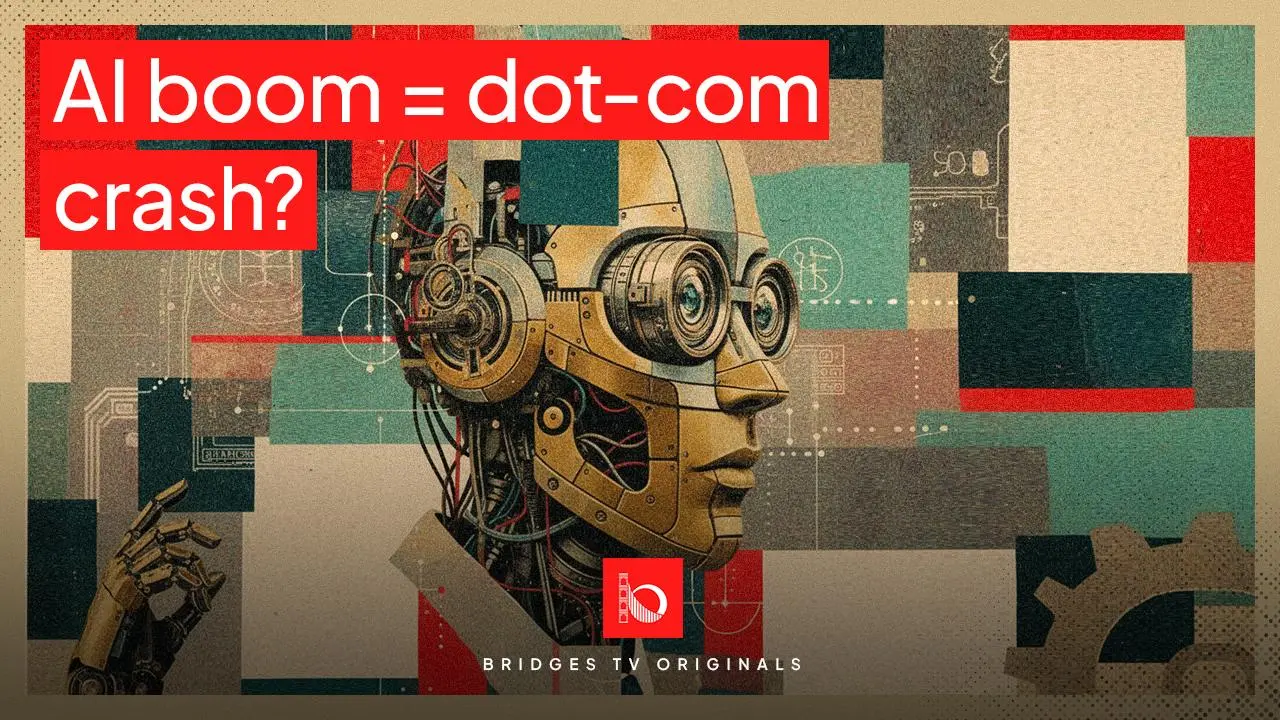
A few years ago, most people had never heard of generative AI. Today, it is everywhere. You see it writing emails, summarizing meetings, even making images from a few lines of text. Big tech companies are racing to build more of it, and investors are following close behind. The excitement is understandable. AI feels like the beginning of something big. People compare it to the early days of the Internet. Others are more cautious, pointing to how fast things are moving and how little we know about where it all ends up. Either way, the change is happening, and money is pouring into it. So, what does that mean for someone who is not a venture capitalist or tech founder, but simply trying to invest wisely?
It depends. There is clearly momentum. Companies like Microsoft and Nvidia have benefited early, not just from hype but from actual use cases. Microsoft has rolled AI into its software tools, while Nvidia makes the high-powered chips that train the models in the first place. These companies have seen huge returns. But not every business riding the AI wave has substance behind it.
Investment Opportunities and Hidden Risks
This is where it gets tricky. When technology becomes globally fashionable, it starts showing up in places it does not belong. Some companies are genuinely using AI to improve their operations. Others are throwing the term around in marketing without much behind it. This happened during the dot-com boom as well; adding “.com” to a name boosted stock prices, even if the company had no internet presence (Pinsker, 2014). For everyday investors, this means taking a breath before jumping in. Just because a company says it uses AI does not mean it will grow. It is worth looking at how the technology actually fits into its business model. Is it cutting costs? Helping them scale? Creating something new that people want?
One option for broader exposure is to look at ETFs – funds that hold shares in many companies tied to AI and automation. These include firms building software, designing chips, and applying AI in health care, finance, and logistics. ETFs spread the risk and let you ride the overall trend without betting on a single winner. Funds like the Global X Robotics and Artificial Intelligence ETF or the iShares Robotics and Artificial Intelligence Multisector ETF have seen growing interest as investors seek ways to benefit from AI’s long-term growth (Sum Growth, 2025).
Risks, Regulation, and the Future of AI Investing
That said, AI is not just about technology companies. Banks are using it to detect fraud faster. Hospitals use it to read scans and suggest diagnoses. Retailers rely on it to manage supply chains and track customer behavior. Some of the best-performing companies in this space might not even call themselves “AI-first,” but they are finding ways to make it work.
Still, there are risks. Running AI on a scale is expensive. It eats up computing power and electricity. Only a few firms can afford to build these tools from scratch. That means the market could get top-heavy, with just a handful of players dominating. There are also growing concerns around privacy, misinformation, and job losses. Governments are starting to take this seriously. Last year, the European Union already passed the world’s first comprehensive AI law, known as the AI Act, which sets strict rules based on risk and will be fully enforced by 2026 (European Commision, 2025). In contrast, the United States has no nationwide AI law yet, but federal agencies are starting to take action, and more than 30 states have introduced their own AI-related rules.
All of this adds up to a simple but important reality: AI is not a passing trend, and it is not magic either. It is a powerful, fast-moving, and uneven tool. Some companies will use it well, while others will not. The challenge for investors is to tell the difference, which often means asking basic but important questions: Is this solving a real problem? Is the value clear? Are the costs sustainable?
Artificial intelligence is reshaping how businesses operate. That does not mean every stock that mentions it will succeed. But it does mean that change is coming, and paying attention now might make a real difference later. Investing in something just because it sounds futuristic is risky. But ignoring it completely might be as well. For long-term investors, the right move may not be chasing headlines but watching carefully. AI will not change everything overnight. But it is already changing something.
References
European Commission. (2025). AI Act: Shaping Europe’s digital future. Retrieved July 22, 2025, from https://digital strategy.ec.europa.eu/en/policies/regulatory-framework-ai
Pinsker, J. (2014, August 6). The Once-Upon-a-Time Magic of Adding ‘.com’ to a Company’s Name. The Atlantic. Retrieved July 22, 2025, from
https://www.theatlantic.com/business/archive/2014/08/the-once-upon-a-time-magic-of adding-com-to-a-companys-name/375658/
Sum Growth. (2025). The Best Artificial Intelligence ETFs to Buy in 2025. Retrieved July 22, 2025, from https://www.sumgrowth.com/top-etfs/largest-artificial-intelligence etfs.html