



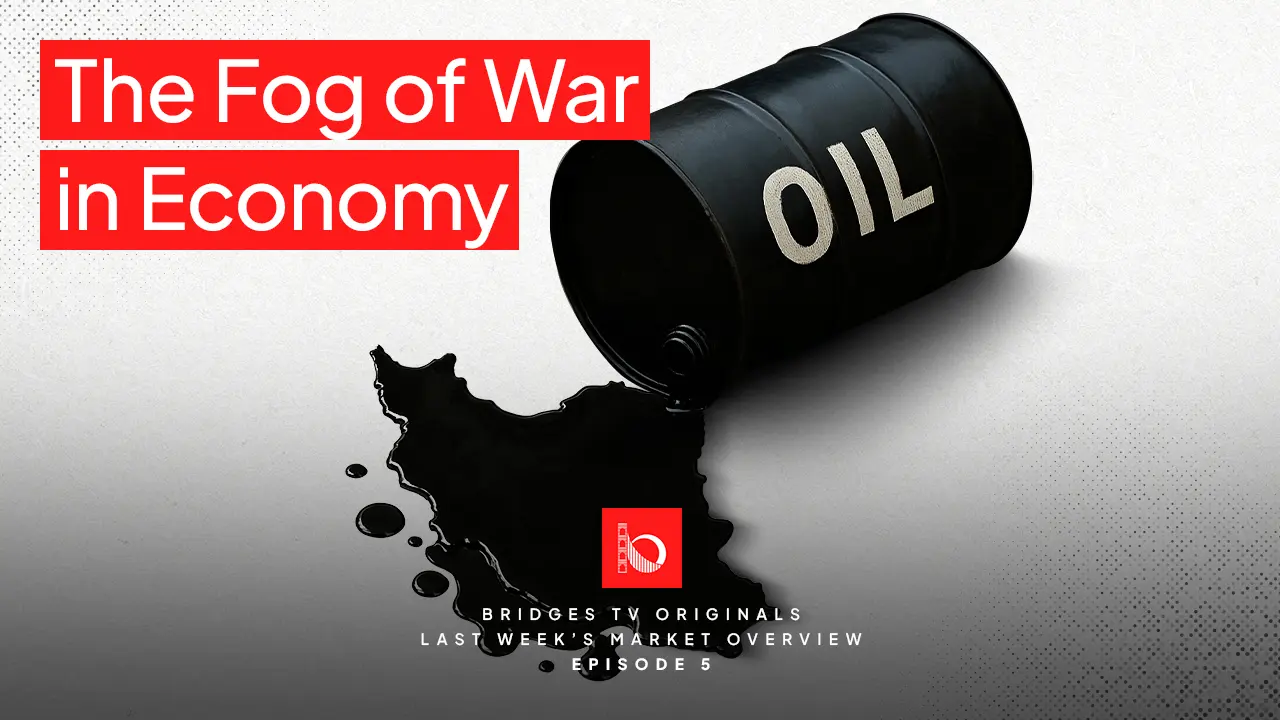
This week’s financial landscape was shaped by escalating geopolitical tensions in the Middle East, particularly the renewed Israeli-–Iran conflict. This situation triggered strong market reactions across various sectors. Oil prices increased by over 7% following Israeli strikes on Iranian targets but later fell as signs of de-escalation happened and rose again (Jao, 2025). Meanwhile, shipping insurance premiums for vessels transiting the Strait of Hormuz rose by more than 60%, indicating higher freight costs and supply chain pressure (Sellers, 2025). These developments have also affected central bank decisions: the Bank of England chose to maintain interest rates at 4.25%, citing “elevated” global uncertainty linked to rising energy prices (Abdulla & Milliken, 2025) For investors, these changes highlight the interplay between geopolitical risk, commodity volatility, and monetary policy, underscoring the importance of monitoring how regional conflicts can influence global financial markets.
Oil Market Turbulence Driven by Israeli–Iran Conflict
Tensions in the Middle East increased this week following the military activity involving Israel and Iran, beginning on June 13. These events triggered a dramatic oil price surge. Brent crude jumped approximately 7% in a single session, reaching over $74 per barrel and briefly soaring as high as $78.50, with U.S. West Texas Intermediate showing similar sharp gains (Seba, 2025a). Later, new signs that Iran was open to talks led to a partial pullback, with oil prices easing by more than 1% on June 16 as traders reassessed supply-risk assumptions (Mikolajczak, 2025). However, it increased by 4% again on June 17, as no negotiations happened between Israel and Iran (Seba, 2025b). On June 19, oil prices settled at $78.85 per barrel, marking the highest close since January 22 (Stephenson, 2025). It is also worth mentioning that Brent crude futures settled at $69.36 per barrel, while West Texas Intermediate crude settled at $67.97 per barrel on June 12, before the tensions began (Khan, 2025). This sharp oil volatility sent waves across multiple asset classes. Investors rushed into safe-haven assets; thus, gold prices climbed, and the U.S. dollar strengthened. The sharp rise in oil prices this week has clear financial consequences across global
markets. Such a price increase adds pressure to already fragile inflation levels, especially in energy-importing countries. Higher oil prices raise costs for transportation, manufacturing, and food production, which can lead to higher consumer prices. This also affects monetary policy, as central banks may delay rate cuts or even consider new measures to control inflation. In equity markets, energy stocks tend to benefit from oil spikes, while airlines, shipping, and logistics companies often suffer due to rising fuel costs. For investors, the volatility reflects how quickly geopolitical risk can shift market expectations and asset prices, making oil a central driver of short term market sentiment.
Higher Insurance Costs for Ships in the Strait of Hormuz
Because of the Israeli–Iran conflict, the payment ship owners pay to insure vessels traveling through the Strait of Hormuz has jumped by more than 60%. Thus, the cost of “hull and machinery” insurance rose from 0.125% of a ship’s value to about 0.2% (Sellers, 2025). “Hull and machinery” insurance covers physical damage to a ship and its engines, protecting the owner from repair or replacement costs due to accidents, collisions, or other risks at sea. That means covering a $100 million ship now costs around $200,000 instead of $125,000 per trip. According to the U.S. Energy Information Administration, 20% of global oil passes through this area (Meredith, 2025). This shows the significance of the region for global trade. This increase happened even though no ships have been attacked yet. It shows how worried insurers are about missile strikes, electronic interference, and possible rebel activity. These higher insurance rates hit businesses and consumers in several ways, including higher freight costs, supply chain pressure, and market worries. Firstly, ships are more likely to pass extra insurance costs to customers, pushing up freight prices throughout the region. Furthermore, it could cause product delays or higher prices in stores, as ships may choose slower rand less efficient routes to cut costs. This may translate to higher prices for goods because it costs more to ship or takes longer to arrive. Overall, these developments add to fears that the Middle East conflict could become a bigger financial problem for global trade and investors.
Bank of England Holds Rates Citing Global Uncertainty
The Bank of England decided on June 19 to keep its main interest rate at 4.25%. The bank’s leaders mentioned that world events, like the Israeli–Iran conflict and higher energy prices, are making them cautious. They said they are watching things closely and plan to move slowly and carefully if they change interest rates. The BoE is trying to balance two things: keeping inflation from rising higher and helping the economy grow. If the BoE had cut interest rates, it could have helped boost economic growth, but it also might have made inflation rise even more. Inflation was still above its target at 3.4% in May, while signs show jobs and wages are weakening (Inman & Heather, 2025). Markets now expect the BoE to reduce the rates in August and again to 3.75% before the end of this year (Inman & Heather, 2025). After the announcement, the British pound stayed steady, and UK stocks did not move much, showing that people see this as a careful, planned approach. The Bank of England’s cautious approach has several financial implications. By keeping interest rates steady and signaling that any cuts will come slowly, the BoE is trying to avoid worrying markets while leaving room to respond if the economy weakens. For investors, this means lower borrowing costs may be coming, which could support housing, business investment, and consumer spending later this year. However, by not cutting yet, the bank is also showing concern about ongoing inflation risks, especially from high energy prices caused by global tensions. This balance creates uncertainty in bond markets, where traders must guess when and how fast rates will fall. For the British pound, the delay in cuts could offer short-term support, but slower economic growth might harm it over time. Overall, the BoE’s “wait and see” stance keeps markets stable for now but also reflects the fragility of the UK economy.
To wrap up, this week showed how quickly global markets can react to geopolitical tensions. Rising oil prices, soaring shipping insurance costs, and cautious moves by central banks like the Bank of England all reflect growing uncertainty. For investors, the main takeaway is clear: regional conflicts can quickly affect global prices, trade routes, and monetary policy decisions. Staying informed and adaptable is key in such a fast-changing environment.
References
Abdulla, S., & Milliken, D. (2025, June 19). Bank of England keeps rates steady, sees further loosening as jobs market weakens. Reuters. Retrieved June 19, 2025, from https://www.reuters.com/world/uk/bank-england-keeps-rates-steady-sees-further loosening-jobs-market-weakens-2025-06 19/
Inman, P., & Heather, S. (2025, June 19). Bank of England keeps interest rates at 4.25% but hints at cuts to come. The Guardian. Retrieved June 19, 2025, from https://www.theguardian.com/business/2025/jun/19/bank-of-england-keeps-interest-rates on-hold-inflation-global-economic-outlook
Jao, N. (2025, June 16). Oil prices fall $1 per barrel on reports Iran seeks truce with Israel. Reuters. Retrieved June 19, 2025, from https://www.reuters.com/business/energy/oil prices-rise-israel-iran-conflict-heightens-fears-supply-disruptions-2025-06-15/
Khan, S. (2025, June 12). Oil settles lower as traders gauge Middle East tensions. Reuters. Retrieved June 19, 2025, from https://www.reuters.com/business/energy/oil-prices-tick up-worries-escalating-us-iran-tension-2025-06-12/
Meredith, S. (2025, June 17). Shipping groups are starting to shy away from the Strait of Hormuz as Israel-Iran conflict rages on. CNBC. Retrieved June 19, 2025, from https://www.cnbc.com/2025/06/17/israel-iran-shipping-groups-shying-away-from-the strait-of-hormuz.html
Mikolajczak, C. (2025, June 17). Equities end higher as oil prices pull back on truce hopes. Reuters. Retrieved June 19, 2025, from https://www.reuters.com/business/us-stock futures-steady-with-focus-mideast-tensions-fed-meeting-2025-06-16/
Seba, E. (2025a, June 14). Oil settles up 7% as Israel, Iran trade air strikes. Reuters. Retrieved June 19, 2025, from https://www.reuters.com/world/china/oil-prices-jump-more-than-4 after-israel-strikes-iran-2025-06-13/
Seba, E. (2025b, June 17). Oil prices rise more than 4% as Iran-Israel conflict escalates. Reuters. Retrieved June 19, 2025, from https://www.reuters.com/business/energy/oil prices-rise-iran-israel-conflict-fans-supply-worries-2025-06-17/
Sellers, M. (2025, June 18). Shipping cover leaps by 60% as tensions rise. Insurance Business Magazine. Retrieved June 19, 2025, from https://www.insurancebusinessmag.com/us/news/breaking-news/shipping-cover-leaps by-60-as-tensions-rise-539563.aspx
Stephenson, A. (2025, June 19). Oil prices up nearly 3% as Israel-Iran conflict escalates, US response remains uncertain. Reuters. Retrieved June 19, 2025, from https://www.reuters.com/business/energy/oil-falls-investors-weigh-chance-us intervention-iran-israel-conflict-2025-06-19/