





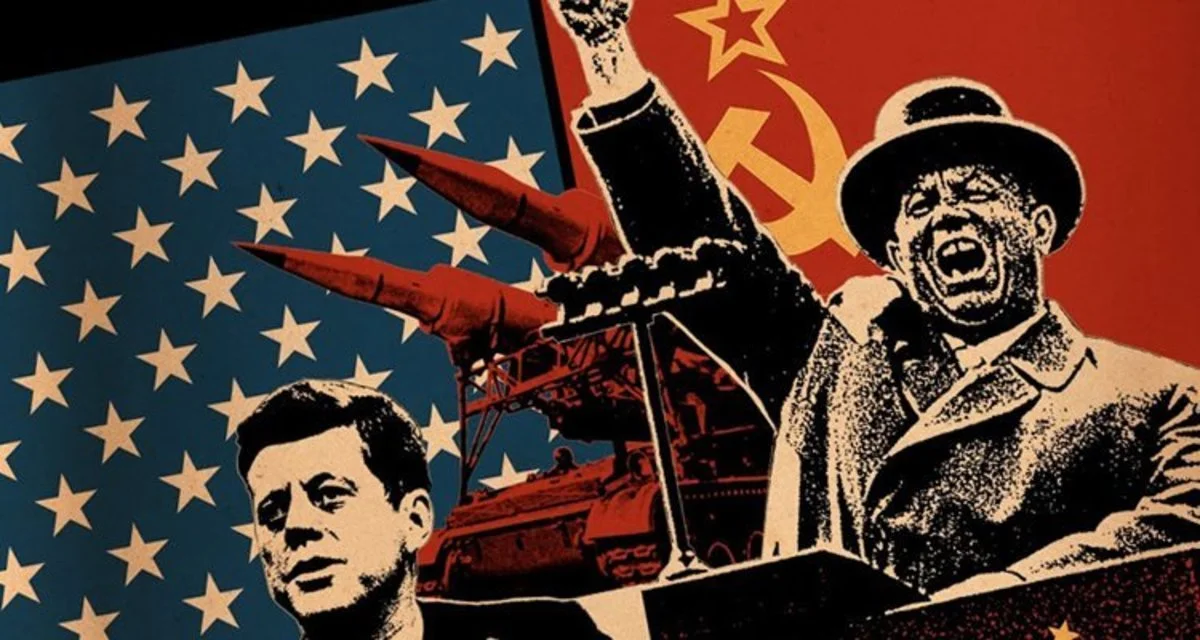
The Cold War was not a traditional war but a long period of political, military, and economic competition between the United States and the Soviet Union after World War II. Its defining feature was that conflict was expressed through systems, alliances, and economic structures rather than direct confrontation.
Two Systems, One Global Competition
At its core, the Cold War was a competition between two economic models.
The United States promoted a market-based system with private ownership, open trade, and capital flows. The Soviet Union operated a centrally planned economy, where production, prices, and distribution were controlled by the state.
This difference shaped everything else. Military alliances, political influence, and foreign policy were often tools to expand one economic system over the other.
The division of Europe into Western and Eastern blocs was not only ideological. It was also a division between two incompatible economic structures.
Economic Reconstruction as Strategy
After World War II, rebuilding economies became a central part of the Cold War.
The United States launched the Marshall Plan, providing financial assistance to Western European countries. This was not only humanitarian support but also an economic strategy.
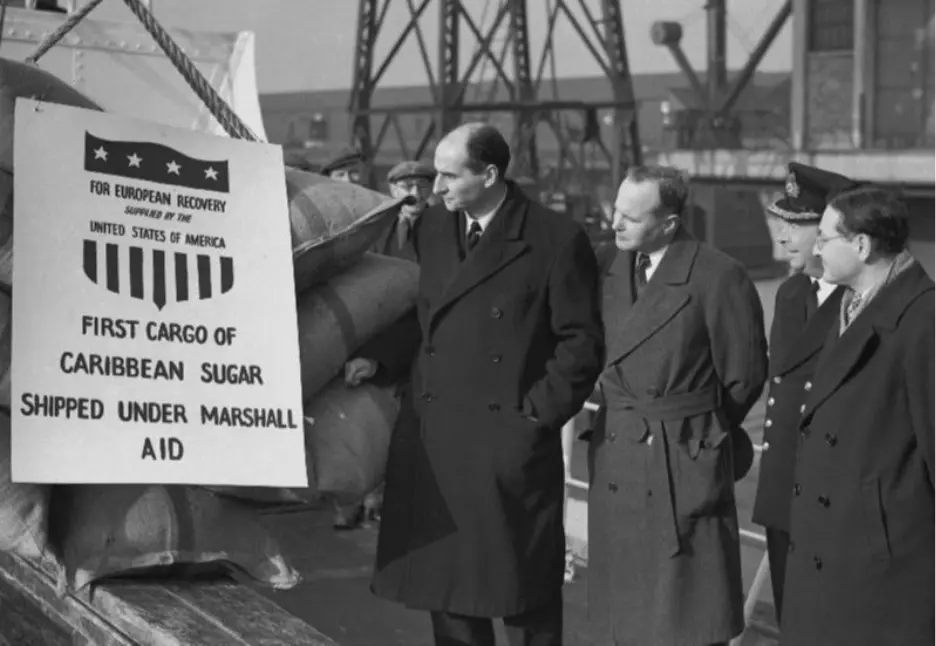
By stabilizing European economies, the US reduced the risk of political instability and increased the attractiveness of capitalist systems.
In contrast, the Soviet Union maintained tighter control over Eastern Europe through coordinated planning and limited integration with global markets.
This created two separate economic zones with minimal interaction.
Military Spending and Economic Pressure
A large part of the Cold War competition took place through military expenditure.
Both sides invested heavily in defense, nuclear weapons, and technological development. This had different economic effects.
For the United States, military spending supported industrial growth and technological innovation. Sectors such as aerospace, computing, and telecommunications benefited from government investment.
For the Soviet Union, sustained military spending placed pressure on an already inefficient economic system. Resources were allocated to defense at the expense of consumer goods and productivity improvements.
Over time, this imbalance contributed to slower economic performance.
Indirect Conflict and Economic Influence
The Cold War extended beyond Europe through indirect conflicts and economic influence in other regions.
Developing countries became areas of competition, where both sides attempted to expand influence through aid, trade agreements, and political support.
Economic alignment often followed political alignment. Countries integrated into one system tended to adopt its economic model, which reinforced the global division.
This created long-term economic patterns that persisted even after the Cold War ended.
Technological Competition
Technological development was a central part of economic competition.
The Space Race is a clear example. Investment in space technology required advancements in engineering, materials, and computing.
These developments had spillover effects into the civilian economy. Many technologies that became standard later were initially developed in this competitive environment.
This shows how geopolitical competition can accelerate innovation, even outside direct economic objectives.
Structural Weaknesses of the Soviet Economy
The Soviet system faced structural limitations.
Central planning reduced flexibility and limited the ability to respond to changing conditions. Innovation was slower, and production often prioritized quantity over efficiency.
While the system was capable of rapid industrialization in earlier decades, it struggled to maintain growth in a more complex global economy.
By the 1980s, economic stagnation became more visible, with declining productivity and increasing pressure from external competition.
End of the Cold War and Economic Transition
The end of the Cold War was closely linked to economic factors.
The Soviet Union could not sustain the combination of military spending, economic inefficiency, and global competition. Internal reforms failed to stabilize the system.
When the Cold War ended, countries in Eastern Europe transitioned toward market economies. This involved privatization, integration into global trade, and institutional restructuring.
The transition was uneven, with some countries adapting more quickly than others.
Lasting Economic Effects
The Cold War reshaped the global economic system.
It accelerated the integration of Western economies, strengthened international institutions, and reinforced the role of market-based systems in global trade.
At the same time, it left long-term differences between regions that were part of different economic blocs.
Many of today’s economic alignments, trade patterns, and institutional structures can be traced back to this period.
Key Insight
The Cold War was not only a political confrontation but a prolonged economic competition between two systems.
Its outcome was determined less by direct conflict and more by the ability of each system to sustain growth, adapt, and support long-term development.

