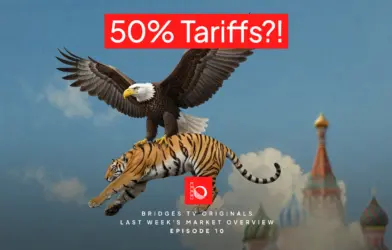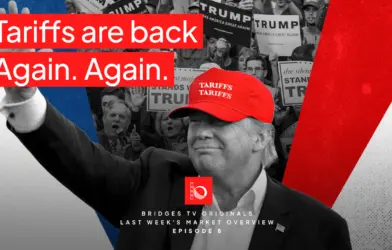





On July 12, President Trump announced a possible 30% tariff on all goods imported from Mexico
and the European Union, starting from August 1 (O’Carroll, 2025). These tariffs aim to protect U.S. manufacturers and reduce reliance on foreign products, President Trump claims. However, they have raised concerns about a potential global trade war, similar to the tariff disputes of 2018-2019. Higher U.S. tariffs can make imported EU goods more expensive, potentially raising costs for American consumers and manufacturers who rely on parts from Europe. The European Union quickly indicated that it might retaliate by imposing tariffs on U.S. exports, which would hurt American industries that rely on selling goods to European markets. However, the EU has delayed any retaliation, hoping for further negotiations. The markets did not react much to recent tariff news, and investors seem to be getting used to it.
Meanwhile, the Federal Reserve is feeling pressure to address rising inflation caused by these trade policies. On July 17, Fed Governor Adriana Kugler mentioned that the central bank is unlikely to cut interest rates soon because of inflation risks from higher import costs. She predicts that the Personal Consumption Expenditures (PCE) price index, which the Fed uses to measure inflation, will rise by 2.5% in June, with core inflation, which excludes unstable food and energy prices, at 2.8% (Schneider, 2025).
New York Fed President John Williams shared this cautious view, warning that inflation could increase to 3.0% – 3.5% by early 2026 if tariffs continue (Derby, 2025). He believes the current interest rate of 4.25% – 4.5% is still “appropriate”. However, not all Fed officials agree. San Francisco Fed President Mary Daly expressed a more relaxed approach on July 17. She suggested that it might be reasonable to two rate cuts to 3% or higher before the end of 2025, given that the market’s response to tariffs has been less intense than expected (Saphir, 2025). She noted that businesses are finding ways to avoid tariff effects and are not passing those costs on to customers. She indicated that a rate cut could happen in July, September, or any time soon, depending on what is best for the economy. Additionally, President Trump stated on July 14 that he wants the rate to be 1% or lower (Brettell, 2025). The Fed’s Beige Book, released on July 16, provided a mixed outlook. It stated a “neutral to slightly pessimistic” economic outlook, with many businesses delaying hiring and facing higher import costs due to tariffs and immigration policies (Saphir & Schneider, 2025).
High tariffs are affecting the economy, increasing prices, reducing business profits, and changing investor strategies. Consumers may see higher prices for imported goods, especially cars, pharmaceuticals, machinery, and electronics. Inflation could stay elevated for longer as tariffs raise production and transportation costs, eventually impacting everyday expenses like groceries, utilities, and gas. Businesses may face shrinking profit margins unless they can pass increased costs to consumers. Small businesses with low profit margins may struggle the most, possibly delaying hiring or cutting back on investments. For investors, tariffs create a mixed outlook. Defensive stocks, such as healthcare and utilities, and companies with strong domestic supply chains may perform well. Tech stocks might do well in the short term, but if interest rates stay high and input costs rise, they will also face challenges. Safe-haven assets like gold and Bitcoin may gain popularity as protection against uncertainty. In fact, Bitcoin is currently around $120,000 after reaching all time high of over $123,000 on July 14 (Mikolajczak et al., 2025).
This week’s U.S. news shows how politics and inflation are affecting each other, with the Federal Reserve in a tough spot. Trump’s tariff strategy might look good politically, but economically it acts like a tax on consumers. History shows that tariffs rarely fix trade deficits. Instead, they often lead to higher prices and slower economic growth. At the same time, the Fed is trying to manage a tricky situation. Inflation is going down, but not quickly enough, and the new tariffs are making things worse. A rate cut is possible in 2025, but it will likely come later in the year and probably just be one cut, not two. This will depend on how well companies can handle rising costs and whether they start laying off many workers. The bigger risk now is stagflation, which is a mix of high inflation and slow growth. If tariffs increase further and the Fed has to keep a strict approach, we might see economic stagnation as we head into 2026.
UK Job Market Weakens: Will the Bank of England Cut Rates Next?
On July 17, new data showed that the UK labor market is weakening faster than expected. Payrolls dropped by 178,000 jobs from last year, and the unemployment rate rose to 4.7%, the highest in four years (Inman, 2025). At the same time, wage growth is slowing, and job vacancies have been falling for several months. This suggests that there is less pressure on inflation from the labor market, which the Bank of England (BoE) takes into account when deciding on interest rates. Yet, as of June 2025, the UK’s annual inflation rate stands at 3.6%, still well above the Bank’s 2% target (Office for National Statistics, 2025). However, the public focus is shifting from controlling price increases to supporting jobs and avoiding a recession, as the trade-off between inflation and unemployment becomes more pronounced.
The market raised its expectations for a rate cut at the Bank of England’s next policy meeting in August. Investors now believe there is more than a 77% chance that the Bank will lower its key interest rate by 0.25% to reduce borrowing costs for consumers and businesses (Inman, 2025). Even with these rising expectations, the market’s reaction has been fairly calm. Investors seem to be waiting for clearer signals from the Bank of England before making significant moves. The shift in the UK economy has both good and bad effects. Lower interest rates will make mortgages and loans cheaper, providing relief to struggling households and encouraging people to spend and businesses to invest. However, this may also weaken the British pound, making imports more expensive and possibly increasing inflation in the long run. Lower interest rates usually help stock prices, especially in real estate, utilities, and consumer goods, where cheaper borrowing can boost demand and profits. On the other hand, bank stocks might suffer since lower rates can reduce their profit margins from lending. In the bond market, a rate cut will likely lower yields and raise bond prices, making government and high-quality corporate bonds more attractive for a while. If the Bank of England keeps interest rates low for an extended period, cash may earn less interest. This could lead investors to shift their money into stocks and other riskier assets, which might raise overall market prices.
To wrap up, this is a turning point for UK monetary policy. The BoE has kept interest rates steady to control inflation, but now it faces new problems: rising unemployment and slowing economic growth. A rate cut in August seems likely unless upcoming job or inflation reports show better than-expected results. The bigger worry is the UK could fall into stagnation, where inflation is low, but growth and jobs keep weakening. The BoE needs to take action soon to prevent this outcome.
Novartis Boosts Outlook and Launches $10 Billion Buyback Plan
On July 17, Novartis, a Swiss pharmaceutical giant, reported strong results for the second quarter. The company saw a 12% increase in sales to $14 billion and a 20% rise in operating income to $5.9 billion, both exceeding expectations (Murray & Weiss, 2025). Free cash flow also rose significantly to $6.3 billion, an increase of 37% compared to the same quarter last year (Novartis, 2025). The strong results come from continued sales growth of key drugs like Kisqali for breast cancer and Entresto for heart failure. In response to this strong performance, Novartis announced a $10 billion share buyback program, which will continue through 2027 (Murray & Weiss, 2025). This action shows confidence in the company’s future and is expected to help support its stock price over the long term. Alongside the earnings results, Novartis announced that it expects higher profits for the full year. While the expectation is a small increase, it shows that the company is more confident in its performance. Importantly, Novartis is changing its U.S. supply chain to ease the impact of possible tariffs on pharmaceutical imports. By investing $23 billion to build and expand its facilities in the US, the company aims to protect its profit margins and keep product prices stable in this important market (Murray & Weiss, 2025). The market responded well to the news. Analysts rate Novartis as a “buy” and see the share buyback plan as a big reason for this positive outlook. A share buyback means the company will repurchase its own stock from the market, which decreases the number of shares available and increases earnings per share. This shows that Novartis thinks its stock is undervalued and has confidence in its cash flow. For investors, this means that if they invest in Novartis now, they may benefit later if the company follows its promises. Looking forward, Novartis is in a good position for the future. It has several fast-growing products, strong financial performance, and a clear plan to manage external risks like tariffs. This makes Novartis an appealing long-term investment in the healthcare sector. If the company maintains steady growth and keeps costs under control, its stock could rise. This is especially true as the buyback program reduces supply and encourages demand.
References
Brettell, K. (2025, July 14). Traders largely shrug off tariffs before US consumer price data.. Retrieved July 17, 2025, from https://www.reuters.com/world/middle-east/euro eases-after-trump-threatens-30-tariffs-eu-2025-07-14/
Derby, M. S. (2025, July 16). Fed’s Williams says tariff economic impact is only just starting. Reuters. Retrieved July 17, 2025, from https://www.reuters.com/business/feds-williams says-tariff-economic-impact-is-only-just-starting-2025-07-16/
Inman, P. (2025, July 17). UK unemployment rises and wage growth slows as jobs market ‘weakens’. The Guardian. Retrieved July 17, 2025, from
https://www.theguardian.com/business/2025/jul/17/rise-in-uk-unemployment-and slowing-wage-growth-add-new-pressure-for-interest-rate-cut
Mikolajczak, C., Wee, R., & Wilkes, T. R. (2025, July 14). Bitcoin climbs to record $123,000 as investors eye U.S. policy boost. Reuters. Retrieved July 17, 2025, from https://www.reuters.com/business/bitcoin-crosses-120000-record-high-2025-07-14/
Murray, M., & Weiss, P. (2025, July 17). Novartis nudges up 2025 outlook, no effect from US tariff threat. Reuters. Retrieved July 17, 2025, from https://www.reuters.com/business/healthcare-pharmaceuticals/novartis-nudges-up-2025 outlook-no-effect-us-tariff-threat-2025-07-17/
Novartis. (2025, July 17). Novartis reports strong Q2 with double‑digit sales growth and core margin expansion; raises FY 2025 core operating income guidance. Retrieved July 17, 2025, from https://www.novartis.com/news/media-releases/novartis-reports-strong-q2 double-digit-sales-growth-and-core-margin-expansion-raises-fy-2025-core-operating income-guidance
O’Carroll, L. (2025, July 12). Donald Trump announces 30% tariffs on goods from the EU and Mexico. The Guardian. Retrieved July 17, 2025, from https://www.theguardian.com/us news/2025/jul/12/trump-tariffs-eu-mexico
Office for National Statistics. (2025, July 16). Consumer price inflation, UK: June 2025. Retrieved July 17, 2025, from
https://www.ons.gov.uk/economy/inflationandpriceindices/bulletins/consumerpriceinflati on/june2025
Saphir, A. (2025, July 17). Fed’s Daly says ‘reasonable’ to expect two rate cuts before end of 2025. Reuters. Retrieved July 17, 2025, from https://www.reuters.com/business/feds daly-says-reasonable-expect-two-rate-cuts-before-end-2025-2025-07-17/
Saphir, A., & Schneider, H. (2025, July 16). U.S. economic activity rises but outlook pessimistic, Fed says. Reuters. Retrieved July 17, 2025, from https://www.reuters.com/business/us economic-activity-up-outlook-pessimistic-fed-says-2025-07-16/
Schneider, H. (2025, July 17). Fed’s Kugler: No rate cut for some time as tariffs pass through to prices. Reuters. Retrieved July 17, 2025, from https://www.reuters.com/business/feds kugler-no-rate-cut-some-time-tariffs-pass-through-prices-2025-07-17/