



Financial systems can be complex, but certain tools exist to make them more predictable and easier to manage. One of these is the Debt Waterfall model, a repayment structure that determines exactly who gets paid first, second, third, and so on when a borrower repays debt. This sequence is crucial because, in many financial arrangements, there is not always enough money to repay everyone in full. In such cases, knowing the order of repayment can mean the difference between recovering the full amount and receiving nothing at all. With interest rates high, corporate defaults increasing, and global debt levels at record highs, understanding this model has never been more important.
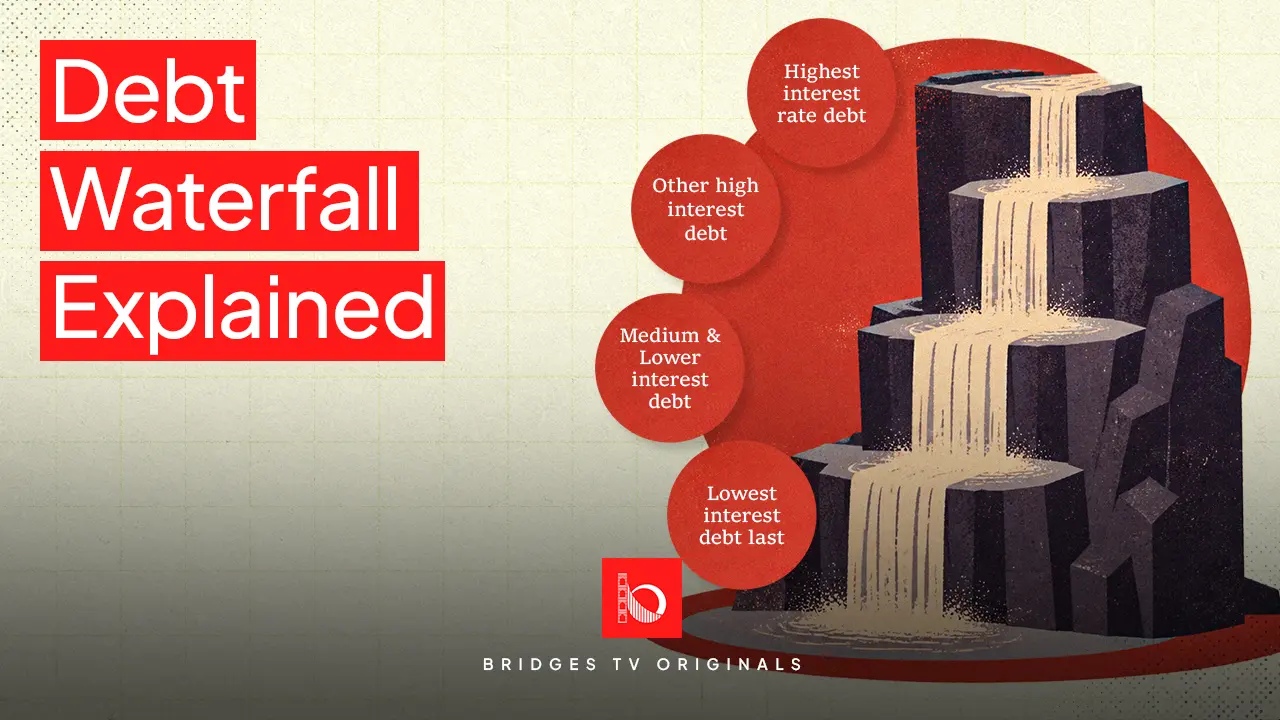
The Debt Waterfall model is a structured framework that outlines the order in which creditors are repaid. Imagine a layered fountain: water flows into the top bowl first, and only when it is full, it spills into the next bowl. Similarly, in a debt waterfall, payments first go to the highest-priority creditors, usually those with secured loans, which are backed by collateral like property or equipment. Once these obligations are fully met, any leftover funds flow down to creditors with lower priority, such as unsecured lenders or shareholders, if any funds remain. This system exists to prevent disputes, ensure fairness, and reduce uncertainty. It also allows investors to evaluate risk more accurately, since those lower in the waterfall know they will only be repaid if funds remain after higher-priority claims are satisfied.
Where the Debt Waterfall Model is Used
The Debt Waterfall model appears in several markets, each using it for a specific reason. In large leveraged transactions such as certain mergers and acquisitions, companies often have multiple layers of debt: senior secured loans, mezzanine financing, and subordinated bonds. Additionally, infrastructure and energy projects, like building a power plant or toll road, often rely on this model as well. Senior lenders who provided the main construction funding are paid before junior investors who took on more risk. It is also common in mortgage-backed securities (MBS) or collateralized loan obligations (CLOs), where thousands of loans are pooled and then sold to investors. The waterfall decides which investors get paid from the incoming loan repayments. Last but not least, when a country restructures its debt, official lenders such as the International Monetary Fund and other governments are often repaid before private investors. In all of these cases, the Waterfall model ensures transparency. By clearly stating repayment order in advance, it reduces legal conflicts and helps lenders price risk appropriately.
Risks, Benefits, and Importance in Today’s Economy
For lenders at the top of the waterfall, the main benefit is security. They are most likely to be repaid, which often allows them to charge lower interest rates. However, for those lower down, the risk of not being repaid is higher. In return for taking this risk, junior creditors typically earn higher interest rates if everything goes well. This trade-off creates opportunities for investors who are willing to take on more risk in exchange for potentially higher returns. Yet, the model has limitations. If the borrower’s assets or cash flow fall sharply, such as during a recession, there may not be enough to reach the lower claims at all. Thus, some investors diversify, holding positions in both senior and junior debt to balance safety and potential reward. Global debt is now at historic levels, and the cost of borrowing has risen sharply over the past two years. Global debt has reached unprecedented levels, topping $324 trillion in mid-2025, as both public and private borrowers continue to issue new obligations at high speed (Campos, 2025). At the same time, interest rates have remained elevated, pushing debt-servicing costs to record highs. This growing burden makes it increasingly difficult for borrowers, whether nations, companies, or individuals, to meet their repayment obligations without distress. In such an environment, the order established by the Debt Waterfall model becomes critical. The Debt Waterfall model is more than just a repayment sequence. It is a tool for managing risk, setting expectations, and ensuring fairness in complex financial arrangements. Whether in corporate finance, infrastructure projects, or sovereign debt negotiations, it provides clarity in situations where multiple creditors have competing claims. In today’s high-debt, high-interest-rate world, this clarity is invaluable. For investors, understanding the waterfall can help identify both safe and high-yield opportunities. For businesses, it offers a framework to negotiate financing more effectively. Ultimately, the model helps everyone involved in lending and borrowing see exactly where they stand, making it one of the most important concepts in modern finance.
References
Campos, R. (2025, May 6). Global debt hits record of over $324 trillion, banking trade group says. Reuters. Retrieved August 12, 2025, from
https://www.reuters.com/world/china/global-debt-hits-record-over-324-trillion-says-iif2025-05-06/