




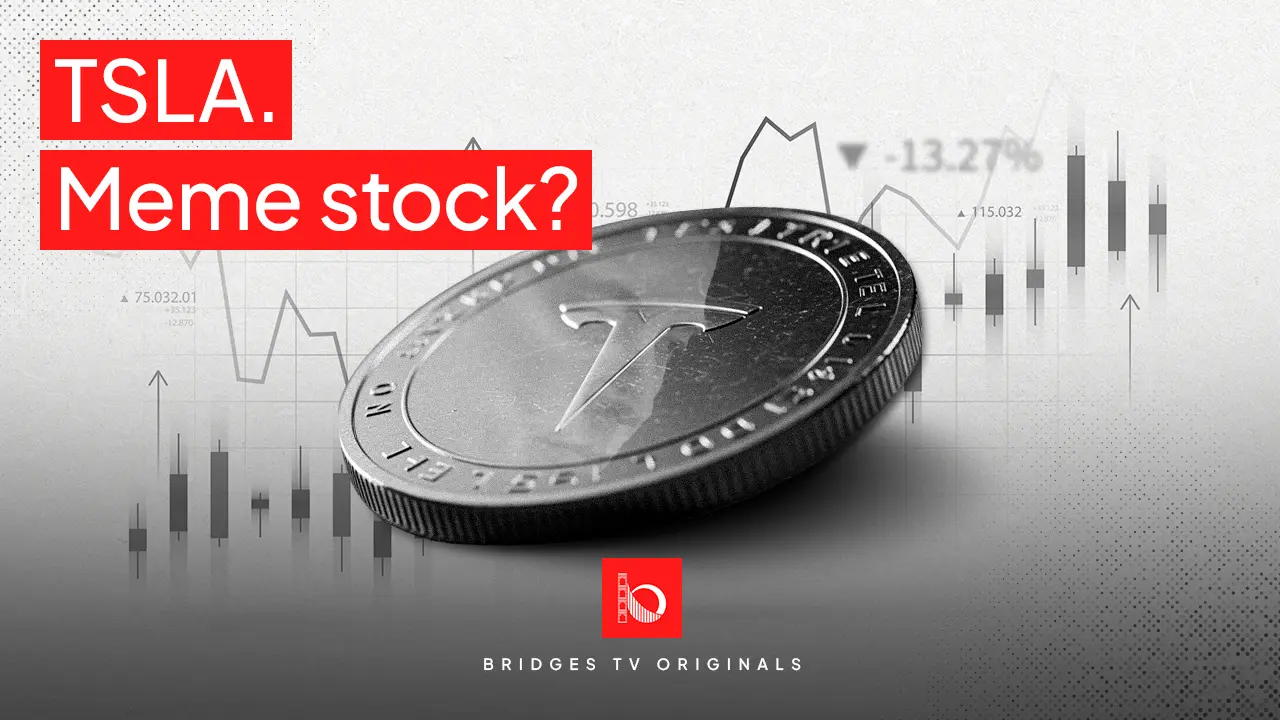
Tesla has been a pioneer in transportation and energy for over a decade. It produces electric vehicles (EV), semi-autonomous driving systems, and clean energy storage, which have been significant turning points in the automotive and energy industries. Besides innovation, Tesla also stands out for its high stock price, underscoring strong investor confidence in the company’s anticipated fast growth. However, there is a debate about whether Tesla’s stock price shows its real valuation. Likewise, the recent Trump-Musk feud, geopolitical tensions, and high competition raise risks and uncertainties about Tesla’s future. This paper aims to analyze Tesla’s real valuation in June 2025 and evaluate possible scenarios that may reshape the company’s future.
To understand Tesla’s business performance, it is important to analyze its market capitalization, revenue, profit (net income), gross margin, and price-to-earnings (P/E) ratio. The market cap measures the valuation of the company, showing how much it is worth for investors. As of 11 June 2025, Tesla’s market cap is around $1.05 trillion, making it one of the most valuable companies in the world (Nasdaq, 2025a). Tesla stated that it made a quarterly revenue of $19.3 billion, highlighting a year-over-year decline of 9% (Tesla Inc., 2025). Although Tesla’s market cap and revenue still seem promising, its net income has declined over a year. Its net income in the first quarter has been reported to be $409 million, a year-over year decline of around 71%, driven by reduced vehicle deliveries and increased expenses in AI and R&D (Tesla Inc., 2025). Additionally, its gross profit margin is 16.3%, lower than 17.4% in the first quarter of 2024 (Tesla Inc., 2025). This means Tesla is not making more money today. Yet, investors still expect it will soon; thus, its stock price remains high. Recently, Tesla’s P/E ratio, which compares the company’s stock price to how much profit it makes, has been ranging between 160 and 180. It was reported to be around 176.3 on June 10 (Yahoo Finance, 2025). According to Yahoo Finance (2025), the P/E ratio is 7.4 for Toyota, 4.9 for Volkswagen, 8.3 for Ford, 6.7 for General Motors, 31.4 for Apple, and 46.0 for Nvidia. These numbers show that Tesla’s P/E ratio is significantly higher than that of major car and tech companies. It implies that Tesla’s current value is not based on what it earns today, but on what people hope it will earn later. Overall, Tesla manages to maintain its global position through strong investor confidence, despite its decreased total revenue and profit.
Growth Drivers and Major Risks
Tesla’s valuation depends not only on car sales, as investors expect growth in other areas like autonomous driving, energy storage, and global EV expansion. To begin with, Tesla promises full self-driving (FSD) capabilities in its cars, boosting investor sentiment. For now, Tesla’s FSD cars remain in beta mode, as regulators in the US and Europe are still cautious about its effectiveness. More than 1,800 car crashes involving Autopilot and FSD have occurred since 2019 (Gitlin, 2025). Such cases have pushed authorities to investigate Tesla’s system cautiously. Therefore, Tesla’s FSD has not been granted full approval by the US government yet. Moreover, the revenue from energy generation and storage has increased by 67% year-over-year to $2.7 billion (Nasdaq, 2025b). Nevertheless, this only accounts only for 14% of the total revenue, meaning that it is not significant enough to offset the future risks. In terms of Tesla’s electric vehicles, global competition is intensifying, raising some concerns over the company’s future performance. Its major rivals like Volkswagen and Toyota have scaled up their EV production, posing another challenge for Tesla, as car prices may drop due to the increased competition. For example, Volkswagen became a top car seller across Europe in the first quarter with 65,679 units sold, marking a 157% increase, while Tesla sold 53,237 units (Pappas, 2025). Meanwhile, Toyota plans to produce 15 EV models by 2027, with a target of 1 million per year, expanding its production to the US, Thailand, and Argentina (Amick, 2025). In addition, Chinese companies like BYD and NIO are expanding their exports to Europe and Latin America with lower-cost alternatives, decreasing Tesla’s market share (Inagaki, 2025). Likewise, geopolitical tensions between the US and China also pose a substantial risk for Tesla. The Chinese government has enhanced scrutiny over U.S. firms. If the relations get worse, Tesla may lose a notable portion of its customers in China. All in all, Tesla may face significant risks if it cannot successfully deal with geopolitical tensions and competition despite its major role in the global market.
Political Impact and Future Scenarios
Tesla’s stock price is also affected by the political situation in the US. The recent Trump-Musk feud is one of these cases that have caused the stock volatility. Specifically, Musk criticized Trump’s “Big, Beautiful Bill’, stating that tax cuts and increased spending will lead the country to a debt crisis. Trump responded by threatening Musk that he may cut off government contracts and EV subsidies (Montgomery, 2025). This may have significant implications for Tesla. The US government currently offers a tax credit of up to $7,500 for eligible buyers of Tesla’s electric vehicles, which has helped Tesla deliver high sales in 2023 and 2024 (Tesla Inc., n.d.). Thus, if the government cuts off these subsidies, the demand for Tesla’s EVs may drop. Another implication is that the subsidy cut may harm investor confidence, resulting in a drop in its stock price.
Considering all these factors, Tesla may go through different possible scenarios – optimistic, mild, and pessimistic. In the optimistic scenario, Tesla may manage to get approval for FSD, increase its energy storage production, and expand its EV, supported by stable prices. Then, Tesla’s high valuation may be justified. That is because, in this scenario, Tesla can become a profitable tech company, not just a car maker. In the mild scenario, Tesla may still maintain its top status as an EV maker and may grow its energy generation and storage. However, FSD may remain in beta mode, and the government may cut subsidies due to the recent dispute between Trump and Musk. Furthermore, its competitors may catch up, pushing prices and earnings down for Tesla. In this scenario, investors may adjust their expectations, making Tesla align more with big companies like Apple and Nvidia. As a result, it may still perform well, yet not at an explosive rate. In the pessimistic scenario, Tesla may face legal or safety setbacks in its FSD production. It may lose part of its market share to its rivals, such as BYD, Volkswagen, and Toyota. Also, the US government may cut subsidies completely. Another challenge may be new regulations and tariffs by China, limiting Tesla’s operations. If this is the case, Tesla’s stock may drop substantially.
In conclusion, Tesla is a highly innovative company that has changed the global auto and energy industries. Its stock price reflects strong confidence in its future, not just its current performance. Investors believe that Tesla will succeed in areas like self-driving technology, energy storage, and EV expansion. However, Tesla also faces serious risks — including falling profits, stronger competition, and uncertainty around government policies and subsidies. These challenges could limit future growth and reduce investor confidence. While Tesla may still deliver strong returns if everything goes well, its current valuation leaves little room for mistakes. This makes it a risky stock: it could grow a lot, or it could drop if things do not go as planned. Therefore, whether it is worth investing in depends on how likely you believe Tesla is to meet its ambitious goals — and how much risk you are willing to take.
References
Amick, M. (2025, April 9). Toyota accelerates EV strategy with 15 new models planned by 2027 [Blog post]. Car Dealership Guy News. Retrieved June 11, 2025, from https://news.dealershipguy.com/p/toyota-accelerates-ev-strategy-with-15-new-models planned-by-2027-report-2025-04-09
Gitlin, J. M. (2025, March 20). DOT must not give Tesla or other automakers a free pass,
advocates say. Ars Technica. Retrieved June 11, 2025, from https://arstechnica.com/cars/2025/03/dot-must-not-give-tesla-or-other-automakers-a free pass-advocates-say/
Inagaki, K. (2025, May 22). BYD sells more electric vehicles in Europe than Tesla for first time. Financial Times. Retrieved June 11, 2025, from https://www.ft.com/content/53ec9a08 1112-4969-8982-2d9f06ee8ea4
Montgomery, B. (2025, June 10). Unstoppable force loses battle with immovable object: Elon bows to Trump. The Guardian. Retrieved June 11, 2025, from https://www.theguardian.com/technology/2025/jun/09/elon-musk-trump-fight-ai-movies
Nasdaq. (2025a, June 11). Tesla, Inc. (TSLA) stock price, quote & news. Retrieved June 11, 2025, from https://www.nasdaq.com/market-activity/stocks/tsla
Nasdaq. (2025b, June 6). Tesla’s energy storage business is quietly growing at triple-digit rates;
company’s next growth engine. Retrieved June 11, 2025, from https://www.nasdaq.com/articles/teslas-energy-storage-business-quietly-growing triple digit-rates-companys-next-growth
Pappas, T. (2025, April 22). VW finally beats Tesla in EV sales across Europe. Carscoops. Retrieved June 11, 2025, from https://www.carscoops.com/2025/04/vw-finally-beats tesla-outselling-it-in-q1-ev-sales-in-europe/
Yahoo Finance. (2025, June 10). Tesla, Inc. (TSLA) key statistics. Retrieved June 11, 2025, from https://finance.yahoo.com/quote/TSLA/key-statistics/
Tesla, Inc. (2025, April 22). Tesla Q1 2025 update [PDF]. Investor Relations. Retrieved June 11, 2025, from https://digitalassets.tesla.com/tesla contents/image/upload/IR/IR/TSLA-Q1 2025-Update.pdf
Tesla, Inc. (n.d.). Electric vehicle and energy incentives. Retrieved June 11, 2025,
from https://www.tesla.com/support/incentives