




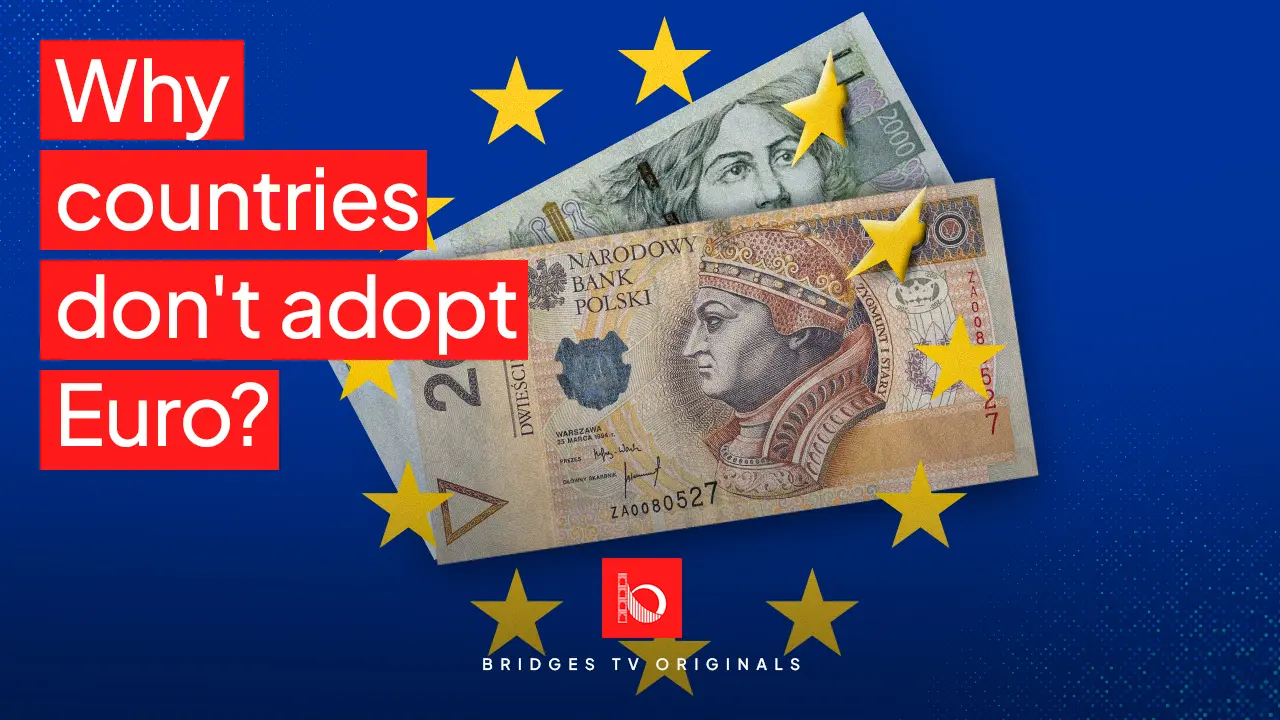
The euro is the official currency of 20 out of 27 European Union (EU) countries, excluding Bulgaria, Czechia, Denmark, Hungary, Poland, Romania, and Sweden. The countries that have adopted the euro form the euro area, or the so-called “eurozone”. It is a monetary union, controlled by the European Central Bank (ECB), where the member countries give up their national currencies to use the euro. The euro was launched in 1999 as an account currency (for example, in bank accounts) and as physical coins and banknotes in 2002 to stimulate economic and political integration in Europe (Council of the European Union, 2025). That is, the member countries agreed to share the currency to simplify the trading process, avoid exchange rate uncertainty, and strengthen political unity. To join the euro area, every EU country must meet the “Maastricht convergence criteria” which includes price stability, public debt sustainability, exchange rate stability, and long-term interest rate (European Commission, n.d.). However, even if an EU country fulfills these requirements, adopting the euro is not automatic but an economic and political decision with long-term outcomes. More precisely, even though some EU countries like Sweden may meet these criteria if they want to, they still delay the process on purpose to keep their national currencies. This paper analyzes the benefits and shortcomings of adopting the euro and explains why some EU countries choose to stay out of the euro area for now.
Advantages
On one hand, the euro has several advantages for the EU countries that have adopted it, such as easier trade, stable prices, lower interest rates, and higher investor confidence. Firstly, the shared currency allows people to trade, invest, and travel within the eurozone without exchanging their money for another currency. This decreases transaction costs like commission fees and time. It also makes prices comparable, encouraging businesses to offer better deals to stay competitive. Next, the ECB targets low and stable prices (2% inflation target), and the member countries benefit from this stability (European Central Bank, n.d.-a). Therefore, the eurozone helps countries to have stable prices and currencies, especially for those that have failed to do so in the past. Additionally, the eurozone members benefit from lower interest rates (European Central Bank, n.d.-a). Such rates make borrowing cheaper for households and businesses, encouraging consumption and investment – the main drivers of economic growth. Finally, adopting the euro can increase investor confidence for two main reasons. First, it signals that the member country has met strict economic requirements. Consequently, investors feel more optimistic, trusting the economic condition of the member country. Second, the euro is the second most used and accepted currency in the world (Council of the European Union, 2025). Therefore, using it may improve a country’s credit rating and attract foreign investors. All in all, adopting the euro leads to simplified trade, steady prices, low borrowing costs, and stronger investor confidence within the euro area.
Disadvantages
On the other hand, joining the eurozone also comes with some disadvantages, such as the loss of independent monetary policy, limited flexibility in responding to economic crises, uniform interest rates that may not suit all economies, and the high entry costs and risks associated with the transition. To begin with, when a country adopts the euro, it gives up monetary control over its central bank, transferring monetary responsibilities to the ECB. It can no longer adjust interest rates and money supply to respond to the economic circumstances. Instead, the ECB sets the rates and controls the money supply (European Central Bank, n.d.-b). The situation worsens even more during financial crises. For example, when a recession (deep economic slowdown) occurs only in one of the member countries, that country cannot reduce interest rates to boost borrowing, spending, and investing if the ECB does not allow it. Likewise, the country can neither devalue its currency to lower the prices of exported goods, nor print money to stimulate the economy. The country cannot apply the fiscal policy either, meaning it cannot easily change taxes and government spending to overcome the recession or budget deficit. The reason is that the ECB requires member countries to keep the budget deficit below 3% of GDP and public debt below 60% of GDP (Leiner-Killinger & Nerlich, 2019). This leads to another drawback: one size does not fit all. The euro area covers both strong and weak economies. Nevertheless, the ECB applies the same policy rate to all member countries, making it hard for countries to react to economic shocks at the same quality. That is, while strong economies need mild interest rate adjustments, the weaker ones may require more drastic changes to cope with the shocks. Lastly, switching to the euro requires additional costs, such as adjusting financial systems, printing new money, adapting software, and educating the public. In the beginning, there can also be a temporary price increase, as businesses tend to round the prices up while adjusting to the new currency (Mužić & Pufnik, 2022). All in all, adopting the euro also has its drawbacks, including the loss of control over national monetary policy, reduced flexibility in handling economic downturns, standardized interest rates that may not align with every country’s needs, and significant costs and risks related to the transition process.
To sum up, adopting the euro offers important benefits like easier trade, more transparent prices, lower borrowing costs, and stronger investor trust. However, it also means giving up national control over interest rates, money supply, and fiscal policies. This can make it harder for countries to react quickly to economic problems, especially when the same policy is applied to both strong and weak economies. Some EU countries, like Sweden and Czechia, prefer to keep their own currency so they can manage their economy in a way that fits their specific needs. They also want to avoid the high costs and short-term risks of switching to the euro, such as increased prices due to rounding. As a result, even if they can meet the official requirements, they choose not to join the eurozone for now in order to keep more economic flexibility and control.
References
Council of the European Union. (2025, Feb 5). The euro. https://www.consilium.europa.eu/en/topics/the-euro/
European Central Bank. (n.d.-a). Benefits of price stability. https://www.ecb.europa.eu/mopo/intro/benefits/html/index.en.html
European Central Bank. (n.d.-b). Overview of monetary policy and
markets. https://www.ecb.europa.eu/mopo/html/index.en.html
European Commission. (n.d.). Convergence criteria for joining. https://economy finance.ec.europa.eu/euro/enlargement-euro-area/convergence-criteria-joining_en
Leiner-Killinger, N., & Nerlich, C. (2019). Fiscal rules in the euro area and lessons from other monetary unions. The European Central Bank. https://www.ecb.europa.eu/press/economic bulletin/articles/2019/html/ecb.ebart201903_02~e835720b96.en.html
Mužić, I., & Pufnik, A. (2022, Dec 21). Possible effects of the rounding of food product prices on inflation when adopting the euro. The Croatian National Bank. https://www.hnb.hr/en//possible-effects-of-the-rounding-of-food-product-prices-on-inflation-when-adopting-the
euro