





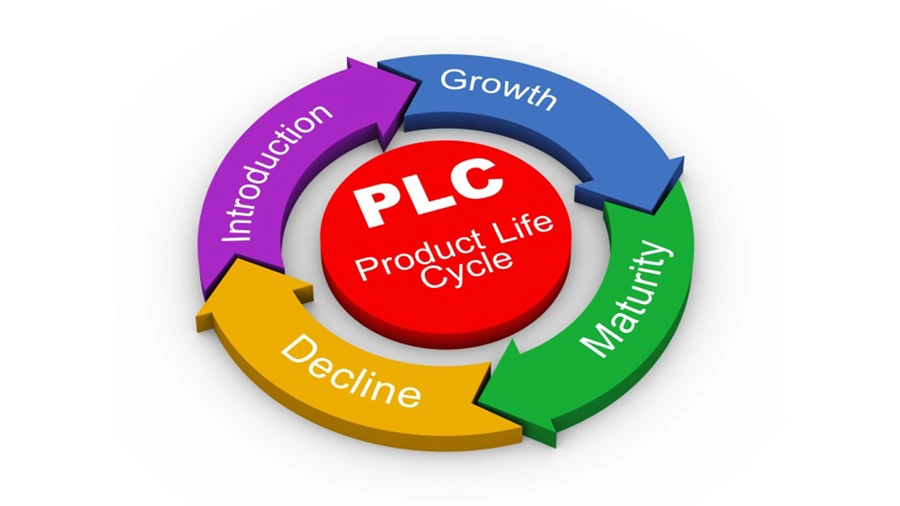
Companies do not grow by maintaining existing products alone. Markets change, competitors introduce alternatives, and consumer expectations evolve. As a result, firms must continuously develop new products while managing the performance of existing ones across their life cycle.
New products can come from two main sources. Companies can acquire them by purchasing patents, licenses, or entire firms, or they can develop them internally through research, improvement, and innovation.
How New Product Development Works
New product development follows a structured process designed to reduce risk and improve the chances of success.
The first stage is idea generation. Firms systematically search for ideas using internal sources such as research and development teams and employees, as well as external sources including customers, competitors, and suppliers. Some companies use crowdsourcing, inviting large groups of people to contribute ideas.
The next step is idea screening. At this stage, companies eliminate weak ideas early. A common framework evaluates whether the idea is real, whether the company can compete with it, and whether it is worth pursuing.
Selected ideas move into concept development and testing. A product idea becomes a product concept when it is described in terms that are meaningful to consumers. These concepts are then tested with target groups to assess demand and perception.
Marketing strategy development follows. Companies define the target market, value proposition, and expected performance, including sales and market share.
Business analysis evaluates whether the product is financially viable by estimating costs, sales, and profitability.
If the project remains viable, the firm proceeds to product development, where the concept is turned into a physical product and tested for functionality.
Test marketing places the product in a realistic market setting to observe performance before a full launch. Companies may skip this step when speed is critical or when risk is low.
The final stage is commercialization, where the product is introduced to the market with decisions about timing, location, and scale of rollout.
Managing the Development Process
Successful product development requires coordination across the organization.
Customer-centered development focuses on solving real customer problems rather than simply generating ideas.
Team-based development integrates different departments, allowing overlapping work stages to reduce development time and improve efficiency.
A systematic approach creates a structured innovation process that generates a continuous flow of ideas and supports consistent development.
Companies that reduce investment in innovation during uncertain periods often lose competitiveness over time.
The Product Life Cycle
Once a product is launched, it moves through a series of stages known as the product life cycle. Each stage has different characteristics and requires different strategies.
During the product development stage, the product does not yet generate sales, while costs accumulate due to research and development.
In the introduction stage, sales grow slowly and profits are typically low or negative due to high promotion and distribution costs.
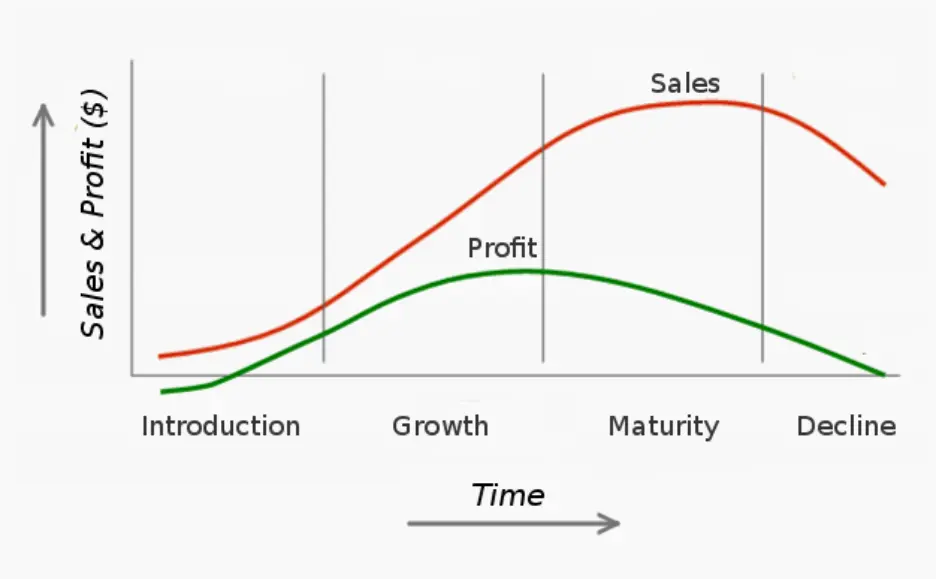
The growth stage is marked by rapid market acceptance and increasing profits. Competition begins to increase, and companies may reduce prices to attract more customers and expand market share.
In the maturity stage, sales growth slows as the market becomes saturated. Competition intensifies, and firms often invest in product improvements, market expansion, or changes in marketing strategy to maintain performance.
The decline stage occurs when sales and profits begin to fall. Companies must decide whether to maintain the product, reduce investment, or remove it from the market.
Additional Considerations
Product decisions are influenced by regulatory and ethical factors. Companies must consider safety, quality, patents, and warranties when developing and managing products.
International markets introduce further complexity. Firms must decide whether to standardize products across countries or adapt them to local preferences, taking into account cultural differences, regulations, and consumer behavior.
Conclusion
Developing new products and managing their life cycle requires a structured process, coordination across functions, and continuous adaptation to market conditions. Companies that systematically generate ideas, evaluate them effectively, and adjust strategies across each stage of the product life cycle are more likely to maintain competitiveness over time.

