





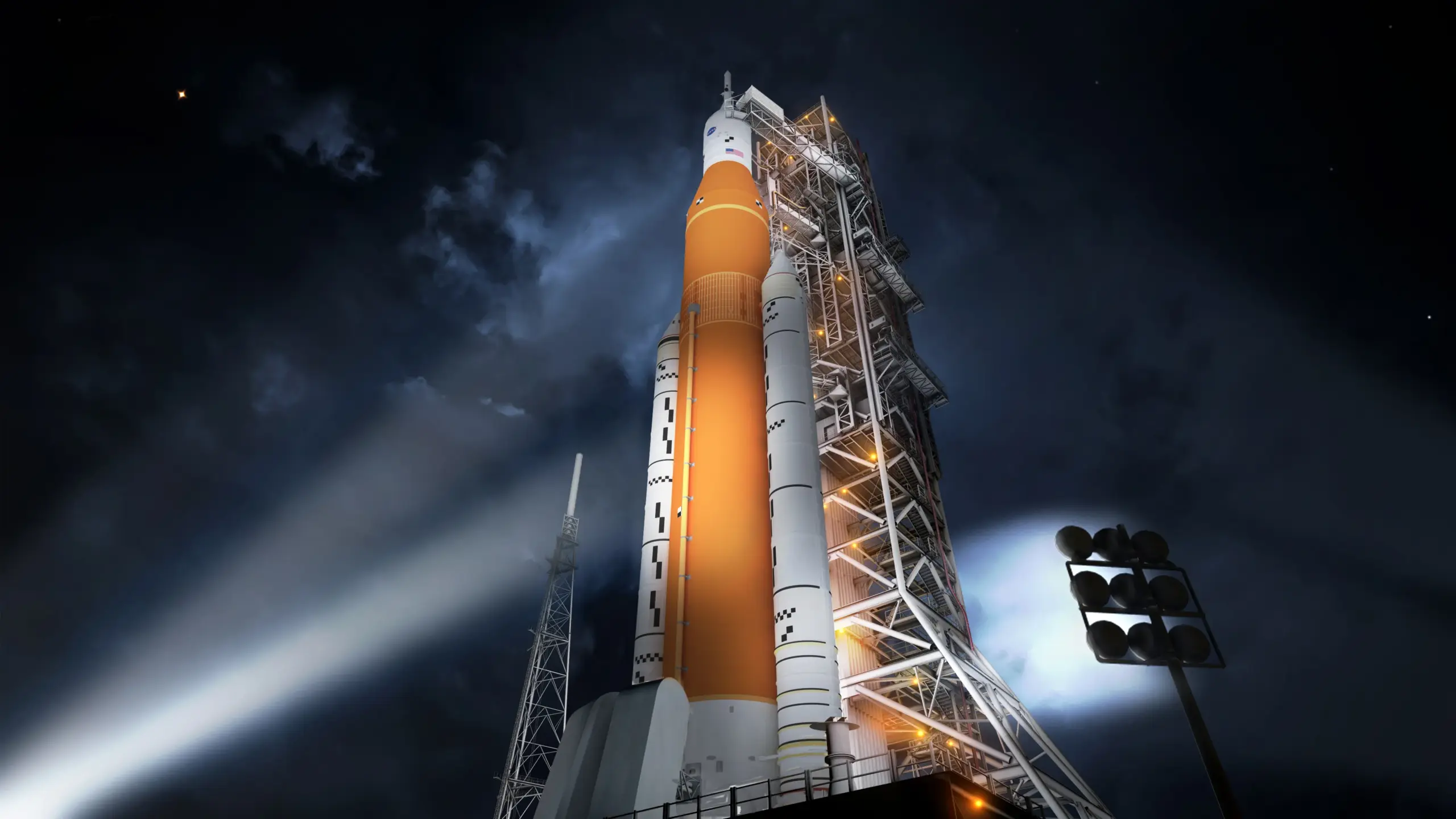
The Artemis Program is the United States’ current framework for returning humans to the Moon, but its purpose differs from the earlier Apollo Program. Apollo missions were designed to demonstrate technological capability within a geopolitical context, and once that objective was achieved, the program ended. Artemis is structured around repeated missions, system development, and long-term operational capacity in space.
Why NASA Is Returning to the Moon
The primary objective is no longer symbolic achievement but system development. Missions to Mars require technologies that can operate independently for long periods without direct support from Earth. Communication delays, extended travel time, and limited resupply options make reliability critical.
These constraints cannot be tested in low Earth orbit. The Moon provides an environment where life support systems, autonomous operations, and surface logistics can be tested under real conditions, while still allowing relatively fast return to Earth if needed.
The Moon as a Testing Ground for Mars
One of the central technical goals of Artemis is to prepare for deep space missions. This involves testing how humans live and work outside Earth’s immediate environment.
The lunar south pole is of particular interest because of the presence of water ice in permanently shadowed regions. This resource can be processed into oxygen and hydrogen, supporting both life support and fuel production.
If this process is validated, it reduces dependence on Earth-based supply. Since transporting mass from Earth is one of the main cost drivers in space missions, using local resources directly affects mission feasibility.
The Role of Private Companies
The structure of Artemis includes a significant role in the private industry. SpaceX is developing the human landing system based on its Starship architecture.
This system introduces orbital refueling, where multiple launches are used to supply fuel to a spacecraft in orbit before it travels to the Moon. This approach allows larger payloads but requires coordination between multiple launches.
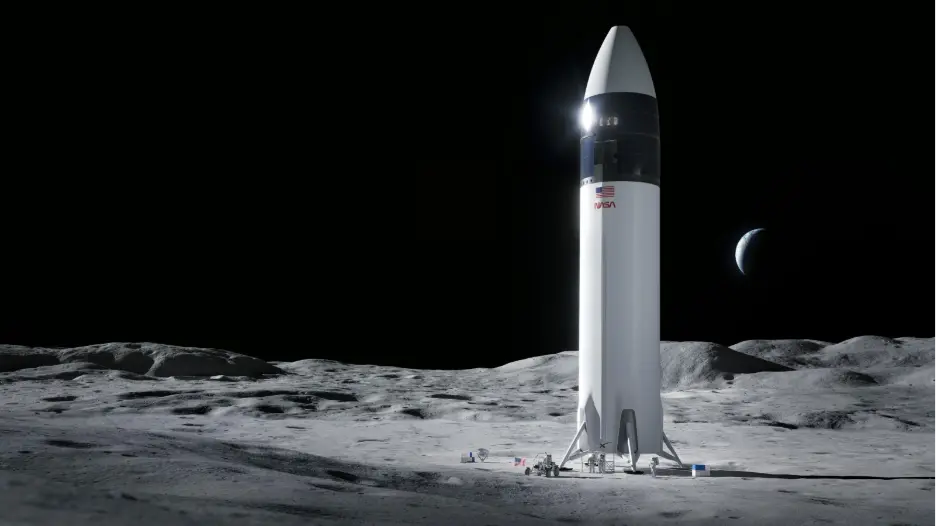
NASA defines mission requirements, while companies design and operate systems. This shifts part of the development of risk to the private sector and changes how space missions are built and financed.
International Participation and the Lunar Gateway
Artemis includes contributions from multiple international partners. The European Space Agency, Japan Aerospace Exploration Agency, and the Canadian Space Agency are involved in developing key components.
One of these is the Lunar Gateway, a station planned for lunar orbit. The Gateway allows missions to be assembled in stages rather than launched as a single unit, which reduces the constraints on individual launches and increases flexibility.
Scientific Objectives
Artemis focuses on regions that were not explored during Apollo missions. The south polar areas contain environments that have remained in permanent darkness for billions of years, preserving materials from the early solar system.
The Moon’s surface also provides a stable geological record. Unlike Earth, it is not affected by erosion or plate tectonics, allowing long-term study of impact history and surface processes.
The far side of the Moon also offers conditions suitable for certain types of observation that are not possible from Earth due to radio interference.
Geopolitics and Parallel Programs
Space exploration continues to be influenced by geopolitical factors. China, through the Chinese Lunar Exploration Program, is developing its own lunar infrastructure, including plans for a research station with Russia.
The United States and its partners are building a separate system through Artemis. These parallel efforts result in different technical standards and operational frameworks rather than a single coordinated global approach.
Economic and Long-Term Implications
The potential use of lunar resources introduces economic considerations. Water ice can be converted into fuel, which could support missions beyond the Moon and reduce launch costs from Earth.
The development of transport systems, cargo delivery, and surface operations creates the basis for future commercial activity. While these applications are still in early stages, they influence how current systems are designed.
What Artemis Represents
The Artemis program is not a single mission sequence, but a system designed for repeated operations beyond Earth. It combines government funding, private development, and international cooperation to build capabilities that extend beyond individual missions.
Its significance lies in shifting from isolated exploration to continuous presence, with implications for future missions deeper into space.

