



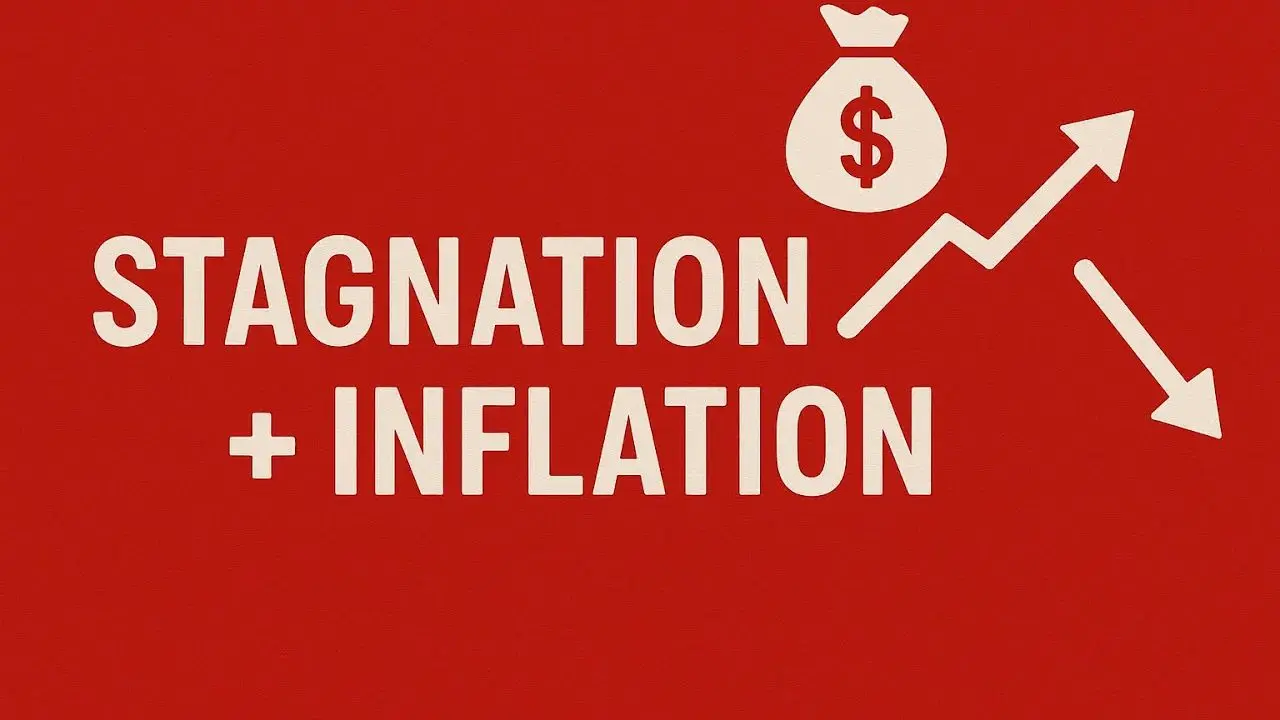
If there is one word that makes economists nervous, it is “stagflation”. Not because it is difficult to explain, but because it represents a kind of economic nightmare, where rising prices and falling growth collide, and the usual tools just stop working. Inflation is when prices rise and money loses value, while deflation is when prices fall and money gains value; both can hurt the economy in different ways. On the other hand, stagflation is a problem that does not follow the script. Typically, when inflation rises, central banks can raise interest rates to cool prices down. When growth slows, they cut rates to boost demand. But stagflation throws both problems at policymakers at the same time. And when that happens, neither approach works without making the other issue worse. That is why, in 2025, people are starting to talk about stagflation again. It is not that we are back in the 1970s, when this term first made headlines. But something about the current mix, including stubborn inflation, slowing growth, and fragile global trade, feels uncomfortably familiar.
Stagflation, by definition, is the combination of high inflation, high unemployment, and low or even negative economic growth. Back in the 1970s, this mix caught economists off guard. They assumed inflation and unemployment moved in opposite directions. When they started rising together, the old models stopped making sense.
Signs of Stagflation in Today’s Economy
Even with two years of rate hikes behind us, inflation is proving harder to shake than many had hoped. Headline numbers have come down, but the underlying pressures are still there. In the US, core inflation, which is measured without food and energy, rose 2.9% over the year to June 2025 (U.S. Bureau of Labor Statistics, 2025). That is not dramatic, but it is still above the Fed’s target and shows how sticky prices in services and housing continue to be. In the eurozone, headline inflation held steady at 2.0% in July, according to Eurostat’s early estimate (Eurostat, 2025). It may look like an encouraging sign on the surface, but many of the cost pressures that matter most to households, like rent, healthcare, and transport, have not gone away. And that makes the job harder for central banks to balance the economies.
Meanwhile, global growth is showing signs of strain, even if the numbers are not outright alarming. According to the International Monetary Fund’s July 2025 update, the world economy is expected to grow by 3.0% this year – a slight improvement from earlier forecasts, but still slower than what many would consider a strong recovery (IMF, 2025). Some of that growth is being driven by early demand ahead of new tariff rules and short-term government stimulus in key economies. But the recovery is not being felt equally. Germany and the UK are barely skimming past recession. The U.S. economy is cooling under the pressure of high interest rates. And China, which once helped pull global growth forward, is now weighed down by a housing crisis and a shrinking workforce. For many, it feels less like progress and more like standing still.
Causes and Policy Challenges
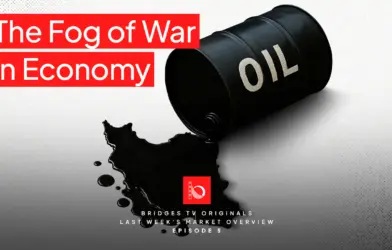
On top of this, the disruptions have not stopped. In the 1970s, it was the oil shocks. Today, we are dealing with a mix of supply problems that are harder to fix. Energy markets remain volatile, with Russian gas flows still disrupted and tensions in the Middle East pushing up prices. At the same time, climate change is creating unpredictable shocks to agriculture. Crops are suffering from drought in one region, flooding in another, both of which are driving up food prices. According to the World Bank’s recent commodity report, climate and conflict are now some of the biggest drivers of food and energy inflation (World Bank, 2025). Add to that the global trend toward “friend-shoring” – countries shifting production to political allies instead of relying on global supply chains – and customers get higher costs, slower trade, and less economic efficiency. That all feeds into inflation, too.
What makes stagflation so difficult to manage is that it does not leave policymakers with many good options. Raise interest rates to curb inflation, and you risk crushing already-weak demand and pushing more people out of work. If you cut rates to support the economy, you risk making inflation worse. Governments might try targeted spending to support jobs or cut wasteful programs to avoid increasing inflation. Over the long term, improving productivity, like investing in technology or supporting businesses, can help. In the past, some countries froze wages and prices, but it rarely worked. Overall, there is no quick fix to stagflation, just a careful balancing act.
Impact on People and Future Outlook
The pain of stagflation is already being felt by households and businesses. For regular people, the problem is simple: goods cost more, but paychecks are not rising fast enough to keep up. Essentials like food, rent, and energy are taking a bigger bite out of incomes. Many are turning to credit or using savings to cover basic needs. For companies, the issue is tighter margins. Materials and labor cost more, but customers are spending less, so raising prices is not always an option. And governments are stuck in the middle; tax revenues are slowing, but pressure to provide support is rising.
Some argue that we are not in full-blown stagflation just yet. And they are not wrong. Unemployment is still relatively low in many developed economies – 4.1% in the US, 6.4% in the eurozone, according to the OECD (2025). Inflation expectations also remain mostly stable, which means people and markets still trust that central banks will bring prices under control in the long run. But the situation is fragile. It would not take much – a new energy shock, another round of global supply disruption, or even a policy misstep, to push things into more dangerous territory. And once that tipping point is reached, recovery can be slow and painful.
Of course, today’s situation is not identical to the 1970s. For one, central banks have learned from past mistakes. They now act faster, communicate more clearly, and have a better understanding of inflation dynamics. Energy markets are also more diversified than they were fifty years ago, and technology has helped boost productivity in some sectors. That said, one major difference now is debt. Public debt levels are far higher today than they were during the last episode of stagflation. This limits how much room governments can spend in the case of a slowdown. And politically, we are operating in a much more divided and volatile environment, which can make bold action harder to coordinate.
So, where does that leave ordinary people? If stagflation becomes more entrenched, financial habits will need to adjust. Households may need to tighten budgets, lock in fixed rates where possible, and build a stronger safety cushion. For investors, the environment may favor real assets like infrastructure, commodities, or inflation-linked bonds over traditional equities, especially those vulnerable to rising costs.
At the end of the day, stagflation is not just an economic concept; it is a shift in the environment that affects the way people live, work, and plan for the future. It forces challenging trade-offs. While the term might still sound abstract to many, its effects are noticeable all around the world. What is clear is that policymakers need to be cautious but proactive. Households and businesses need to stay alert. And everyone from central banks to consumers will need to make decisions that reflect a world where growth cannot be taken for granted, and rising prices are no longer a short-term problem.
References
European Central Bank (ECB). (2025). Core inflation indicator (HICP excluding energy and unprocessed food). Retrieved July 29, 2025, from https://data.ecb.europa.eu/main figures/inflation
Eurostat. (2025, August 1). Euro area annual inflation stable at 2.0% in July 2025 (flash
estimate). Retrieved July 29, 2025, from https://ec.europa.eu/eurostat/web/products-euro indicators/w/2-01082025-ap
International Monetary Fund. (2025, July 29). World Economic Outlook Update, July 2025: Global Economy: Tenuous Resilience amid Persistent Uncertainty. Retrieved July 29, 2025, from https://www.imf.org/en/Publications/WEO/Issues/2025/07/29/world economic-outlook-update-july-2025
Organization for Economic Co‑operation and Development (OECD). (2025, June). Unemployment rate (indicator). Retrieved July 29, 2025, from
https://data.oecd.org/unemp/unemployment-rate.htm
U.S. Bureau of Labor Statistics. (2025, July 11). Consumer Price Index – June 2025. Retrieved July 29, 2025, from https://www.bls.gov/news.release/cpi.nr0.htm
World Bank. (2025, May). Commodity Markets Outlook: Weather, War, and Weakness. Retrieved July 29, 2025, from https://www.worldbank.org/en/research/commodity markets