





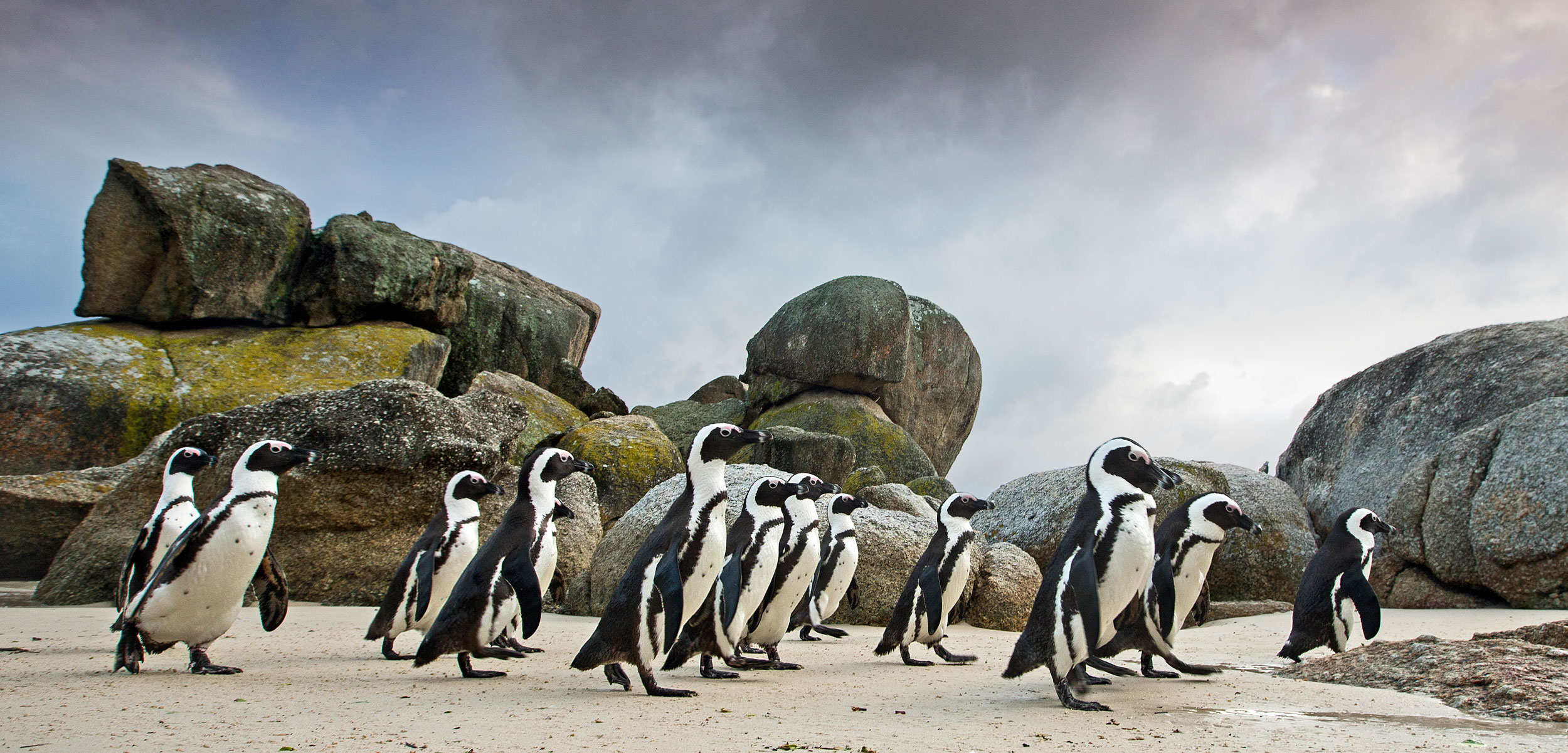
The African penguin is the only penguin species native to Africa, living along the coasts of South Africa and Namibia. Unlike Antarctic penguins associated with ice and freezing temperatures, African penguins evolved in relatively warm coastal environments and depend heavily on local marine ecosystems.
A century ago, their population exceeded one million individuals. Today, fewer than 10,000 breeding pairs remain, making the species critically endangered and one of the fastest declining seabird populations in the world.
Why the Population Is Collapsing
The central problem is food availability.
African penguins depend mainly on small fish such as sardines and anchovies. Over time, warming ocean temperatures have shifted fish populations away from traditional penguin feeding grounds. Changes in ocean conditions, including salinity and water temperature, have disrupted marine ecosystems that penguins rely on.
At the same time, commercial fishing has intensified pressure on already declining fish stocks.
As penguins are forced to travel farther in search of food, they expend more energy while bringing back less nutrition. This directly affects adult survival as well as breeding success.
Recent research has identified starvation as one of the leading causes of mortality in African penguins.
Why Breeding Is Becoming More Difficult
African penguin parents normally alternate between hunting at sea and guarding eggs or chicks on land. This balance becomes unstable when feeding trips become longer and less predictable.
If one parent cannot return in time, eggs or chicks may be abandoned. In recent years, this has become increasingly common due to longer foraging distances, extreme weather conditions, and increased predation.
Young chicks are especially vulnerable because they depend entirely on consistent feeding during early development.
Additional Threats Beyond Food Shortages
Food scarcity is not the only factor behind the decline.
Oil pollution continues to threaten coastal colonies, particularly after spills involving shipping routes near southern Africa. Penguins lose waterproofing when coated in oil, which affects insulation and survival.
Habitat destruction has also reduced suitable nesting areas. Historically, many penguins nested in guano deposits that provided insulation and protection, but extensive guano harvesting removed much of this environment.
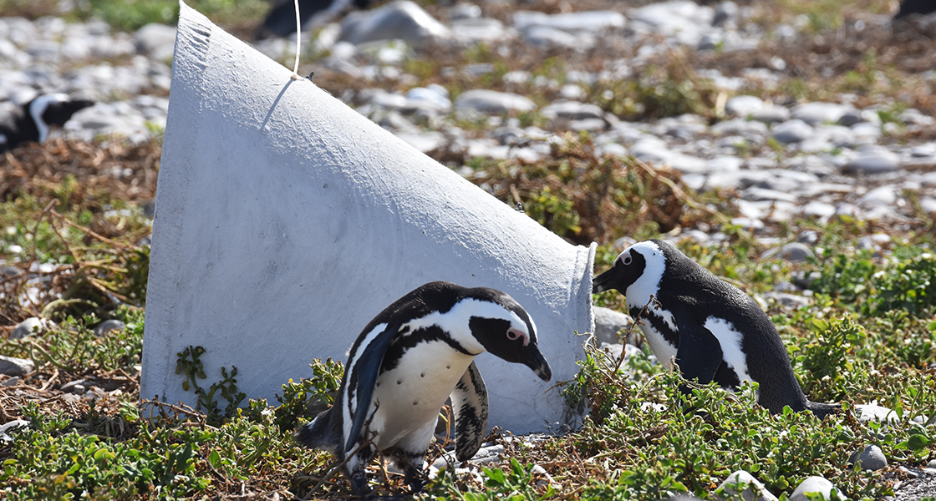
Predation from marine animals, including Cape fur seal, adds additional pressure, especially on young penguins.
Rescue and Rehabilitation Efforts
Organizations such as the Southern African Foundation for the Conservation of Coastal Birds play a major role in stabilizing the population.
Their work includes:
- rescuing injured or starving penguins
- rehabilitating birds affected by oil spills
- hand-feeding abandoned chicks
- conducting long-term research and monitoring
Rehabilitation programs have saved thousands of birds over the years, particularly after major oil spill events.
The Role of Marine Protection Zones
One of the most significant recent developments came in 2025, when the South African government established new no-take marine protection zones around several major penguin breeding colonies.
These areas restrict commercial fishing and other extractive activities in waters used by penguins for hunting.
The objective is straightforward: reduce competition for fish near breeding sites so adults can feed more efficiently and return to colonies faster.
Conservation scientists view these protected zones as one of the few measures capable of improving breeding success within a relatively short period.
Is There Still Hope?
Some projections suggest African penguins could disappear in the wild by around 2035 if current trends continue.
However, extinction is not inevitable.
Unlike many species facing decline, the causes behind the African penguin crisis are relatively well understood. Scientists already know that food access near breeding colonies is one of the most important variables affecting survival and reproduction.
This means targeted conservation measures can still make a measurable difference if implemented consistently and at a sufficient scale.
What Makes the Situation Urgent
The African penguin’s decline illustrates how quickly marine ecosystems can change under combined environmental and economic pressure.
Climate shifts, industrial fishing, pollution, and habitat degradation are interacting simultaneously rather than separately. Penguins are therefore not only losing population numbers, but also losing the ecological conditions that previously allowed colonies to recover naturally.
The next decade will likely determine whether the species stabilizes or continues toward extinction.