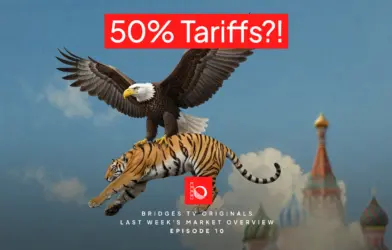




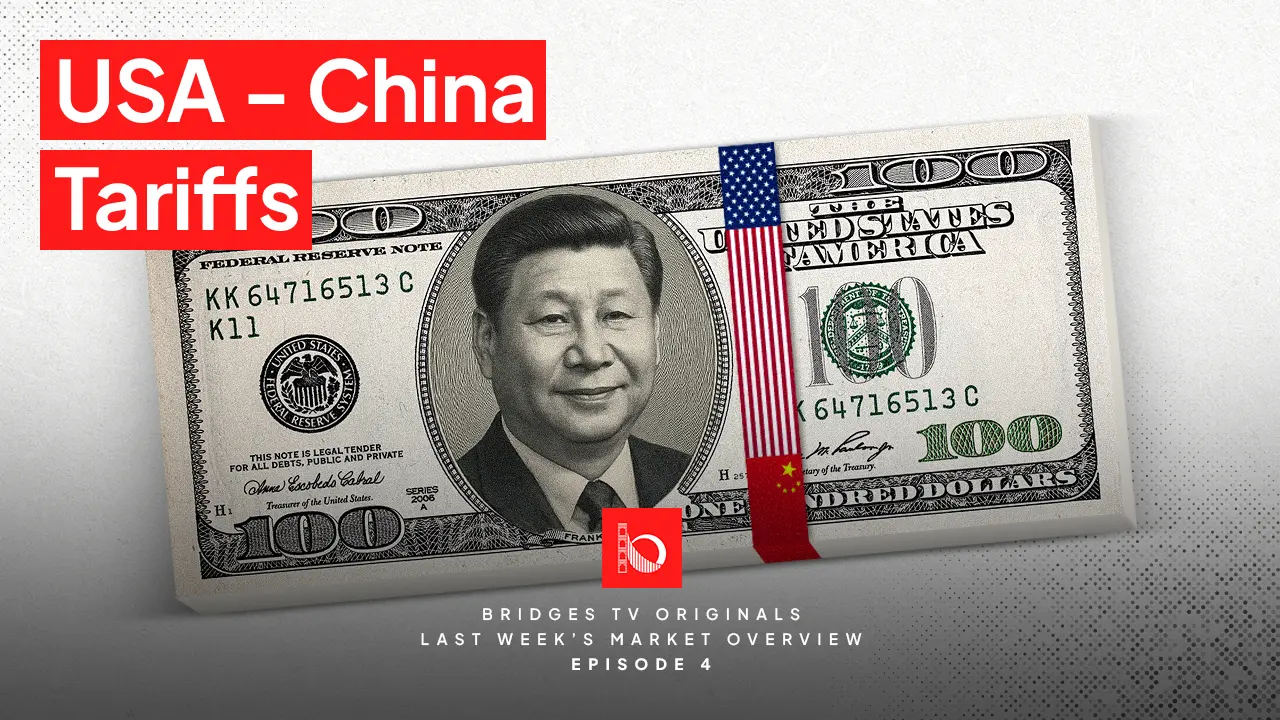
On June 11, U.S. President Trump announced that the trade talks with China in London concluded a day before. Trump added that he and Chinese President Xi Jinping are waiting to formally sign off on the agreement. According to the new agreement, the U.S. tariff on Chinese goods will be 55% in total – 25% from Trump’s first term and 30% in his second term – while Chinese tariffs will remain at 10% (Graham, 2025). It is worth noting that the US tariff stood at 145%, and the Chinese tariff hit its peak of 125% during the recent trade war (Inocencio & Reals, 2025). Additionally, once the agreement is signed, China promises to lift export restrictions on rare earth minerals; in return, the US reportedly agreed to ease the restrictions on exported goods like jet engines and ethane (Lim, 2025). Likewise, the US will allow Chinese students to study in U.S. universities. The tariff cut has significant consequences. To begin with, the new deal does not necessarily solve the vital issues; it just pauses the geopolitical tension. More specifically, 55% tariffs are still substantially high. This means manufacturing and consumer goods will remain expensive in both countries, feeding into inflationary pressures. Thus, global trade and growth may get a short-term boost, yet the supply chain may remain distorted. For instance, small Chinese businesses continue struggling due to the high tariffs; some are delaying wages and exporting at a loss to keep their customers in the US (Hall & Zhang, 2025). Moreover, rare earth minerals are critical for the US in terms of technology, electric vehicles (EV), and defense. Therefore, China’s opening up of rare earths may reduce the production costs for U.S. tech and EV makers, easing concerns over supply shortages. This may also push the goods prices down in such industries. Last but not least, the reduced tariffs may boost investor confidence at least for a short period, whereas investors will stay cautious. The major confidence boost for investors is not the promises but how successful and willing the US and China will be to actually implement this new deal. Overall, the new agreement will give the US and China a break from the recent trade war that has damaged global growth, yet it should be implemented thoroughly to avoid risks and uncertainties.
U.S. investors shift to Europe & emerging markets
On June 11, Reuters reported that investors have shifted from U.S. equity markets to European and emerging markets due to rising concerns over U.S. trade tensions, national debt, and fiscal policy (Murugaboopathy, 2025). According to the data from LSEG Lipper, U.S. equity mutual funds and ETFs experienced outflows of $24.7 billion (the largest in a year) in May, while Europe and emerging markets attracted inflows of $21 billion (the highest in four years) and $3.6 billion, respectively (Murugaboopathy, 2025). In addition to worries about rising national debt, unsustainable trade and fiscal policies, and high tariffs in the US, there are other significant reasons for investors to move money away from the US. First, the US dollar has weakened recently, encouraging investors to seek stronger currencies. Furthermore, the European Central Bank (ECB) keeps cutting interest rates, and governments spend more on defense and infrastructure; thus, investors expect economic growth in Europe. For instance, Blackstone, a private equity giant, is planning to invest up to $500 billion in Europe over the next decade, highlighting the increasing confidence in the region’s prospects (Bhandari, 2025). Meanwhile, emerging markets have lower debt and more stable yields than the US (Murugaboopathy, 2025). Also, price-to-earnings ratios in European and emerging markets are usually lower than in the US; hence, stock prices appear to be cheaper, attracting more investors. As a result of this shift, European and emerging markets will have a greater chance to boost their economies further. More investment means higher stock prices and stronger markets in these regions. Additionally, their currencies may strengthen, as the demand for them increases, while the opposite is probable for the US. In turn, this will make imports cheaper in Europe and emerging markets, causing lower inflation risk. On the other hand, the US may feel the urge to raise interest rates to keep the dollar attractive for investors. Likewise, U.S. stocks could underperform and experience more volatility. In short, this shift in global investment flows may mark a turning point, where the balance of financial power slightly moves away from the US and opens new opportunities for other parts of the world.
Inflation cooldown in the US
The U.S. Bureau of Labor Statistics (2025) reported that the inflation rate rose only by 0.1% in May compared to April and by 2.4% over the year, with core inflation, which excludes volatile food and energy prices, at 2.8%. These numbers are lower than what forecasters had predicted. They had expected prices for clothes and cars to go up due to the tariffs; instead, they actually dropped (Hyatt, 2025). The main driver of inflation was rising housing costs, while lower fuel and goods prices prevented it from rising more than it did (Hyatt, 2025). The cooler inflation rate usually leads people to expect rate cuts sooner. Therefore, yields drop as bond prices rise with the increased demand. On June 12, yields on the 10-year Treasury fell below 4.4% (Lang & Barnato, 2025). This made mortgage lenders offer lower rates (Graham, 2025). On the other hand, while cooling inflation suggests the US might cut rates soon, persistent capital outflows and a weakening dollar could put pressure on U.S. policymakers to keep rates higher than expected, or at least delay cuts, in order to keep the currency attractive for global investors. There are several possible outcomes of this report. Firstly, falling rates can boost consumer spending and investment, with lower borrowing costs. On the other hand, savers may face lower returns. Next, lower yields may encourage some investors to switch to the stock market, pushing stock prices up. In addition, more buyers may return to the housing market because of lower mortgage rates. Thus, housing prices may go up, benefiting from higher demand. However, the expected rate cuts can make the dollar less attractive to foreign investors. Overall, while cooler inflation and falling rates may support growth in spending, investment, and housing, they could also bring new challenges such as lower savings returns and a weaker dollar, which investors and policymakers will need to carefully balance.
References
Bhandari, A. (2025, June 10). Blackstone to invest $500 billion in Europe over next decade, CEO tells Bloomberg Television. Reuters. Retrieved June 12, 2025, from https://www.reuters.com/business/blackstone-invest-500-billion-europe-over-next decade-bloomberg-reports-2025-06-10/
Graham, J. (2025, June 11). U.S.–China trade deal includes 55% tariff, Trump says. Investors Business Daily. Retrieved June 12, 2025, from https://www.investors.com/news/economy/us-china-trade-deal-rare-earths-55-percent tariff-sp-500/
Graham, M. (2025, June 11). Mortgage rates fall as inflation data comes in soft. Mortgage News Daily. Retrieved June 13, 2025, from https://www.mortgagenewsdaily.com/markets/mortgage-rates-06112025
Hall, C., & Zhang, E. (2025, June 12). As U.S. trade truce gets back on track, some Chinese exporters are ‘slowly dying’. Reuters. Retrieved June 12, 2025, from https://www.reuters.com/sustainability/sustainable-finance reporting/us-trade-truce-gets back-track-some-chinese-exporters-are-slowly-dying-2025-06-11/
Hyatt, D. (2025, June 11). Inflation rose less than expected in May. Investopedia. Retrieved June 13, 2025, from https://www.investopedia.com/inflation-rose-less-than-expected-in may-cpi-11752316
Inocencio, R., & Reals, T. (2025, June 11). Trump says U.S. trade deal with China is done, after tariff talks in London yield “framework deal”. CBS News. Retrieved June 12, 2025, from https://www.cbsnews.com/news/trump-us-china-trade-deal-done-tariff-talks-london
framework/
Lang, H. E., & Barnato, K. (2025, June 12). Stock Market News, June 12, 2025: Inflation Reading Sends Bond Yields Lower, Stocks Higher. The Wall Street Journal. Retrieved June 13, 2025, from https://www.wsj.com/livecoverage/stock-market-today-trump-tariffs trade-war-06-12-2025/
Lim, L. (2025, June 12). Trump’s ‘done’ deal with China just brings tariffs back to Liberation Day levels. Fortune Asia. Retrieved June 12, 2025, from https://fortune.com/asia/2025/06/12/trumps-done-deal-china-brings-tariffs-back-to liberation-day-levels/
Murugaboopathy, P. (2025, June 11). Investors pull out of US stocks and into Europe and emerging markets. Reuters. Retrieved June 12, 2025, from https://www.reuters.com/markets/wealth/global-markets-fundflows-2025-06-11/
U.S. Bureau of Labor Statistics. (2025, June 11). Consumer price index for all urban consumers rises 0.1 percent in May; shelter up. Retrieved June 13, 2025, from https://www.bls.gov/news.release/cpi.nr0.htm