





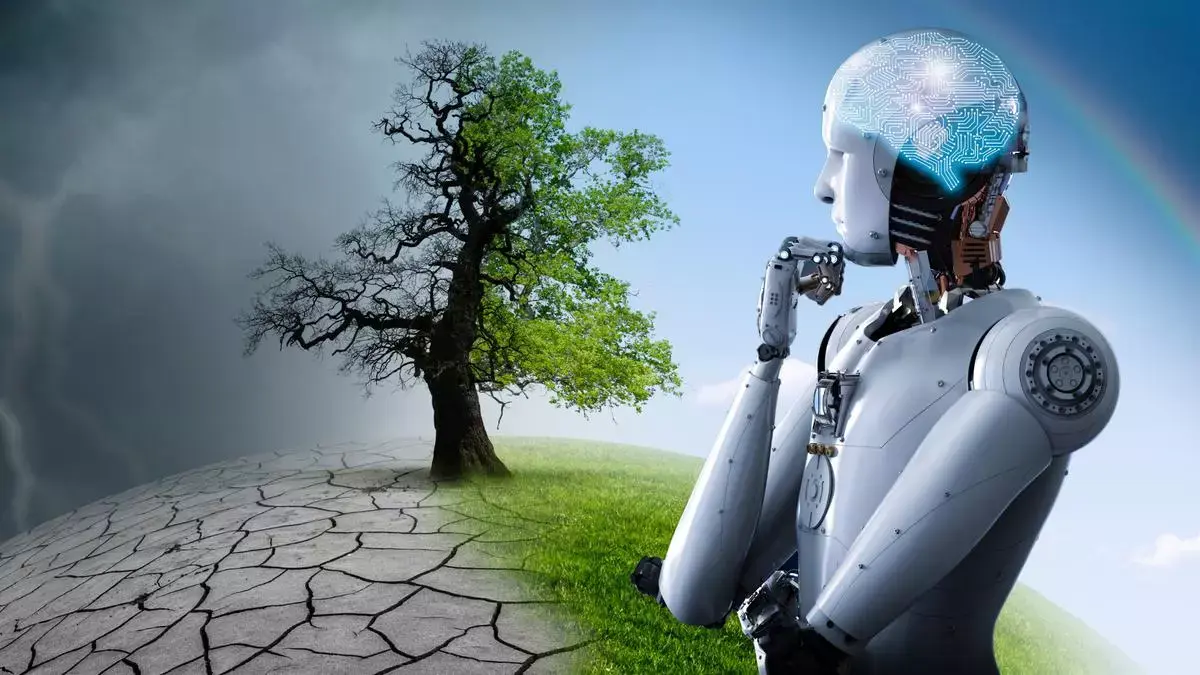
Climate change is often discussed in terms of policy, emissions targets, and global agreements. Less visible, but increasingly important, is the role of technology in understanding and responding to environmental change.
Among these technologies, artificial intelligence has emerged as a powerful tool. Not because it replaces human decision-making, but because it allows scientists, governments, and organizations to process information at a scale that was previously impossible.
At its core, climate monitoring is a data problem. And AI is fundamentally a system for turning large volumes of data into usable insight.
Why Climate Monitoring Is So Complex
The Earth’s climate system is vast and interconnected. It involves oceans, forests, atmosphere, ice sheets, and human activity, all interacting across time and geography.
Monitoring these systems requires enormous amounts of data:
- satellite imagery
- weather station measurements
- ocean temperature readings
- deforestation tracking
- air quality sensors
The challenge is not only collecting this data, but interpreting it quickly enough to make decisions.
Traditional analytical methods struggle with this scale. AI, particularly machine learning, is designed to detect patterns in large datasets, making it well-suited for environmental monitoring.
Satellites and Real-Time Environmental Tracking
One of the most important applications of AI is in satellite data analysis.
Satellites continuously capture images of the Earth’s surface, producing vast amounts of visual information. AI models can process these images to identify changes that would be difficult for humans to detect at scale.
Examples include:
- tracking deforestation in tropical regions
- monitoring melting ice sheets in polar areas
- detecting illegal mining or land use changes
- measuring urban expansion
AI allows these changes to be identified in near real time, rather than months or years later.
This improves the ability of governments and organizations to respond before environmental damage becomes irreversible.
Climate Prediction and Forecasting
AI is also improving climate prediction models.
Traditional climate models rely on complex physical equations that simulate interactions within the climate system. While these models are powerful, they are computationally intensive and sometimes limited in resolution.
Machine learning can complement these models by identifying patterns in historical data and improving forecasting accuracy.

For example:
- predicting extreme weather events such as floods and heatwaves
- improving seasonal climate forecasts
- modeling drought risk in agricultural regions
More accurate predictions allow policymakers and businesses to prepare for disruptions rather than react to them.
Agriculture and Resource Management
Environmental protection is closely linked to how resources are used.
AI is increasingly applied in agriculture to optimize:
- water usage
- fertilizer application
- crop monitoring
By analyzing soil conditions, weather patterns, and satellite data, AI systems can help farmers make more efficient decisions.
This reduces waste, lowers environmental impact, and improves food security.
In regions facing water scarcity, even small improvements in efficiency can have significant long-term effects.
Monitoring Emissions and Pollution
AI is also used to track emissions and environmental pollution.
Sensors placed in cities and industrial areas generate continuous streams of data on air quality and emissions. AI systems can analyze this data to:
- identify pollution sources
- detect anomalies or illegal emissions
- forecast air quality trends
In some cases, AI has been used to monitor methane leaks from oil and gas infrastructure, one of the most potent greenhouse gases.
By improving transparency, these tools support regulatory enforcement and corporate accountability.
Wildlife Protection and Biodiversity
Environmental protection extends beyond climate to biodiversity.
AI is now used to monitor wildlife populations and combat illegal activities such as poaching.
Applications include:
- image recognition to identify animal species in camera trap footage
- acoustic monitoring of forests to detect chainsaws or gunshots
- tracking migration patterns through data analysis
These tools allow conservation efforts to operate at a scale that would not be possible through manual observation alone.
The Limitations of AI in Climate Solutions
Despite its potential, AI is not a solution on its own.
There are important limitations:
First, AI systems depend on high-quality data. In regions where data is limited, predictions may be less reliable.
Second, AI models can be complex and difficult to interpret, which can reduce transparency in decision-making.
Third, AI itself consumes energy. Training large models requires significant computing power, which can contribute to emissions if powered by non-renewable energy sources.
Technology can support climate action, but it cannot replace policy, regulation, or behavioral change.
The Bigger Picture
AI is not solving climate change, but it is changing how we understand it.
By improving monitoring, forecasting, and resource management, AI provides better information for decision makers. It reduces uncertainty and allows earlier intervention.
In a problem as complex as climate change, better information is not a small advantage. It is a critical one.
The effectiveness of climate action depends not only on political will, but on the ability to measure, predict, and respond.
Artificial intelligence is becoming an essential part of that process.

