



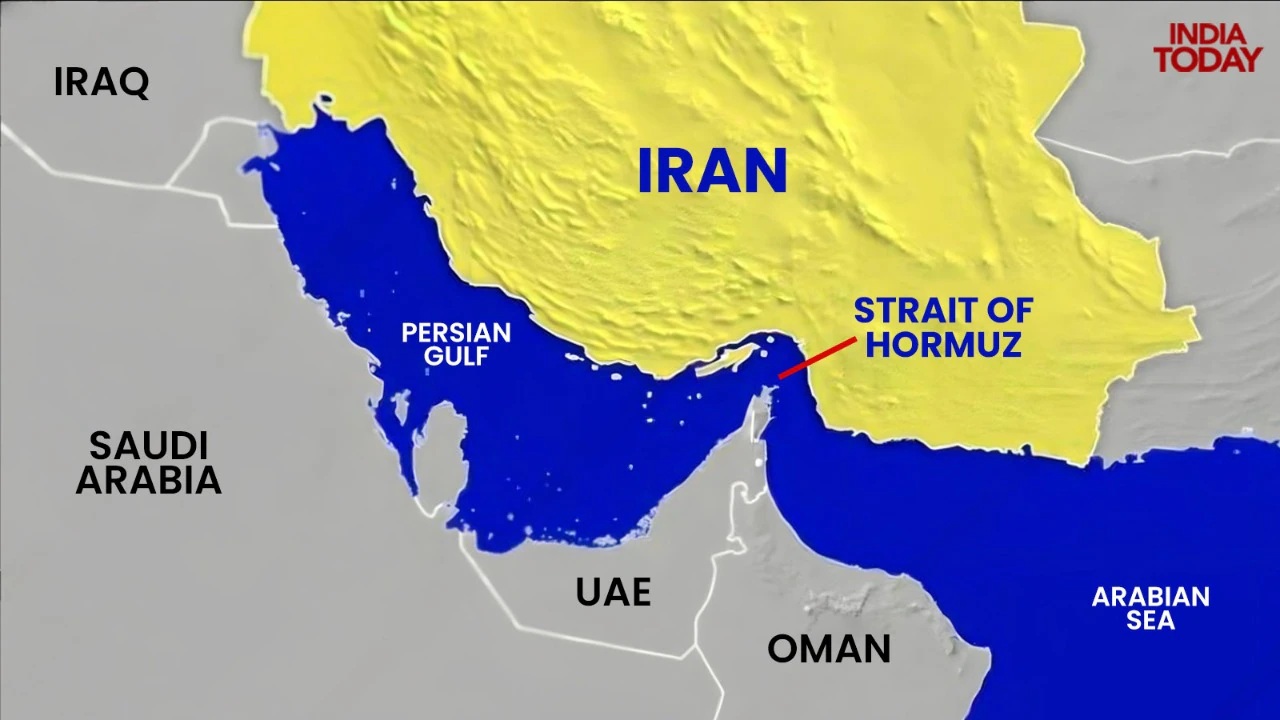
The Strait of Hormuz is widely regarded as the most critical energy chokepoint in the global economy. This narrow maritime corridor between Iran and Oman connects the Persian Gulf to the open ocean and serves as the primary export route for oil and gas produced by Gulf states. Approximately one-fifth of global petroleum consumption moves through this passage each day, making it one of the most strategically significant locations in international energy markets (U.S. Energy Information Administration, 2025).
Tensions surrounding the strait intensified again in 2026, when Iran temporarily restricted navigation during naval exercises and warned that shipping could be targeted amid escalating regional tensions. Although a sustained blockade did not materialize, the events demonstrated how sensitive energy markets remain to geopolitical developments in the Persian Gulf. Even the possibility of disruption quickly translated into price volatility and heightened risk premiums in global oil markets.
From an energy market perspective, the central question is not simply whether Iran could maintain a closure militarily. Rather, the key issue is how even partial disruptions could affect global energy supply, prices, and economic stability.
A Structural Vulnerability in the Global Energy System
The strategic importance of the Strait of Hormuz stems from the concentration of global energy flows passing through it. Historically, around 17 million barrels of oil per day moved through the strait, representing roughly 20 percent of global oil supply and about 35 percent of seaborne oil trade (Katzman et al., 2012).
In addition to crude oil shipments, a large portion of global liquefied natural gas exports from Qatar also passes through the same waterway. Because the global oil market operates as an integrated system, a disruption in one region rapidly affects prices everywhere.
The vulnerability of the strait is amplified by the limited availability of alternative export routes. While some oil can bypass the strait through pipelines connecting Gulf producers to the Red Sea or the Gulf of Oman, these routes can only replace a portion of the total export capacity.
This means that any disruption to the strait would immediately translate into a global supply shock.
Iran’s Ability to Disrupt Shipping
Iran has long developed military capabilities designed to complicate maritime operations in the Persian Gulf. Its naval doctrine emphasizes asymmetric tactics intended to disrupt shipping rather than compete directly with larger naval forces.
These tactics include the deployment of naval mines, small fast attack boats, submarines, and shore based anti-ship missiles positioned along Iran’s coastline (Katzman et al., 2012; Talmadge, 2008).
Naval mines are particularly important in this context. Even a limited number of mines can force shipping to slow or halt while mine-clearing operations are conducted. Similarly, swarm attacks by fast boats or missile strikes against tankers could increase the risks associated with transiting the strait.
Importantly, however, energy markets do not require a complete blockade to experience disruption. Even limited attacks or elevated security risks could reduce tanker traffic if insurers withdraw coverage or shipping companies avoid the region.
For this reason, partial disruption scenarios may be more economically significant than a hypothetical long-term blockade.
Scenario Analysis: Short Term vs Prolonged Closure
The economic consequences of a disruption depend heavily on its duration.
Short Term Disruption (Several Days to Two Weeks)
If tanker traffic were temporarily halted, oil markets would likely experience an immediate price spike driven by uncertainty and precautionary stockpiling.
Financial markets would react rapidly to perceived supply risks, pushing crude oil prices sharply higher even before physical shortages emerge. Governments would likely respond by releasing strategic petroleum reserves to stabilize markets.
Under this scenario, the main effect would be price volatility rather than a sustained supply shortage. Once shipping resumed, prices would likely retreat, although geopolitical risk premiums could remain elevated.
Prolonged Disruption (Several Months)
A longer closure would produce far more serious consequences.
With millions of barrels per day removed from global supply, oil prices could surge sharply. Several analysts suggest that a prolonged disruption of shipments through the Strait of Hormuz could push prices above $120 per barrel and potentially toward $150 depending on the duration of the disruption and the availability of spare capacity elsewhere.
At the same time, alternative pipeline routes could replace only a fraction of the lost export capacity. This would leave a substantial supply gap in global markets.
Under such conditions, countries would compete aggressively for available crude supplies, intensifying price volatility and potentially forcing demand reductions.
In extreme scenarios, prolonged disruptions could trigger energy rationing in some regions and increase the likelihood of a global economic slowdown.
The Asian Energy Security Problem
The geographic distribution of oil imports means that the consequences of a disruption would not be evenly distributed.
Asian economies would face the greatest exposure. Countries such as China, India, Japan, and South Korea receive the majority of oil exported through the Strait of Hormuz. Their industrial sectors rely heavily on stable flows of imported energy.
A disruption would therefore force these countries to search for alternative suppliers, often at significantly higher prices. Competition among Asian importers for limited supplies could further amplify global price volatility.
Because of their large energy demand, developments in Asian markets would strongly influence global price dynamics.
Macroeconomic Effects
The impact of a Hormuz disruption would extend far beyond the energy sector.
Higher oil prices rapidly translate into increased transportation costs, rising inflation, and higher production costs for industries that depend on fuel and petrochemical inputs. These effects can slow economic growth and strain monetary policy.
Historically, major oil supply shocks have contributed to global economic downturns. A prolonged disruption in the Strait of Hormuz could revive similar risks, particularly if oil prices remained elevated for an extended period.
In such an environment, policymakers might face the difficult challenge of addressing inflation while attempting to maintain economic stability.
Strategic Reserves and Emergency Measures
Governments possess tools to mitigate supply disruptions, most notably strategic petroleum reserves.
Countries belonging to the International Energy Agency maintain emergency oil stockpiles designed to stabilize markets during supply crises. Coordinated releases of these reserves have previously helped offset disruptions caused by wars or natural disasters.
However, these reserves are intended to smooth short-term shocks rather than replace large volumes of lost supply indefinitely. If a disruption in the Strait of Hormuz lasted for several months, emergency reserves alone would not be sufficient to stabilize global markets.
This limitation underscores the long-term importance of supply diversification and alternative energy development.
Winners and Losers in a Hormuz Crisis
A disruption in the Strait of Hormuz would create both economic winners and losers.
Energy exporters outside the Gulf could benefit from higher prices. Producers in the United States, Canada, Brazil, and Norway might experience increased revenues as global markets search for alternative supply.
Russia could also benefit financially from higher oil prices, particularly if its exports remain accessible to global markets.
In contrast, energy-importing countries would face significant economic pressure. Asian economies dependent on Middle Eastern oil would experience higher import costs, while European and developing economies could face inflationary pressures and slower economic growth.
Shipping companies and insurers would also face increased risks and costs associated with operating in conflict zones.
A Strategic Pressure Point in Global Energy Markets
Debates about the Strait of Hormuz often focus on whether Iran could maintain a complete blockade of the waterway. From an energy market perspective, however, this question is somewhat misleading.
Oil markets do not require a perfect blockade to experience disruption. Even limited interruptions to tanker traffic can remove millions of barrels from global supply and trigger dramatic price increases.
The events of 2026 illustrate this dynamic clearly. Military activity and rising geopolitical tensions in the Gulf were sufficient to generate significant volatility in global oil markets.
In this sense, the Strait of Hormuz functions as a strategic pressure point in the global energy system. Its vulnerability lies not only in geography but also in the interconnected structure of global energy markets.
References
Katzman, K., Nerurkar, N., O’Rourke, R., Mason, R. C., & Ratner, M. (2012). Iran’s threat to the Strait of Hormuz. Congressional Research Service.
Talmadge, C. (2008). Closing time: Assessing the Iranian threat to the Strait of Hormuz. International Security, 33(1), 82–117.
U.S. Energy Information Administration. (2025). The Strait of Hormuz is the world’s most important oil transit chokepoint. U.S. Department of Energy.
International Energy Agency. (2024). Oil market report. International Energy Agency.

