





Happiness is often described as a mindset. Think positively. Stay grateful. Focus on the bright side.
However, beneath every emotion lies biology. Happiness is not only a philosophy. It is chemistry, electricity, and evolutionary design.
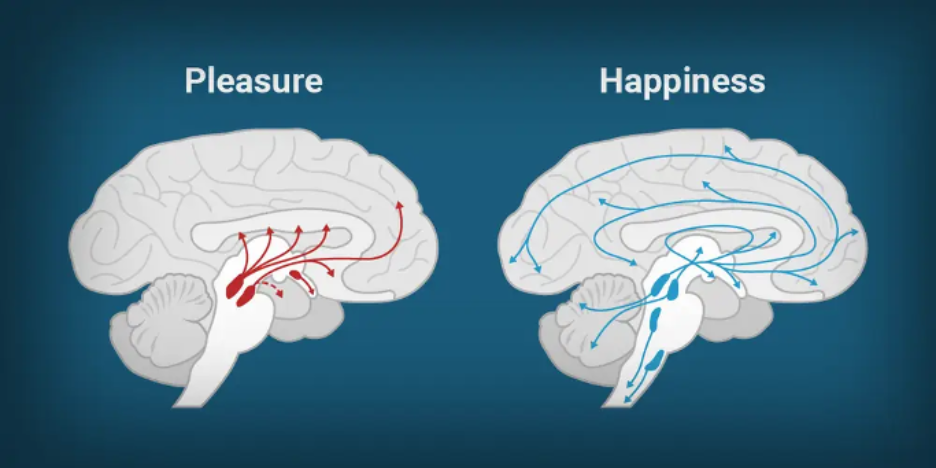
Understanding what science says about dopamine, serotonin, and other key systems reveals something important: pleasure and happiness are not the same thing. The factors that create lasting well-being are very different from the ones that generate short bursts of excitement.
To understand happiness properly, we need to start in the brain.
Dopamine: The Pursuit Chemical
Dopamine is often called the “happiness hormone.” That description is misleading.
Dopamine is not the molecule of pleasure. It is the molecule of motivation.
It activates when we anticipate reward, chase goals, or experience novelty. It drives behavior. When you check your phone for notifications, pursue a promotion, or scroll through social media, dopamine circuits are active.
From an evolutionary perspective, this makes sense. Humans survived because they pursued food, status, security, and social bonds. Dopamine reinforces goal-directed behavior.
The problem is that modern life provides constant artificial stimulation. Endless scrolling, gaming, fast-paced content, and instant rewards overstimulate dopamine pathways. This creates cycles of craving rather than satisfaction.
High dopamine activity feels energizing, but it is unstable. Once the reward is obtained, dopamine drops. The brain then seeks the next stimulus.
This explains why short-term pleasure rarely produces lasting happiness. The system is built for pursuit, not contentment.
Serotonin: Stability and Social Status
If dopamine is about chasing, serotonin is about stability.
Serotonin plays a role in mood regulation, emotional balance, and social positioning. Higher serotonin levels are associated with calmness, confidence, and reduced anxiety.
Unlike dopamine, which spikes with novelty, serotonin reflects a more sustained sense of security. It increases when individuals feel respected, valued, and socially integrated.
This is one reason why meaningful relationships matter so much. Humans are deeply social organisms. Feeling accepted within a group historically meant safety and survival. The brain still responds accordingly.
Stable routines, sunlight exposure, physical movement, and healthy sleep patterns all influence serotonin production. These are not dramatic interventions. They are basic biological inputs.
Happiness at a deeper level often looks less like excitement and more emotional steadiness.
Oxytocin: Connection and Trust
Another key player is oxytocin, sometimes called the bonding hormone.
Oxytocin is released during physical touch, close conversation, trust-based interaction, and moments of genuine connection. It strengthens social bonds and increases feelings of safety.
From a biological perspective, humans evolved in cooperative groups. Isolation historically reduced survival odds. The brain, therefore, rewards social closeness with biochemical reinforcement.
Modern research consistently shows that strong relationships are one of the most reliable predictors of long-term life satisfaction. This is not abstract psychology. It is neurochemistry.
Connection stabilizes emotional systems in ways that material success cannot replicate.
The Stress System: Cortisol and Chronic Disruption
Happiness is not only about activating positive chemicals. It is also about managing negative ones.
Cortisol, the primary stress hormone, is essential in short bursts. It prepares the body for action. However, chronic elevation disrupts mood, sleep, and even immune function.
Modern stress is rarely acute and short-lived. It is persistent. Financial anxiety, information overload, job insecurity, and social comparison keep stress systems activated.
Long-term happiness requires reducing chronic stress load. Exercise, sleep regulation, time outdoors, and structured downtime are not luxuries. They regulate biological systems that directly influence mood stability.
The absence of chronic stress often contributes more to well-being than the presence of intense pleasure.
Why Pleasure Fades but Meaning Endures
Neuroscience helps explain a familiar paradox. Achievements feel exciting, but the feeling fades quickly. A new car, a promotion, or a financial milestone produces a spike, then normalization.
This process is known as hedonic adaptation. The brain recalibrates to new baselines.
Lasting happiness appears to be less about stimulation and more about alignment. Studies in positive psychology repeatedly show that people report deeper well-being when their daily actions align with personal values, relationships, and a sense of purpose.
Purpose engages dopamine in a sustainable way. Social belonging stabilizes serotonin. Connection increases oxytocin. Physical health supports the entire system.
This combination creates durability rather than volatility.
What Actually Makes People Happy on a Deeper Level
Scientific evidence across neuroscience, psychology, and public health points to consistent patterns.
First, strong relationships. Close social bonds are one of the most powerful predictors of life satisfaction across cultures.
Second, physical movement. Regular exercise influences dopamine, serotonin, and endorphins simultaneously, while lowering stress hormones.
Third, sleep. Poor sleep disrupts emotional regulation more dramatically than most people realize.
Fourth, autonomy and progress. Humans need to feel capable and forward-moving. Small achievements matter more than dramatic milestones.
Fifth, meaning. Contributing to something larger than oneself, whether through work, family, or community, consistently correlates with higher reported well-being.
None of these factors is extreme. They are foundational.
The Real Biological Insight
The biology of happiness reveals a simple but uncomfortable truth.
The brain is not designed for constant pleasure. It is designed for survival, connection, and forward movement.
Short bursts of stimulation activate reward systems. Long-term well-being depends on stability, purpose, and belonging.
Modern culture often emphasizes dopamine-driven excitement. Science suggests that serotonin-supported stability, oxytocin-based connection, and stress regulation matter more for genuine contentment.
Happiness, at a biological level, is less about intensity and more about balance.
And balance is not achieved through constant pursuit. It is built through consistent habits that align with how the human nervous system evolved to function.

