






Weddings are often treated as local events. In reality, they depend on global supply chains.
A dress, a ring, or even a cake typically involves materials and components sourced from multiple countries. When tariffs are introduced or increased, the effect is not limited to trade statistics. It appears directly in final consumer prices.
Why Weddings Are Globally Sourced
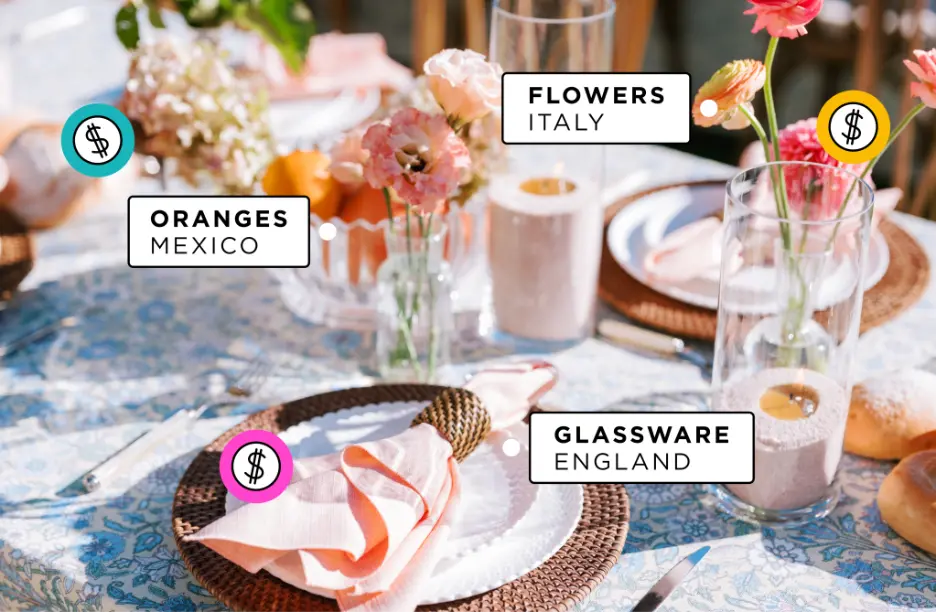
Many wedding products are not produced entirely in one country.
A bridal dress from a brand like Justin Alexander may be manufactured in Vietnam, but the materials and components can come from several countries, including China or Taiwan. Jewelry follows a similar pattern. Diamonds may originate in Botswana, sapphires in Sri Lanka, and metals such as silver in Europe.
Even products that seem local, such as wedding cakes, rely on imported inputs. Ingredients like Belgian white chocolate, Madagascan vanilla, or specialized decorating materials from the United Kingdom or the Netherlands are commonly used by professional bakers.
This means a single wedding purchase often reflects multiple international supply chains.
How Tariffs Enter the Price
A tariff is a tax on imported goods. When a product crosses a border, the importer pays an additional cost based on its value.
If a wedding dress enters a country with a 20 percent tariff, the importer faces higher costs immediately. Businesses typically respond in one of three ways:
- absorb the cost and reduce their margin
- pass the cost fully to the customer
- split the cost through partial price increases or surcharges
In practice, most companies pass at least part of the cost on to consumers. Some brands introduce explicit surcharges, while others adjust base prices.
Because many wedding products involve multiple imported inputs, tariffs can accumulate across the production chain.
The Supply Chain Effect
The impact of tariffs is rarely limited to one stage.
Consider a wedding cake. Ingredients may include:
- white chocolate from Belgium
- vanilla beans from Madagascar
- fondant and structural components from the United Kingdom
- decorative materials from the Netherlands or Vietnam
Each of these inputs may be subject to different tariff rates. Even small increases in individual components can raise the final cost when combined.
The same logic applies to dresses and jewelry. Materials, labor, and finishing processes are often spread across countries, so tariffs affect several points in production rather than just the final product.
Timing and Price Adjustment
Tariffs do not affect all consumers equally at the same time.
Businesses often sell inventory that was imported before tariff increases at existing prices. New shipments, however, reflect updated costs. Over time, as older inventory is replaced, prices adjust upward.
This creates a timing effect. Customers purchasing later are more likely to face higher prices because the full cost of tariffs has been incorporated into the supply chain.
Why Wedding Costs Are Sensitive
Wedding purchases are particularly exposed to these changes.
First, many items are highly customized. This limits the ability to switch quickly to cheaper alternatives or substitute inputs.
Source: WeddingPro
Second, demand is relatively inelastic in the short term. Weddings are planned around fixed dates, so consumers are less able to delay purchases in response to price increases.
Third, quality expectations are high. Buyers are less willing to compromise on materials, which reduces flexibility when costs rise.
The Broader Cost Structure
Tariffs are only one component of pricing, but they interact with other factors.
Higher import costs increase production expenses. These costs then feed into retail pricing alongside labor, logistics, and distribution. When multiple inputs become more expensive at the same time, the effect compounds.
For businesses, the challenge is maintaining margins while remaining competitive. For consumers, the result is higher overall costs without a clear change in the final product.
What This Means in Practice
In a globalized market, even small policy changes can affect everyday purchases.
A wedding dress, a ring, or a cake is no longer just a local product. It is the final stage of an international supply chain. When tariffs increase along that chain, the impact becomes visible at the point of sale.
For couples planning weddings, this means that price changes are not always driven by local factors. They are often the result of shifts in global trade conditions.

