





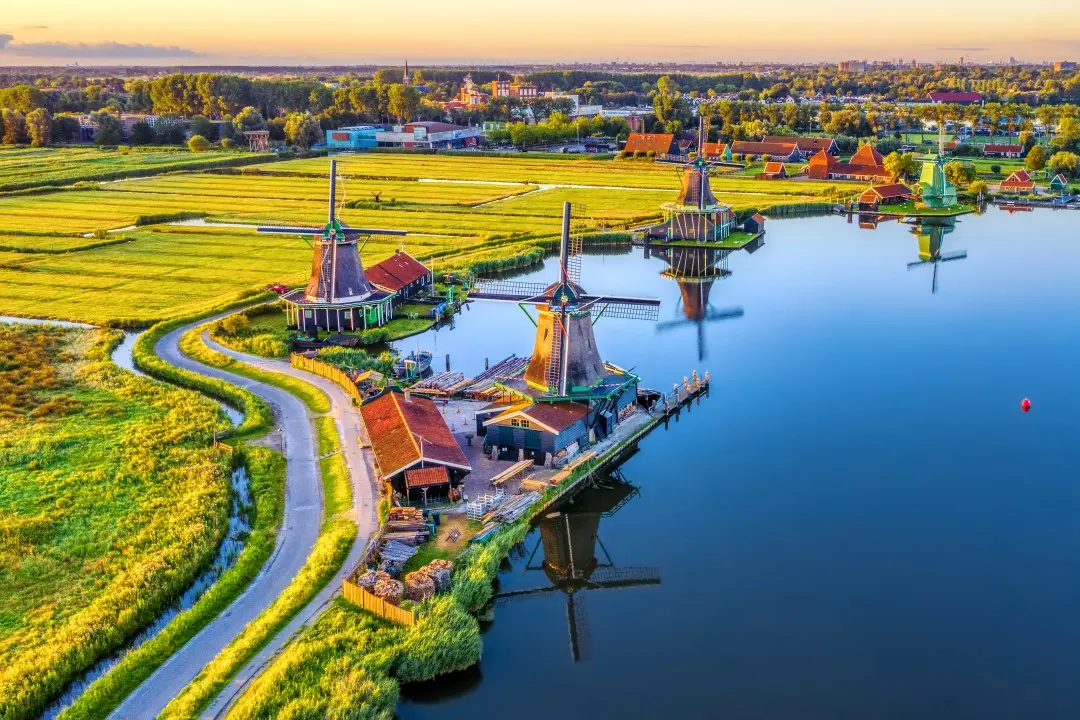
Few countries are as defined by water as the Netherlands.
Around 26 percent of its land lies below sea level, and a majority of its population lives in areas vulnerable to flooding. For centuries, survival required engineering barriers against the sea and rivers. But over time, the Dutch recognized a simple truth: water cannot be permanently defeated.
Instead of fighting it, they began working with it.
From Barriers to Adaptation
The traditional Dutch approach was defensive. Following the catastrophic North Sea Flood of 1953, which killed more than 1,800 people, the Netherlands launched the Delta Works, one of the largest flood protection systems in the world. Massive dikes, storm surge barriers, and reinforced coastlines became the backbone of national security.
These structures remain critical. Some regions are protected to standards designed to withstand flood events statistically expected only once every 10,000 years.
However, policymakers increasingly acknowledge that building ever-higher walls has limits. Climate change, rising sea levels, and heavier rainfall place growing pressure on rigid defenses. If a barrier fails, the consequences can be severe.
By the 1990s, after near-flood disasters along major rivers, a new philosophy emerged: give water space.
Making Room for Rivers
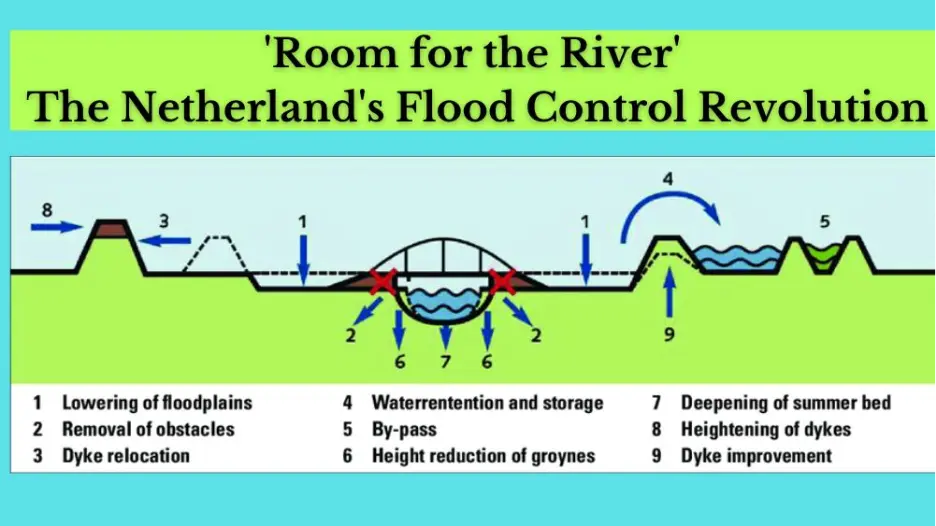
The “Room for the River” program marked a strategic shift. Instead of constraining rivers within narrow channels, the Netherlands redesigned landscapes to allow controlled overflow during peak discharge.
Source: See Through News
Floodplains were widened. Dikes were relocated inland. Certain areas were designated as temporary flood zones. The aim was not to prevent water entirely, but to manage where it goes.
This approach reduces pressure on critical urban zones while lowering the risk of catastrophic failure.
Floating Architecture
Urban design has also evolved.
In areas like IJburg in Amsterdam and Maasbommel along the River Maas, floating and amphibious houses were introduced. Some homes rest on concrete pontoons and rise with changing water levels. Others are anchored but designed to float upward during floods.
These structures transform flooding from disaster into manageable fluctuation.
Water Plazas
In Rotterdam, innovation took another form: water plazas.
Public squares such as Benthemplein function as recreational spaces under normal conditions. During heavy rain, they temporarily store excess water. Instead of overwhelming drainage systems, rainwater is held in shallow basins before gradually being released.
The concept integrates flood control into everyday urban life.
Permeable Surfaces and Green Roofs
Beyond large infrastructure projects, smaller design interventions contribute to resilience.
Permeable pavements allow rainwater to infiltrate the ground rather than running directly into drainage systems. This reduces peak pressure during storms.
Green roofs absorb rainfall, delay runoff, and moderate urban temperatures. Cities like Rotterdam actively subsidize rooftop vegetation to expand capacity across private and public buildings.
Each intervention alone is modest. Together, they form a distributed water management network.
Canals as Storage Systems
The Netherlands’ historic canal systems were originally built for drainage and transport. Today, they also serve as integrated storage and flow channels within urban water systems.
Rather than viewing canals as aesthetic relics, Dutch planners treat them as active components in flood mitigation strategies.
A Model for Climate Adaptation
The Dutch system does not rely on a single solution. It combines:
- engineered flood barriers
- adaptive river management
- water-integrated urban design
- distributed absorption systems
This layered strategy reflects an understanding that climate risk is dynamic.
Rather than assuming absolute control, the Netherlands designs for flexibility. Infrastructure is built to withstand extreme events, but landscapes are also shaped to absorb and redirect water when necessary.
Beyond Defense
The shift from fighting water to living with it represents more than engineering pragmatism. It reflects a cultural adjustment.
Water is no longer treated solely as an external threat. It is incorporated into public space, architecture, and long-term planning.
As rising sea levels and extreme rainfall challenge cities worldwide, the Dutch approach offers a framework grounded in realism: protection where essential, accommodation where possible.
Flood resilience, in this model, is not about eliminating risk entirely. It is about reducing vulnerability while accepting that water will always remain part of the equation.

