





Most football clubs define themselves by trophies, transfers, and league position.
Como 1907 is trying something different.
The Italian club, based on the shores of Lake Como, is positioning itself not just as a football team, but as a lifestyle ecosystem, where sport, fashion, tourism, and culture intersect.
While many clubs focus almost exclusively on performance and broadcasting revenue, Como appears to be building a brand that extends beyond the pitch.
From Provincial Club to Global Strategy
Como 1907 has historically been a modest Italian side. But under the ownership of the Hartono brothers, the club has adopted a long-term global outlook.
Promotion to Serie A marked a sporting milestone, but the strategic ambition appears broader.
The club’s messaging and partnerships suggest an attempt to reposition itself as a destination brand, leveraging its unique geographic asset: Lake Como.
Unlike industrial football cities, Como sits in one of Europe’s most recognizable luxury landscapes. That backdrop is not incidental. It is increasingly central to the brand narrative.
The Stadium as Experience
The Stadio Giuseppe Sinigaglia, located directly by the lake, is part of this repositioning.
Redevelopment plans emphasize not only compliance with modern football infrastructure standards, but hospitality, aesthetics, and premium experience. The approach signals that matchday is being framed as an event rather than just a fixture.
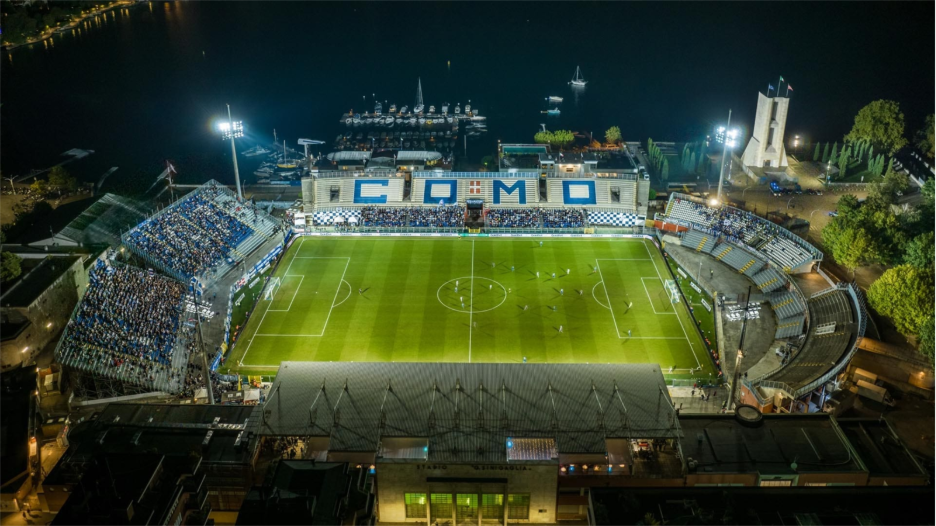
In traditional football economics, stadiums are revenue engines. In Como’s model, the stadium appears positioned as part of a broader lifestyle offering, aligning with tourism, design, and high-end hospitality.
Lake Como’s global reputation strengthens this strategy. Visitors do not come solely for football. They come for the setting.
A Different Approach to Merchandising
Football merchandise has historically followed a predictable model: jerseys, scarves, and standard club apparel.
Como has taken a more design-led route.
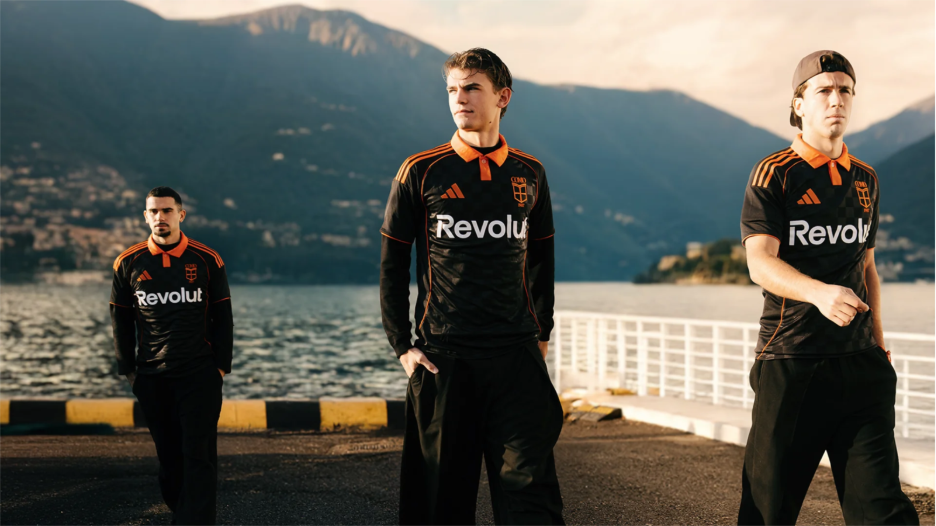
In collaboration with Adidas and the Los Angeles-based fashion brand Rhude, Como launched limited-edition kits and apparel that moved beyond typical matchday aesthetics. The Rhude x Como x Adidas black-and-gold kit, along with monogram-inspired pieces, drew attention in global fashion media.
The significance lies not just in the collaboration itself, but in positioning. The merchandise blurred the line between sportswear and luxury streetwear.
Rather than selling only loyalty-based fan products, the club entered a conversation traditionally occupied by fashion houses and cultural brands.
Football as Cultural Platform
This strategy reflects a broader shift in global sports branding.
Clubs such as Paris Saint-Germain and AC Milan have also pursued fashion collaborations. But Como’s scale makes its ambition more striking. It is not building from an established global fan base; it is attempting to create one through aesthetic identity.
The club’s retail direction suggests two layers of engagement:
- Classic football staples for supporters
- Elevated, design-forward pieces aimed at style-conscious consumers
The goal appears to be expanding the audience beyond traditional football followers.
Tourism and the Ripple Effect
Lake Como is already synonymous with luxury tourism. By embedding football into that environment, Como 1907 is attempting to create a feedback loop.
Visitors who come for the scenery encounter the club. Matchdays become part of a broader weekend experience. Hospitality, retail, and events intersect.
This model treats football as both sport and cultural asset.
Rather than relying solely on broadcasting rights and player trading, the standard pillars of mid-tier European clubs, Como is diversifying its brand exposure.
Can the Model Scale?
The challenge is sustainability.
Luxury positioning requires consistency. Performance on the pitch still matters. Football remains results-driven.
However, Como’s strategy suggests a recognition that modern clubs compete not only in league tables, but in global attention markets.
If successful, Como could represent a new archetype: a club that integrates football into a broader premium lifestyle narrative rather than building solely on sporting dominance.
It would not be the first club to pursue fashion collaborations. But it may be the first to anchor its entire identity around location, design, and curated cultural positioning.
For now, Como remains an experiment.
The pitch will determine sporting credibility. But the brand architecture suggests that the club is thinking far beyond ninety minutes.

