





The Olympic Games are usually associated with records, medals, and opening ceremonies. Yet behind the competition lies a history filled with unusual traditions, artistic experiments, political symbolism, and logistical challenges.
Some of the most surprising aspects of the Olympics have little to do with sport itself.
When War Stopped for the Games
The ancient Olympic Games in Greece were accompanied by a sacred truce known as the Ekecheiria. City-states agreed to suspend hostilities so that athletes and spectators could travel safely to Olympia.
While modern wars do not pause for the Olympics, the International Olympic Committee still promotes an Olympic Truce resolution before each Games through the United Nations. It remains symbolic, but it reflects the original idea that sport could create temporary unity during conflict.
When Artists Won Olympic Medals
Between 1912 and 1948, art was officially part of the Olympic Games.
Competitors could win gold, silver, or bronze medals in five categories:
- architecture
- literature
- music
- painting
- sculpture
All works had to be inspired by sport. Over six Olympic Games, more than 150 medals were awarded for artistic achievement.
Submissions included stadium designs, Olympic-themed symphonies, athletic sculptures, and paintings celebrating the human body in motion.
The art competitions were eventually discontinued because most participants were professional artists, which conflicted with the Olympic commitment at the time to amateurism. Today, the Olympics still include cultural programs, but no longer award medals for art.
The Meaning Behind the Five Rings
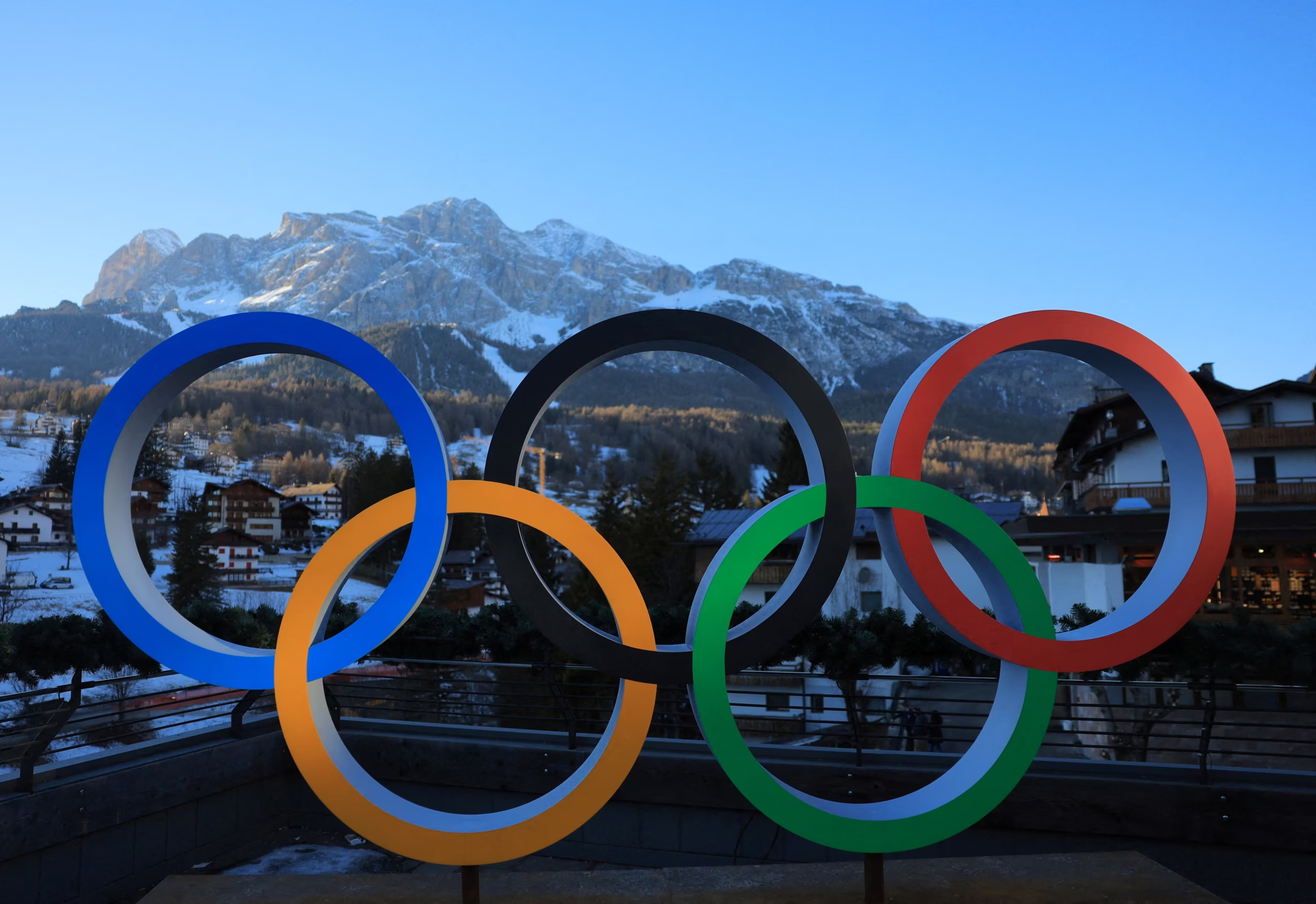
One of the most recognizable symbols in the world is the Olympic flag with its five interlocking rings.
The design was created in 1913 by Pierre de Coubertin, founder of the modern Olympic movement. The rings represent the union of the five inhabited continents: Africa, the Americas, Asia, Europe, and Oceania.
The colors, blue, yellow, black, green, and red, were not assigned to specific continents. Instead, they were chosen because at least one of those colors appeared in every national flag at the time the design was created.
The interlocking pattern symbolizes global unity through sport.
When Snow Is Not Guaranteed
Winter Olympic Games depend on natural conditions that are becoming less predictable.
Despite the name, snow is not always guaranteed. Modern Winter Olympics rely heavily on artificial snow production. During the Vancouver 2010 Winter Games, unusually warm temperatures forced organizers to transport snow from higher elevations and use extensive snowmaking systems.
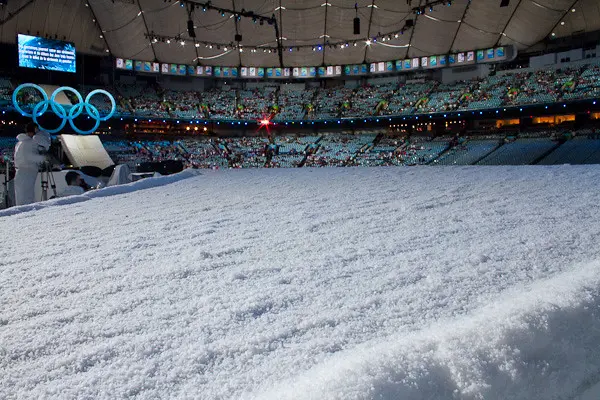
In recent Winter Games, artificial snow has become the norm rather than the exception, raising questions about long-term sustainability and climate conditions.
The Cost of Hosting
Hosting the Olympics is often presented as an economic opportunity. However, it can also be extraordinarily expensive.
The Tokyo 2020 Summer Olympics, postponed to 2021 due to the pandemic, became one of the most expensive Games in history. Official government figures placed the cost at approximately 13 to 15 billion US dollars. Independent analyses, which include broader infrastructure and operational expenses, have estimated totals exceeding 25 billion dollars.
Cost overruns are common in Olympic history. Infrastructure construction, security, and last-minute adjustments frequently push final expenses beyond initial bids.
The Marathon’s Odd Distance
The modern marathon distance of 42.195 kilometers was not part of the original ancient Games.
The specific distance was standardized after the 1908 London Olympics, when the race was extended so it could begin at Windsor Castle and finish in front of the royal box in the Olympic Stadium. The unusual length became permanent in 1921.
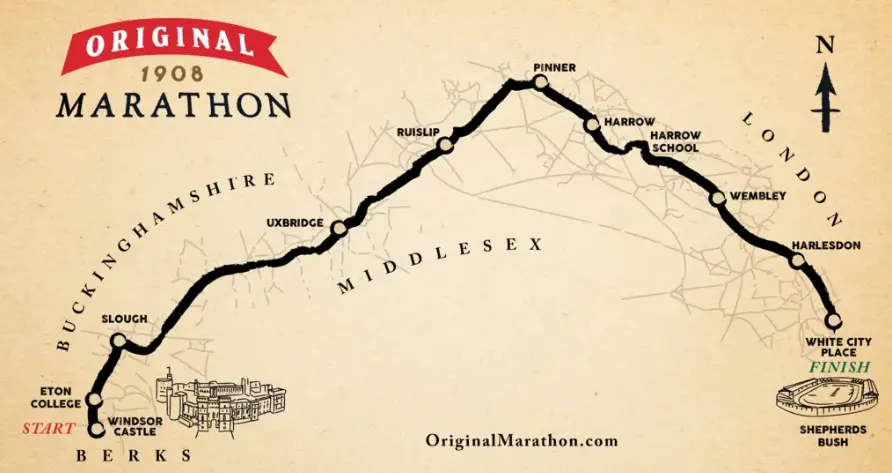
Source: BBC
Why the Olympics Continue to Evolve
The Olympic Games have repeatedly changed over time.
Events have been added and removed. Amateur-only rules were relaxed, allowing professional athletes to compete. New sports such as skateboarding and sport climbing have been introduced to attract younger audiences.
Even the art competitions, once central to Coubertin’s vision, are now part of Olympic history rather than the present.
What has remained constant is the attempt to combine sport with cultural symbolism.

