



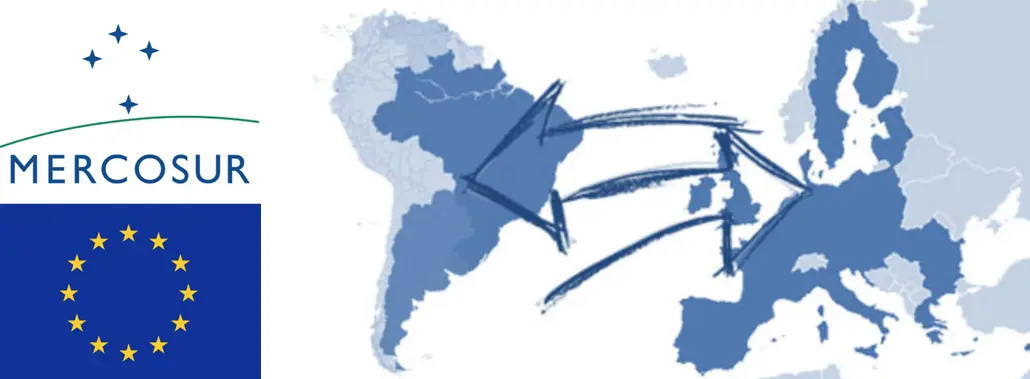
The European Union has signed a new free trade framework with the Mercosur bloc of Latin American countries, marking one of the most significant trade developments in recent decades. The agreement brings together European Union and Mercosur, which includes Argentina, Brazil, Paraguay, and Uruguay.
Together, the two regions represent a market of more than 700 million consumers, making this one of the largest free trade areas in the world.
Why This Agreement Matters Now
The deal arrives at a moment of growing fragmentation in global trade. Protectionism has risen, supply chains have become more politicized, and competition between major powers has intensified. Against this backdrop, the EU–Mercosur agreement sends a clear signal in favor of multilateralism and rules-based trade.
From a geopolitical perspective, the agreement strengthens Europe’s presence in Latin America, a region increasingly courted by both the United States and China. For Mercosur countries, it diversifies economic partnerships and reduces dependence on any single external power.
The Economic Scale of the Deal
The economic impact is substantial. According to EU estimates (2026), the agreement is expected to increase EU exports to Mercosur by around 39 percent, equivalent to roughly €49 billion annually. The EU already exports €57 billion in goods to Mercosur and €29 billion in services and holds €390 billion in foreign direct investment stock in the region.
For European companies, the agreement removes tariffs on a wide range of industrial and agricultural products, including cars, machinery, pharmaceuticals, and processed foods. The European Commission estimates that tariff elimination alone will save EU businesses about €4 billion per year in duties.
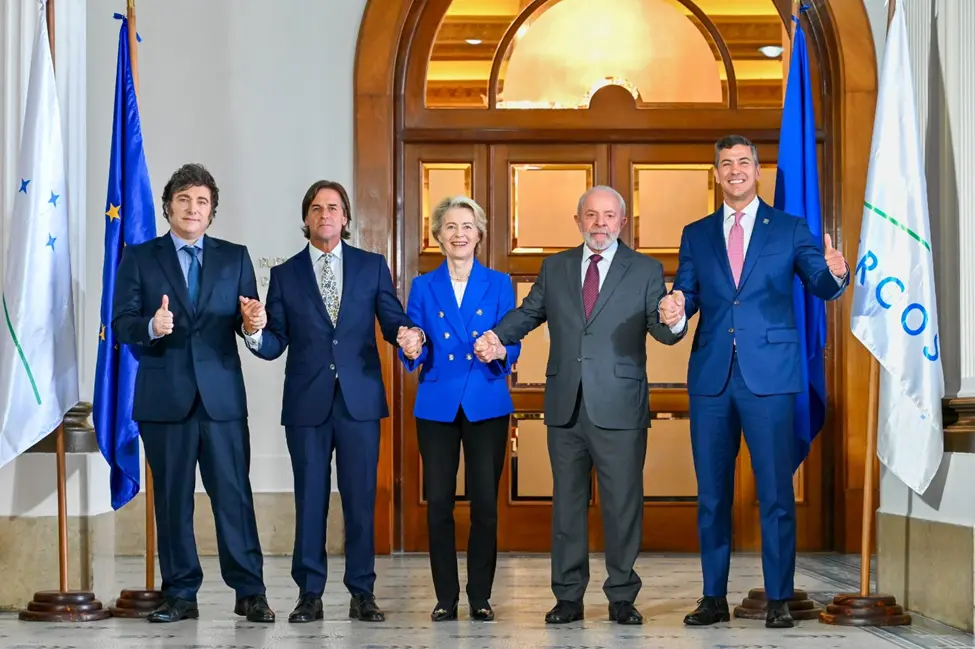
Source: Borderlex
What Changes for Businesses
Beyond tariffs, the agreement focuses on reducing non-tariff barriers that often matter more in practice. It simplifies customs procedures, improves regulatory cooperation, and creates more predictable investment rules. This is particularly relevant for small and medium-sized enterprises, which tend to be more sensitive to administrative complexity.
The agreement also improves access to critical raw materials and strengthens supply chain resilience, an increasingly important consideration for European industry.
Agriculture As the Most Sensitive Issue
Agriculture has been the most politically sensitive part of the negotiations. The agreement opens Mercosur markets to European exports such as wine, spirits, dairy products, and olive oil. EU agri-food exports to Mercosur are expected to increase by up to 50 percent.
At the same time, the EU has introduced safeguards to protect its own farmers. These include tariff rate quotas on sensitive imports, legally binding safeguard mechanisms in case of import surges, and stricter controls to ensure imported products meet EU standards on food safety, pesticides, and animal welfare. The EU has also committed €6.3 billion from 2028 as a safety net to support farmers in the event of market disruptions.
These protections were critical to winning support from hesitant member states, although opposition remains in countries such as France, where farming lobbies continue to raise concerns about competition from South American producers.
Sustainability And Environmental Commitments
The agreement includes some of the EU’s strongest sustainability provisions to date. Climate commitments linked to the Paris Agreement are legally embedded, alongside obligations related to labor rights, environmental protection, and sustainable development. Both sides have pledged to work toward climate neutrality by 2050.
While enforcement will remain a point of scrutiny, the EU views the agreement as a way to extend its regulatory standards through trade rather than isolation.
Political Process and Remaining Hurdles
The agreement consists of two legal instruments: a broader partnership agreement and an interim trade agreement. The interim trade agreement can enter into force after approval by the European Parliament and the Council, while the full partnership agreement requires ratification by all EU member states.
This means implementation is not automatic. Domestic political resistance, particularly from agricultural sectors, could still delay or complicate ratification.
A Strategic Bet on Openness
In essence, the EU–Mercosur deal is not only about trade volumes. It is a strategic bet that openness, diversification, and long-term partnerships offer a better response to global uncertainty than tariffs and economic nationalism.
For Europe, the agreement strengthens access to fast-growing markets and resource rich economies. For Mercosur, it offers deeper integration into global value chains and closer ties with one of the world’s largest economic blocs.
Whether the agreement ultimately delivers on its promises will depend on ratification, enforcement, and how both sides manage domestic opposition. But in scale and ambition, it stands as one of the most consequential trade agreements of the current decade.

