





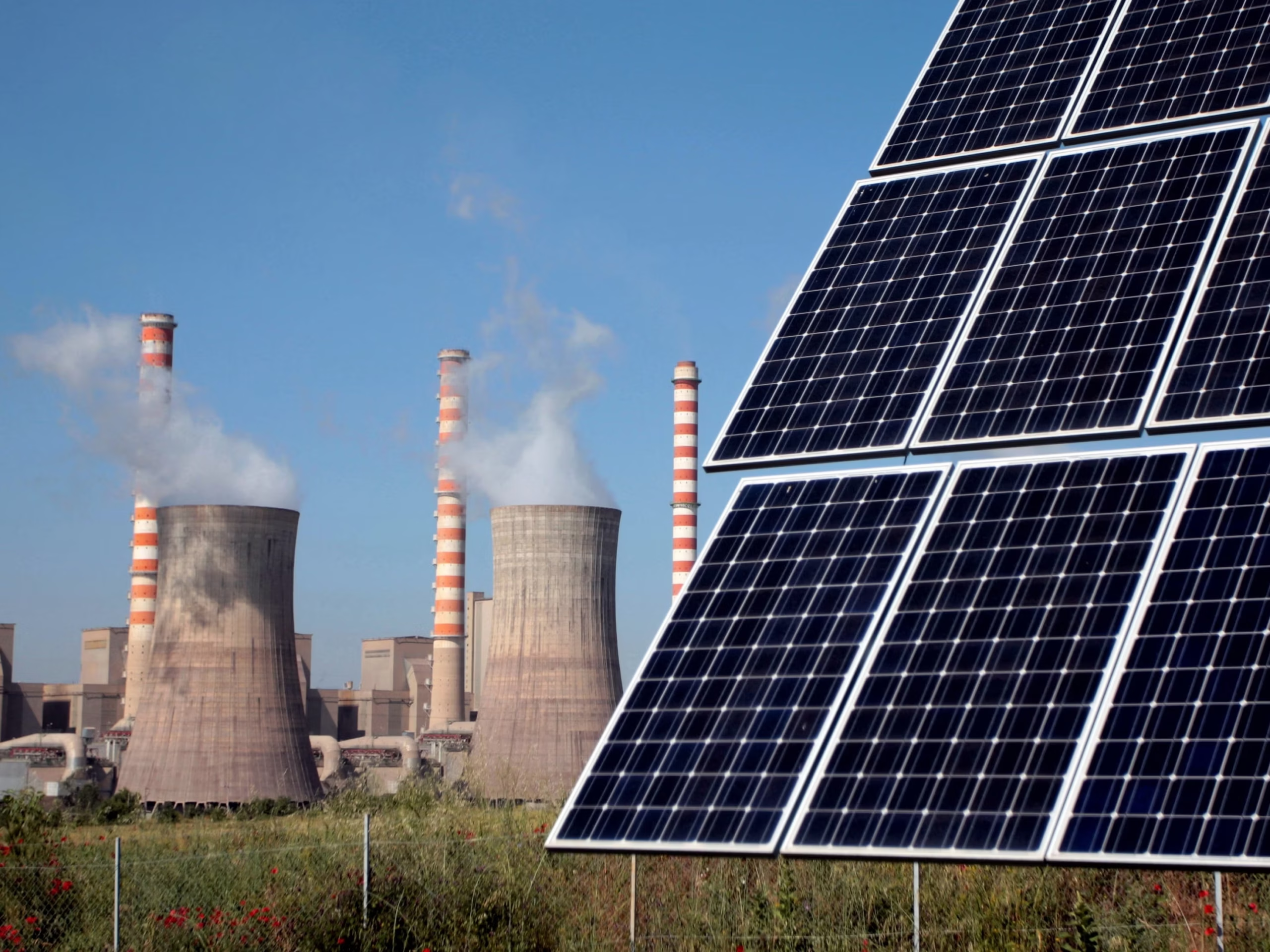
For the first time on record, renewable energy sources generated more electricity than coal at the global level during the first half of 2025. According to Ember (2025), renewable sources including solar, wind, hydropower, and bioenergy, produced more than 5,000 terawatt hours of electricity between January and June 2025, exceeding electricity generation from coal during the same period.
As a result, renewables accounted for more than 34 percent of global electricity generation in the first half of the year, while coal’s share fell to just over 33 percent. This shift reflects continued growth in renewable capacity combined with slower growth in coal generation across several major electricity systems (Ember, 2025).
China as the Main Contributor to Renewable Growth
China was the single largest contributor to the increase in global renewable electricity generation. The country continues to lead the world in solar and wind deployment, accounting for the majority of new renewable capacity additions in recent years. According to the International Energy Agency (2025), China represents more than half of global renewable capacity growth and remains central to the expansion of solar photovoltaic generation worldwide.
Solar generation in China increased sharply in the first half of 2025, contributing significantly to the global rise in renewable output. While coal remains an important part of China’s electricity system, rapid growth in renewables has slowed the increase in coal generation and, in some periods, offset it entirely (Reuters, 2025).
India and Accelerating Solar Deployment
India was the second major driver of renewable growth in the first half of 2025. The country recorded its largest ever annual increase in solar capacity during the fiscal year 2024. According to industry data and government reporting, India added close to 24 gigawatts of new solar capacity, nearly doubling the installations from the previous year (JMK Research, 2025).
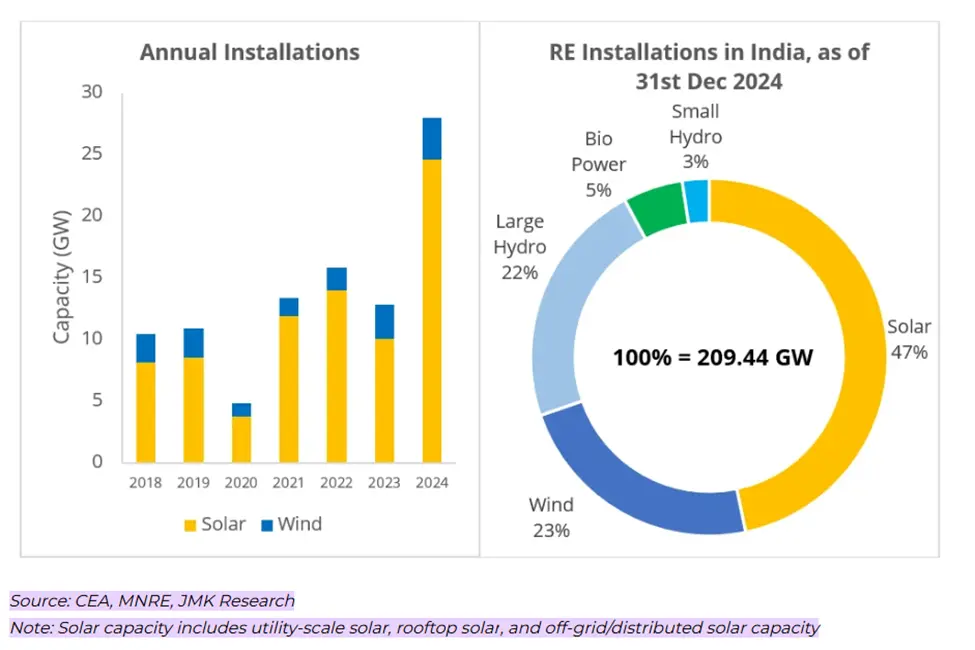
This rapid expansion allowed renewable generation in India to grow faster than electricity demand in several regions, reducing reliance on coal generation during periods of high solar output. The Indian case highlights how solar deployment can scale quickly when supported by targeted policy frameworks and falling technology costs.
Europe and Post-Crisis Energy Diversification
Across Europe, renewable investment has accelerated following the 2022 energy crisis, which exposed vulnerabilities linked to fossil fuel imports. Since then, many European countries have increased investment in wind and solar capacity as part of broader energy diversification strategies. These efforts contributed to higher renewable output in the first half of 2025, although weather conditions and grid constraints led to variation between countries (International Energy Agency, 2025).
While fossil fuel generation has not disappeared from the European electricity mix, renewables now account for a growing share of electricity production across the region.
Cost Competitiveness of Renewables
The continued expansion of renewable electricity is supported by declining costs. Utility-scale solar and onshore wind are now among the lowest-cost sources of new electricity generation in many regions. Cost assessments indicate that new solar and wind projects are often cheaper than new coal-fired power plants, particularly when fuel and carbon costs are taken into account (International Renewable Energy Agency, 2024).
In favorable markets, utility-scale solar power purchase agreements have been signed at prices well below those of new coal generation, reinforcing the economic case for continued renewable deployment.
What the Milestone Means
Renewables overtaking coal in global electricity generation does not imply that coal has been eliminated from the power system. Coal remains a major source of electricity in several countries and regions. However, the data from the first half of 2025 show that renewable energy growth is now sufficient to meet rising electricity demand and begin reducing the role of coal at the global level.
This milestone reflects structural changes in electricity systems driven by technology deployment, investment trends, and policy decisions. Whether this shift continues will depend on future investment in renewable capacity, grid infrastructure, and storage, as well as the pace of electricity demand growth.
References
Ember. (2025). Global Electricity Mid Year Insights 2025. Ember.
International Energy Agency. (2025). Renewables 2025.
International Renewable Energy Agency. (2024). Renewable Power Generation Costs. IRENA.
JMK Research. (2025). India adds record 24.5 GW of solar power capacity in CY2024.
Reuters. (2025). Global renewable power output overtakes coal for the first time.

