





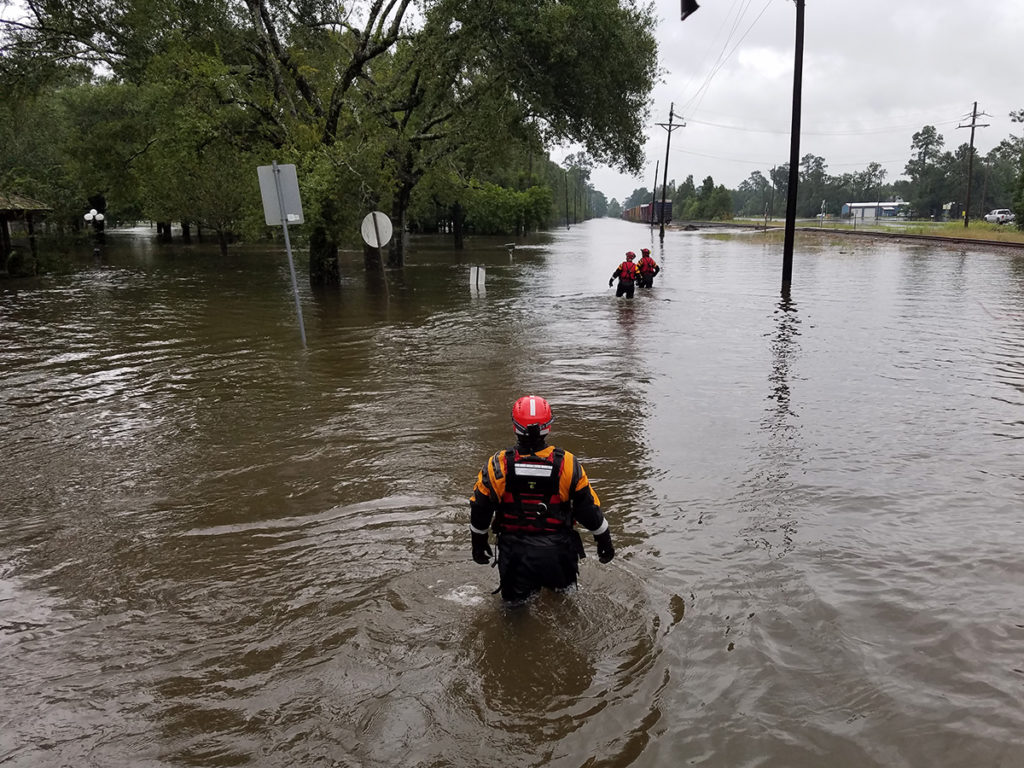
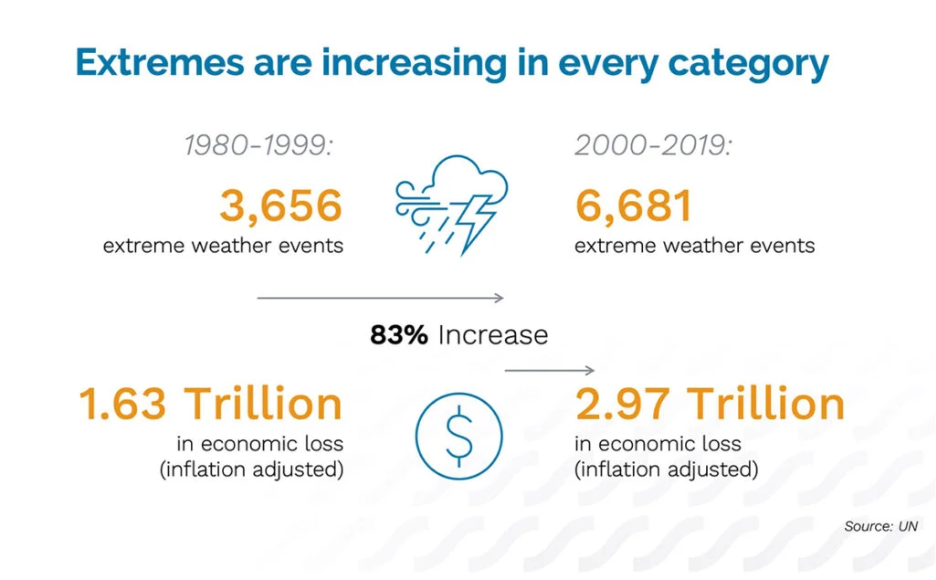
Extreme weather events are becoming more frequent, and their economic impact is increasingly visible in national output. GDP measures production, and when production is disrupted, the effect is immediate. What was once considered an occasional shock is now becoming a recurring constraint on economic activity.
Direct Damage and Output Loss
The most immediate effect of extreme weather is the destruction of physical capital. Floods damage infrastructure, hurricanes shut down ports and factories, and wildfires eliminate entire areas of production. When these assets are lost, businesses cannot operate at normal capacity, and output declines.
This reduction in production feeds directly into GDP. In severe cases, regional economies experience short-term contraction, not because demand disappears, but because supply is physically constrained.
The Illusion of Recovery
After a major disaster, economic activity often increases as reconstruction begins. Governments spend on rebuilding, insurance payouts finance repairs, and construction activity rises.
At first glance, this may appear to be economic growth. However, rebuilding does not increase productive capacity. It restores what was lost. Resources that could have been used for expansion are instead used for recovery.
Source: Everstream Analytics
As a result, GDP may rise in the short-term while the overall level of wealth remains lower than it would have been without the disaster.
Productivity Under Climate Stress
Beyond immediate damage, extreme weather affects how efficiently economies operate.
High temperatures reduce labor productivity, particularly in sectors such as agriculture, construction, and manufacturing. Workers produce less under physically demanding conditions, and output per hour declines.
Agriculture is especially exposed. Droughts reduce yields, while irregular rainfall disrupts planting and harvesting cycles. These effects are not always dramatic in a single year, but they accumulate over time and gradually slow economic growth.
Disruption Beyond the Affected Region
The impact of extreme weather is rarely contained within one location. Modern economies are interconnected through supply chains, and disruptions in one region can affect production elsewhere.
When transport networks are damaged or key inputs are delayed, firms across different sectors experience interruptions. This extends the economic impact beyond the original event and increases overall volatility in output.
Unequal Economic Consequences
The same type of event can produce very different outcomes depending on the country.
Developed economies tend to recover more quickly due to stronger infrastructure and greater financial resources. While losses can be large, recovery is often relatively fast.
In developing economies, the effects are more persistent. Limited infrastructure and weaker institutional capacity slow reconstruction, leading to longer periods of reduced output. Over time, this divergence contributes to widening global inequality.
Fiscal Pressure and Public Finances
Extreme weather also places significant pressure on government budgets.
Public spending increases due to emergency response, infrastructure repair, and recovery programs, while tax revenues often decline as economic activity slows. This combination leads to higher deficits and rising public debt.
Repeated events can reduce a government’s ability to invest in long term growth, as more resources are redirected toward managing immediate shocks.
Investment and Economic Uncertainty
As extreme weather becomes more frequent, it also changes how businesses make investment decisions.
Firms become more cautious about committing capital in regions exposed to climate risk. At the same time, infrastructure projects require additional spending to ensure resilience.
This increase in risk raises the cost of investment and can slow capital formation, which is a key driver of long-term GDP growth.
A Gradual Shift in Economic Growth
The economic impact of extreme weather is not limited to isolated disasters. It operates through multiple channels that reinforce each other over time.
Capital is repeatedly damaged and rebuilt, productivity is gradually reduced, and uncertainty affects investment decisions. These effects do not cause sudden collapse, but they alter the trajectory of economic growth.