





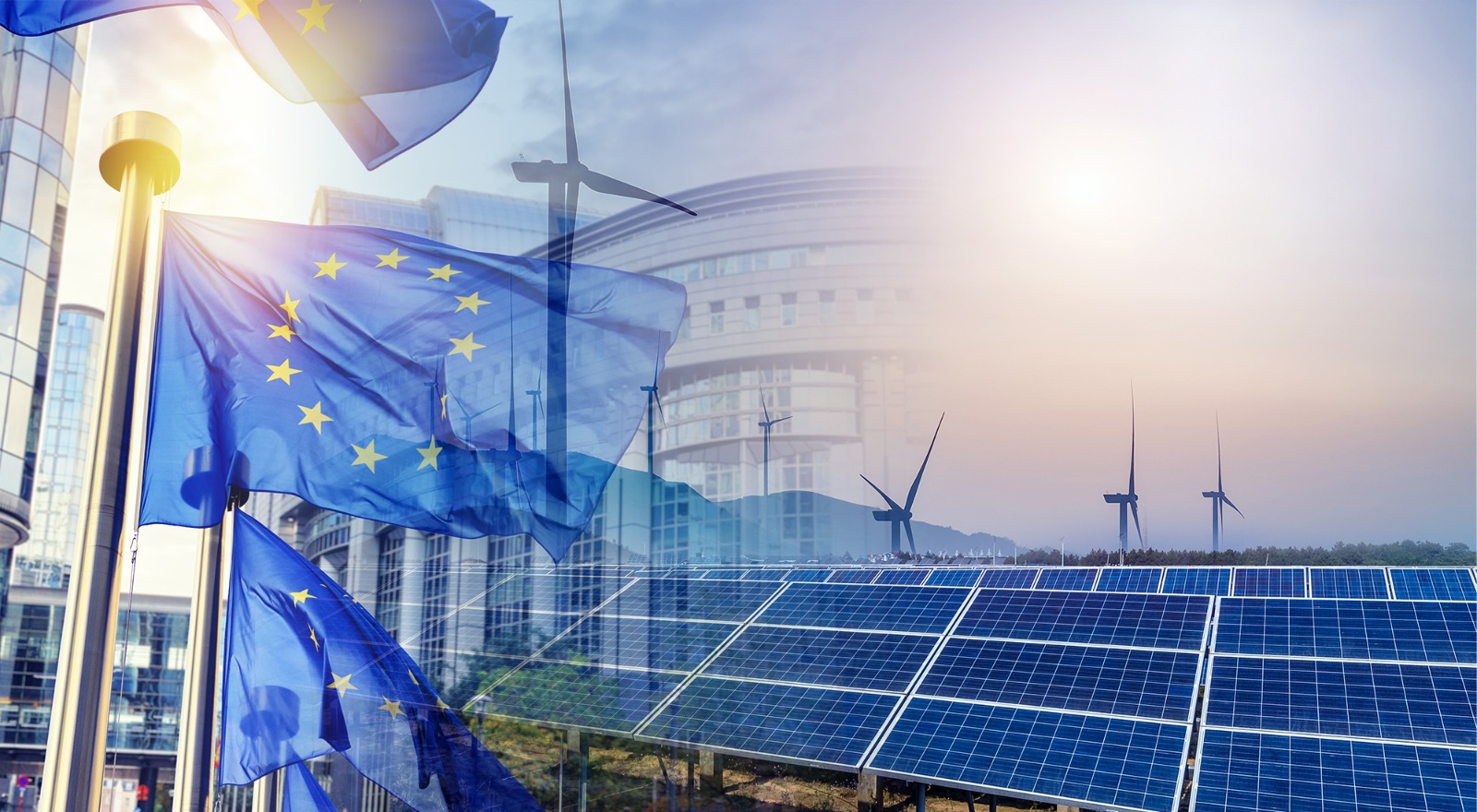
Europe’s energy system has undergone a structural transformation that extends far beyond a short-term supply shock. What changed is not only where energy comes from, but how the entire system is organized, priced, and evaluated. The previous model was built on efficiency, predictability, and cost minimization. The emerging model prioritizes resilience, diversification, and strategic autonomy, even at higher economic cost.
This shift reflects a deeper reality: energy systems are not purely economic structures. They are embedded in infrastructure, trade networks, and institutional decisions that make rapid adjustment costly. When disruptions occur, the response is not a simple substitution of suppliers, but a reconfiguration of the system’s underlying logic.
From Efficiency to Structural Vulnerability
Before recent political disruptions, Europe’s energy system represented a highly optimized structure. Imports covered a majority of energy demand, and supply chains were designed to minimize cost through long-term contracts and geographically efficient sourcing. Pipeline infrastructure ensured stable delivery, particularly for natural gas, which played a central role as both a fuel and a balancing mechanism in electricity generation.
However, this system embedded a critical weakness: low substitutability. Infrastructure investments such as pipelines are specific and inflexible, meaning that alternative supply routes cannot be activated quickly. As a result, dependence was not simply a matter of supplier concentration but of system rigidity.
Chen et al. (2023) show that disruptions in energy trade generate broader economic effects not only through reduced supply but through price transmission, inflation, and declines in output. This highlights that energy systems operate as core economic infrastructure, and disruptions propagate across the entire economy.
In this context, Europe’s vulnerability was structural. The system was efficient under stable conditions but costly to adjust under stress.
Disruption and the Reallocation of Energy Flows
The disruption of established supply relationships triggered a rapid reallocation of energy flows. Europe did not face an absolute shortage of global energy resources; rather, it faced the challenge of replacing established trade patterns within a constrained timeframe.
This adjustment produced what Chen et al. (2023) describe as a trade diversion effect. Energy that previously flowed into Europe was redirected to other regions, while Europe sourced from new suppliers. This process increased global competition for energy resources and introduced inefficiencies in trade.
Energy flows became longer, more complex, and more dependent on global logistics. The system shifted from regional integration toward global interdependence. As a result, Europe’s energy market became more exposed to global price dynamics rather than localized supply conditions.
This transformation did not eliminate dependency. Instead, it redistributed dependency across a broader set of actors, embedding Europe more deeply into global energy competition.
Changing Supplier Structure: Who Supplies Europe Now?
The most visible transformation in Europe’s energy system is the diversification of suppliers. Instead of relying on a concentrated group of exporters, Europe expanded its sourcing to multiple regions.
Key suppliers now include:
- United States, as a major exporter of liquefied natural gas
- Norway, which increased pipeline gas exports
- Qatar and other Middle Eastern producers, supplying LNG
- North and West Africa, particularly Algeria and Nigeria
This diversification reduced concentration risk but introduced a new dynamic: Europe is now competing directly with other major importers, especially in Asia, for access to flexible energy supplies.
Makarov et al. (2024) show that exporters adapted by redirecting trade flows rather than reducing production. This confirms that global energy markets adjusted through reallocation rather than contraction, reinforcing competition and price pressures.
Infrastructure as the Core Constraint
The transformation of supply required corresponding changes in infrastructure. Europe’s system had been built around pipeline gas, which is efficient but inflexible. Replacing this structure required rapid expansion of LNG infrastructure.
This included:
- construction and expansion of LNG import terminals
- deployment of floating storage and regasification units
- strengthening interconnections between EU member states
However, infrastructure capacity remains a binding constraint. Even when global supply is available, it cannot be fully utilized without sufficient import, storage, and distribution capacity.
Jakušev (2024) emphasizes that infrastructure limitations significantly affect the speed and scale of adjustment. This highlights a key insight: energy security depends not only on access to resources but on the physical ability to process and distribute them.
The Cost of Flexibility
The shift from pipeline gas to LNG fundamentally altered the cost structure of Europe’s energy system.
Pipeline gas is characterized by:
- low marginal transport costs
- stable pricing through long-term contracts
- high dependence on fixed routes
LNG, by contrast, involves:
- higher costs due to liquefaction, shipping, and regasification
- pricing linked to global spot markets
- greater flexibility in sourcing
This creates a structural trade-off between cost and flexibility. Europe’s move toward LNG improved its ability to respond to supply disruptions but increased overall energy costs.
Chen et al. (2023) demonstrate that such disruptions lead to higher energy prices and reduced economic output. Cui (2022) further links energy price increases to inflationary pressures and slower growth, emphasizing the macroeconomic consequences of rising energy costs.
Thus, diversification has not preserved efficiency. It has replaced low-cost stability with higher-cost adaptability.
Price Formation and Global Market Integration
Europe’s entry into global LNG markets has reshaped price formation mechanisms. Gas pricing, which was previously regionally segmented, has become increasingly globalized.
This has several implications:
- prices in Europe are influenced by demand conditions in Asia
- competition for LNG cargoes increases volatility
- regional price differences narrow but fluctuate more frequently
The result is a system where local energy prices are determined by global market conditions. This reduces predictability and increases exposure to external shocks.
Makarov et al. (2024) highlight that the reallocation of trade flows increased overall system costs and reduced efficiency. In effect, Europe’s diversification contributed to global price pressures rather than isolating itself from them.
Renewable Energy as Strategic Reorientation
Renewable energy has become a central component of Europe’s response, not only for environmental reasons but as a strategy to reduce external dependency.
Investment has accelerated in:
- wind and solar generation
- electrification of consumption
- energy efficiency measures
However, renewables introduce new system requirements. Their intermittent nature requires:
- grid expansion
- storage solutions
- backup capacity
Jakušev (2024) argues that while renewables improve strategic autonomy, they increase system complexity and require sustained infrastructure investment.
This creates a structural shift in the nature of risk. Europe moves from external supply dependence toward internal system management challenges. The system becomes less exposed to geopolitical shocks but more dependent on technological and infrastructural coordination.
Industrial and Economic Consequences
Higher energy costs and increased volatility have direct implications for industrial competitiveness. Energy-intensive industries face rising production costs, which can affect output levels, investment decisions, and location choices.
In some cases, firms may reduce activity or relocate to regions with lower energy costs. This creates the risk of industrial relocation and reduced domestic production capacity.
Cui (2022) shows that energy crises can generate stagflationary conditions, where inflation rises while economic growth slows. This reflects the central role of energy as an input across all sectors.
More broadly, Chen et al. (2023) demonstrate that energy disruptions reduce overall economic output, indicating that Europe’s adjustment is part of a global economic shift rather than an isolated regional issue.
A System Defined by Trade-Offs
The emerging European energy system is not a return to equilibrium but a new configuration defined by structural trade-offs.
Three core dynamics now shape the system:
- Security versus cost: diversification increases resilience but raises prices
- Flexibility versus efficiency: global sourcing improves adaptability but reduces cost efficiency
- Independence versus complexity: renewables reduce external reliance but increase system management requirements
These trade-offs are persistent. They reflect a redefinition of energy systems from purely economic structures toward strategic systems balancing risk, cost, and sustainability.
Conclusion
Europe’s energy system has been fundamentally restructured. The shift from efficiency to resilience has altered sourcing patterns, pricing mechanisms, and infrastructure requirements. While diversification and renewable expansion have reduced dependence on specific suppliers, they have introduced higher costs and greater complexity.
The new system does not eliminate risk; it redistributes it across markets, technologies, and internal structures. Europe now operates within a more interconnected and volatile global energy environment.
The long-term challenge lies in managing these trade-offs effectively. Success will depend not on restoring previous conditions, but on building a system capable of balancing security, affordability, and sustainability under persistent uncertainty.
References
Chen, Y., Jiang, J., Wang, L., & Wang, R. (2023). Impact assessment of energy sanctions in geo-conflict: Russian–Ukrainian war. Energy Reports, 9, 3082–3095.
Cui, L. (2022). The European energy crisis of 2022 in the context of increasing sanctions pressure on the Russian Federation: Analysis of economic losses and scenarios. European Chronicle, 7(3), 19–29.
Jakušev, A. (2024). Strategic analysis of EU energy security: Crude oil, petroleum products and the impact of Russian sanctions. Metropolia University of Applied Sciences.
Makarov, V. L., Mizintseva, M. F., & Ageeva, A. F. (2024). The impact of anti-Russian sanctions on the Russian fuel and energy complex and the European energy market. Vestnik Volgogradskogo gosudarstvennogo universiteta. Ekonomika, 26(4), 6–21.
