





There is a new app in China with a stark premise. Every couple of days, it asks users to confirm that they are still alive. If they do not respond, the app sends a message to their emergency contact suggesting they check on them.
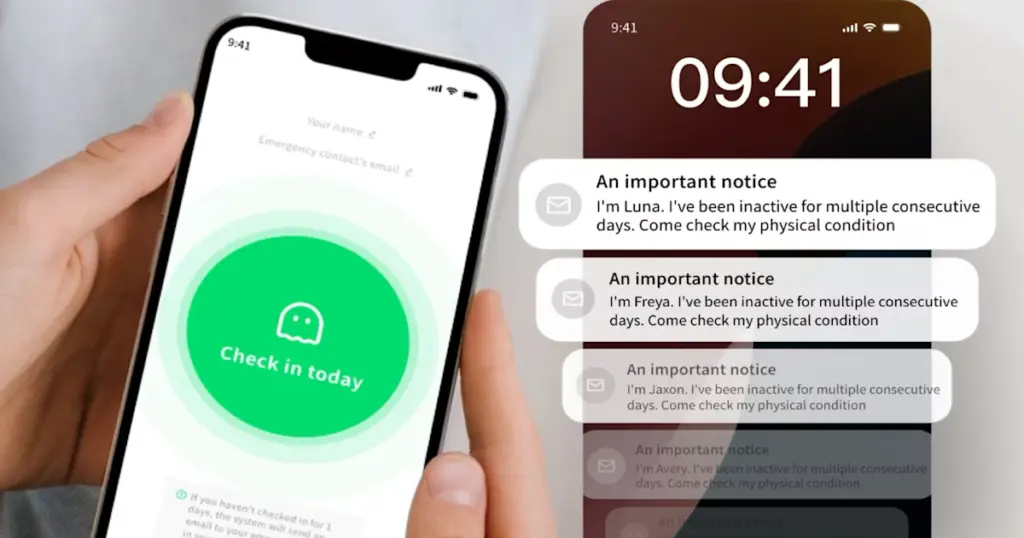
The app, commonly translated as “Are You Dead?”, has attracted widespread attention for its blunt name and unusually direct purpose. At the center of the interface is a large button labeled “Check in today”. Tapping it confirms that the user is safe. Failing to do so triggers an alert.
The message sent to emergency contacts is equally direct. In one commonly shared example, the notification reads:
“I’m Luna. I’ve been inactive for multiple consecutive days. Come check my physical condition.”
While the concept may sound unsettling, the app has found a receptive audience, particularly among young people living alone in China’s major cities.
Why the App Exists
The creators of the app say it is designed for people who worry about dying alone and not being discovered in time. This concern is becoming more common as living patterns in China change.
According to projections cited by Chinese state media, the number of one-person households in China could reach around 200 million by 2030. This includes young professionals working far from their hometowns, migrants living away from family, people who prefer living alone, and an increasing number of older adults without cohabiting relatives. For many of these individuals, especially those in dense cities, isolation is not always visible. People may go days without meaningful contact, even while surrounded by millions of others. The app positions itself as a low-tech solution to that problem. It does not track health data or monitor movement. It simply asks users to check in regularly and notifies someone if they do not.
How It Works in Practice
After installing the app, users designate one or more emergency contacts. They then set the check-in interval, typically every 24 or 48 hours.
If the user taps the check-in button within that period, nothing happens. If they do not, the app automatically sends a message to the emergency contact, advising them to check on the user’s condition. The system is intentionally simple. There are no medical assessments, no AI predictions, and no assumptions about why a user failed to respond. The app does not claim to detect death. It only flags prolonged inactivity. Developers have described it as a “last line of notice” rather than a safety guarantee.
Why It Resonates with Young Urban Users
The app’s popularity appears to reflect broader social trends rather than novelty alone.
Many young people in Chinese cities live alone while working long hours, often far from family networks. Some users have said they worry about sudden medical emergencies, accidents, or health events occurring with no one noticing for days.
Others describe it as psychological reassurance rather than a safety device. Knowing that someone would be alerted if they disappeared provides a sense of connection without requiring constant communication.
In this sense, the app functions less like surveillance and more like a quiet background presence.
The Name Controversy
Not everyone is comfortable with the app’s name.
Critics have argued that calling an app “Are You Dead?” is unnecessarily distressing and could provoke anxiety rather than reassurance. Some have suggested alternative names such as “How Are You?” or “Daily Check In.”
The developers have acknowledged the criticism and said they are considering renaming the app. They have stated that the original name was chosen to be direct and attention-grabbing, but they recognize that it may be too harsh for some users. The functionality of the app is not expected to change if the name does.
A Reflection of Changing Living Patterns
The app’s rise highlights a shift in how people think about safety, connection, and independence.
As solo living becomes more common, especially in urban environments, traditional assumptions about family proximity no longer apply. Tools that once seemed unnecessary are now being adopted as informal safeguards.
The app does not address the underlying causes of loneliness or isolation. It does not replace community, healthcare, or social support. But it offers minimal intervention for a specific fear: being unseen in an emergency.

