





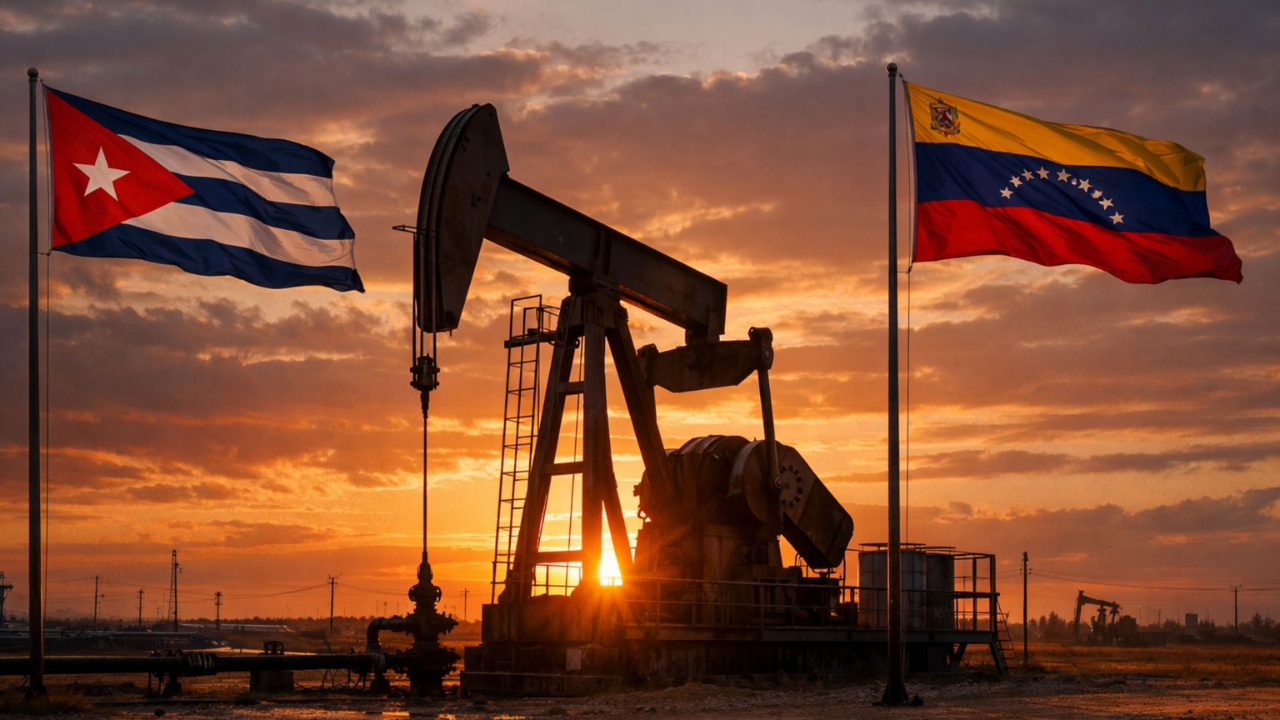
Cuba is approaching a critical energy threshold. According to shipping data cited by the Financial Times (2026), the island has not received an oil shipment since January 9, 2026, and current inventories are estimated to cover only fifteen to twenty days of consumption. This estimate, attributed to energy consultancy Kpler, highlights the immediacy of the challenge facing a country whose electricity system and broader economy remain heavily dependent on imported fuel.
The situation has emerged after a period of mounting strain on Cuba’s external energy supply lines. Mexico, which became Cuba’s largest oil supplier in 2025, delivered the most recent cargo in early January, but a planned follow-up shipment has been postponed. Venezuela, once the backbone of Cuba’s oil imports, is no longer able to provide reliable supplies following a sharp escalation in United States pressure on Caracas. Other suppliers, including Russia and Algeria, have delivered oil only intermittently in recent years and do not represent a stable alternative (Hoffmann, 2026).
Why oil shortages translate directly into blackouts
Cuba’s vulnerability to oil supply disruptions stems from the composition of its energy system. Domestic crude production exists, but it is limited and of low quality. As a result, imported oil and fuel oil remain essential inputs for electricity generation. According to Rodríguez (2024), roughly 60 percent of Cuba’s electricity generation still depends on oil-based thermal power plants, many of which are aging and inefficient.
This reliance creates a narrow margin for error. When fuel imports decline, electricity generation falls quickly, forcing authorities to ration power. Over the past year, this mechanism has already been visible. Prolonged blackouts have become a near-daily feature across much of the island, disrupting households, industry, and essential services (Financial Times, 2026).
Electricity shortages also carry broader economic consequences. Fuel scarcity constrains transport, limits agricultural production, and forces authorities to prioritize household consumption at the expense of productive activity. In an economy already struggling with low growth, high inflation, and limited foreign exchange, energy shortages amplify existing weaknesses rather than creating a discrete crisis.
The changing geography of Cuba’s oil supply
For much of the past two decades, Venezuela served as Cuba’s primary energy lifeline, supplying subsidized oil under bilateral agreements. That relationship has steadily weakened. The Cuban economy has been directly affected by the reduced supply of Venezuelan oil, largely due to production difficulties in Venezuela itself and the impact of US sanctions (Rodríguez, 2024). Deliveries fell from around 115,000 barrels per day in 2015 to approximately 57,720 barrels per day during the first half of the current year, forcing Havana to rely more heavily on alternative suppliers, most notably Mexico and, to a lesser extent, Russia (Rodríguez, 2024).
Mexico filled part of that gap in 2025, overtaking Venezuela as Cuba’s largest oil supplier. This shift was significant not because Mexico could replace Venezuelan volumes indefinitely, but because it provided temporary relief without the same level of geopolitical risk. That window now appears to be narrowing.
Mexico’s current hesitation reflects its own strategic constraints. A review of the United States–Mexico–Canada Agreement is scheduled for this year, and maintaining stable trade relations with Washington is a priority for Mexico’s government. In this context, continued oil shipments to Cuba carry political and economic risks that are difficult to absorb quietly (Financial Times, 2026).
Russia and Algeria have supplied oil to Cuba on an ad hoc basis, but neither has demonstrated the capacity or willingness to provide sustained support. Hoffmann (2026) notes that while Cuba has explored alternative suppliers, each option increases exposure to secondary sanctions and logistical uncertainty.
Energy and the revival of hard power in the region
Cuba’s oil shortage cannot be separated from a broader shift in US regional strategy. Recent research on energy security in Latin America indicates that the United States has increasingly treated energy flows as instruments of geopolitical influence rather than neutral market transactions (Poque González, 2026).
The tightening of pressure on Venezuela and the extension of punitive measures targeting third parties that supply oil to Cuba reflect this approach. President Donald Trump’s decision to sign an executive order imposing tariffs on imports from entities that provide oil to Cuba signals a willingness to raise the cost of engagement for potential suppliers (Financial Times, 2026).
From this perspective, the objective is not necessarily immediate regime change. Rather, it is to constrain state capacity by limiting access to critical inputs, thereby accelerating economic deterioration. Cuba’s energy dependence makes it particularly exposed to this form of pressure.
What happens if shipments do not resume
If no additional oil arrives in the coming weeks, the immediate consequences are likely to be severe. Refining activity would have to be curtailed, reducing the availability of fuel oil for power generation. Electricity rationing would intensify, potentially shifting from rolling blackouts to more rigid schedules with longer outages.
The economic impact would extend beyond the power sector. Tourism, one of the few remaining sources of foreign exchange, would face further disruption as hotels and transport services struggle with unreliable electricity. Industrial activity, already operating below capacity, would contract further. Rodríguez (2024) emphasizes that electricity shortages have repeatedly forced the suspension of productive activity in order to prioritize households.
At the social level, energy scarcity would deepen existing inequalities. Urban centers and politically sensitive areas tend to receive preferential treatment during shortages, while rural regions experience longer outages. Although such dynamics do not necessarily translate into organized political opposition, they contribute to public frustration and erode living standards.
Why collapse remains unlikely
Despite the gravity of the situation, most analysts do not expect an immediate collapse of the Cuban political system. Hoffmann (2026) argues that the state retains significant tools of control, including centralized distribution mechanisms and security institutions. Historical precedent also suggests that Cuba has endured extreme economic hardship without regime change.
However, resilience should not be confused with recovery. The current crisis arrives after a decade of weak growth, declining productivity, and large-scale emigration. Rodríguez (2024) documents that Cuba’s economy has struggled to regain its pre-2019 output levels, with tourism underperforming and foreign investment falling well short of what would be required for sustained recovery.
Each new shock reduces the government’s capacity to manage the next one. Unlike the 1990s, Cuba today lacks a powerful external patron capable of underwriting a comprehensive stabilization effort.
Structural constraints and limited alternatives
Renewable energy is often presented as a long-term solution to Cuba’s energy dependence. The government has announced plans to expand solar generation and diversify the energy mix.
Strategies are being pursued to reduce oil dependence, but progress has been limited. According to official projections, renewable sources are expected to account for about 37 percent of electricity generation by 2030, a meaningful increase but insufficient to eliminate fuel oil dependence in the near term (Rodríguez, 2024).
Even under optimistic assumptions, renewables cannot substitute for imported fuel in the short term, particularly for baseload power. Energy efficiency improvements could reduce demand at the margin, but they too require investment and institutional capacity.
The debate document A Free Cuba Is Good for Business highlights similar constraints from a different perspective, emphasizing that grid unreliability and fuel shortages deter foreign investment and private sector development (Vidal Alejandro, 2025). While normative in tone, this argument aligns with more empirical assessments of Cuba’s energy bottlenecks.
A narrowing path forward
Cuba’s remaining oil inventories represent more than a logistical challenge. They expose the fragility of an energy system built on external dependence and constrained by geopolitics. Even if shipments resume, the episode underscores how little margin for error remains.
The most likely outcome is neither sudden collapse nor rapid stabilization, but continued economic erosion. Energy shortages will compound existing problems, reinforcing a cycle of low output, declining services, and outward migration.
Cuba’s resilience may prevent immediate failure. But without a credible path to stabilizing energy supply and modernizing its power system, the country’s slow decline is likely to continue.
References:
Financial Times. (2026). Cuba has ‘15 to 20 days’ of oil left as Donald Trump turns the screws.
Hoffmann, B. (2026). Ten things to watch in Cuba. GIGA German Institute of Global and Area Studies.
Poque González, A.B. (2026). Energy security and the revival of U.S. hard power in Latin America. E-International Relations.
Rodríguez, J.L. (2024). The Cuban economy in the last decade: Balance and outlook. Science & Society, 88(1), 27-48.
Vidal Alejandro, P. (2025). The crisis of the Cuban economy: Notes for an evaluation. Ho rizonte Cubano. Columbia Law School.

