





At first glance, Uruguay appears an unlikely candidate for an electricity sector transformation. It is a small country with no significant domestic reserves of oil, natural gas, or coal, and for decades, it faced a structural vulnerability common to energy systems dependent on imports. Electricity prices were highly sensitive to external shocks because both global fuel prices and regional supply relationships could change abruptly. In addition, the country relied heavily on hydropower, which, while efficient and low in carbon emissions, becomes financially and politically risky in periods of drought, when shortages must be covered through costly emergency generation or electricity imports.
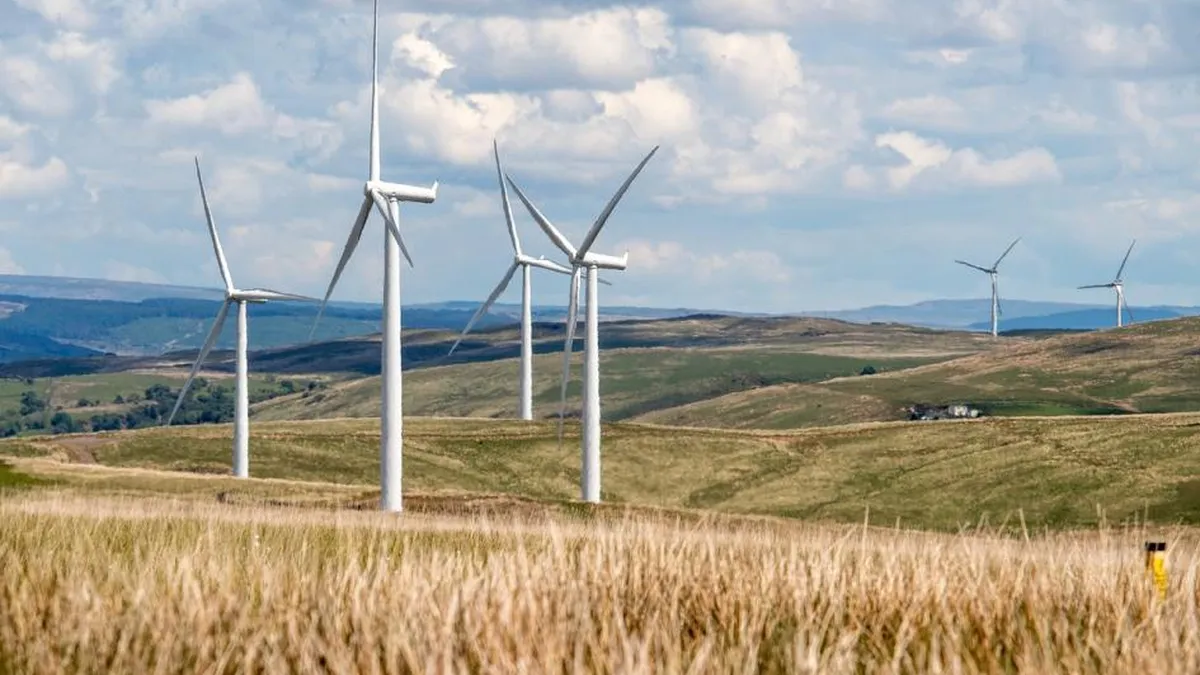
Nevertheless, over the course of approximately two decades, Uruguay shifted from a system dominated by hydropower and thermal generation to a diversified renewable energy model in which wind, biomass, solar, and hydro together meet nearly all electricity demand. In 2017, the electricity mix was commonly described as consisting of roughly half hydropower, about one-quarter wind, close to one-fifth biomass, and a small but growing contribution from solar, with thermal generation representing around two percent (Fornillo, 2021). Casaravilla and Chaer (2021) report an expected generation structure of approximately half hydropower, around two-fifths wind, and the remainder mainly biomass and solar, with thermal generation at about three percent. This implies that roughly 97% of electricity was generated from renewable sources. Although different studies rely on different benchmark years and accounting methods, they converge on a central conclusion: Uruguay successfully transformed variable renewable energy from a peripheral component into the backbone of its electricity system.
The more significant question is therefore not whether Uruguay has achieved a high share of renewables, since this is clearly established, but how the country managed to make the transition credible, financially viable, and operationally reliable without reducing renewables to a merely symbolic policy objective.
1. The problem Uruguay had to solve was risk, not ideology
The central challenge Uruguay needed to address was not ideological, but economic and operational risk. While energy transitions are often presented as moral debates between clean and fossil-based power, Uruguay’s transformation was driven primarily by pragmatic concerns related to cost volatility and supply security.
This vulnerability stemmed from two closely connected sources. The first was climatic exposure. Heavy dependence on hydropower meant that periods of drought could sharply reduce domestic electricity generation. In such years, Uruguay was forced to rely on thermal generation and electricity imports, both of which imposed significant financial burdens. Casaravilla and Chaer (2021) identify 2012 as a critical stress scenario prior to the transition, when the cost of thermal generation alone exceeded one billion US dollars. When combined with the expense of electricity imports, purchased at prices comparable to rationing costs, the total burden rose well above 1.3 billion US dollars. More importantly, they underline the magnitude of the system’s tail risk. When drought conditions coincided with high international oil prices, total generation costs could rise far beyond average expectations, producing a non-negligible probability of extremely high expenditures.
The second source of vulnerability was exposure to external supply reliability. Uruguay historically relied on regional energy relationships, including expectations of gas supply from Argentina in the early 2000s. However, Argentina ceased to function as a dependable supplier by the mid-2000s, creating a structural reliability shock. This experience forced a reassessment of Uruguay’s energy strategy, shifting self-sufficiency and diversification from secondary policy aspirations to core strategic objectives (Fornillo, 2021).
2. A long-term state policy created credibility
Uruguay approached energy policy as a matter of long-term state strategy rather than as a short-term electoral project. The Energy Policy 2005-2030 is repeatedly identified as a central instrument in this regard, as it established a stable planning horizon and coordinated action across institutions and stakeholders (Corrêa, et al., 2022). This extended time frame was crucial because it rendered investment conditions predictable. Large scale projects such as wind farms require confidence in long-term revenue streams, and such confidence can only exist when policy commitments are perceived as durable. The policy framework was also characterized by broad political support that extended beyond a single governing party. This cross-party consensus substantially reduced the perceived risk of regulatory reversal or contract instability, thereby lowering financing costs and encouraging private investment (Corrêa et al., 2022).
3. Uruguay did not rely on a single technology. It built a portfolio
Uruguay did not pursue its energy transition through reliance on a single dominant technology. Instead, it deliberately constructed a diversified portfolio that combined hydropower, wind, biomass, and solar generation.
This diversification is important for system reliability. Wind generation and hydrological conditions are not perfectly correlated, which creates a natural form of risk balancing within the electricity system. Strong wind output allows hydropower reservoirs to be conserved, preserving water for periods when wind generation is weaker or when drought conditions emerge.
Casaravilla and Chaer (2021) provide a more technical justification for this complementarity. They compare the statistical reliability of wind and solar generation with that of annual hydrological inflows. While wind and solar output may fluctuate on a daily basis, the energy received over bimonthly periods is highly predictable and exhibits a strong tendency to remain close to expected values. Hydropower, by contrast, shows much greater year-to-year variability due to climatic uncertainty. This means that variable renewables reduce exposure to the most financially damaging scenario, namely a severe drought coinciding with high international fuel prices.
Biomass generation adds a further layer of stability. Unlike wind and solar, it is dispatchable and can be adjusted in response to system demand. In Uruguay, biomass expansion is closely linked to agro-industrial activity and the use of byproducts from pulp and forestry industries. Fornillo (2021) identifies biomass as a substantial component of the electricity mix and situates it within a broader development strategy that integrates industrial cogeneration into the national energy system. Its role, therefore, extends beyond electricity generation alone, reinforcing the economic and industrial foundations of the transition.
4. Market design converted political intent into bankable projects
A common misconception in discussions of energy transitions is the belief that setting ambitious targets is equivalent to delivering physical capacity. Uruguay avoided this error by concentrating not only on political commitment, but also on the financial and institutional architecture required to translate objectives into investable projects. Market design became the mechanism through which political intent was converted into operational reality.
A central instrument in this process was the use of long-term power purchase agreements backed by the state-owned utility. The academic literature emphasizes that these contracts provided transparency and security for investors by guaranteeing stable revenues over long horizons, typically around twenty years, and in predictable currency terms (Corrêa et al., 2022). Watts (2015) describes the same mechanism from a practical perspective, noting that the assurance of a fixed price over an extended period, supported by the credibility of the public utility, was a decisive factor in attracting both domestic and foreign capital.
This design achieved several interrelated outcomes. First, it substantially reduced financing costs. When revenues are contractually secured, lenders perceive projects as carrying lower risk. Lower risk translates directly into a lower cost of capital, which in turn reduces the levelized cost of electricity. In this sense, financial stability was not merely a supporting condition but a core driver of cost competitiveness.
Second, it fostered effective competition. As multiple firms competed for long-term contracts, bidding processes increasingly revealed lower prices. Watts (2015) reports that competitive pressure rapidly pushed bid prices downward and contributed to a marked decline in generation costs. While the precise magnitude of cost reductions varied across contract rounds, the underlying mechanism remained consistent: stable contractual frameworks enabled competitive auctions that progressively discovered more efficient pricing.
Third, the model preserved centralized system governance. Uruguay did not dismantle its electricity sector into a fully liberalized and fragmented market. The state utility, UTE, retained control over transmission and distribution and remained a principal purchaser of electricity from private producers. Fornillo (2021) observes that UTE continued to generate a significant share of electricity itself while acquiring the remainder from independent power producers, thereby maintaining strategic coordination of the system. The result was a hybrid structure in which private capital financed and constructed new capacity, but overall system planning and stability remained anchored in a strong public institution.
5. Planning did not stop at contracts. It included the physical system
A renewable project can be successfully financed and constructed yet still fail to generate system level value if the electricity grid is unable to absorb and distribute its output. Uruguay’s transition is distinctive precisely because it incorporated infrastructure development and operational sophistication alongside capacity expansion.
Correa et al. (2021) identify several enabling conditions that operate below the level of political visibility but are decisive for system performance. These include detailed resource assessment through wind mapping, the expansion of grid infrastructure to connect generation sites to load centers, and the availability of supporting logistics such as roads and ports capable of handling large and heavy equipment. Although such elements appear technically routine, they frequently constitute the primary constraints on renewable deployment. Generation assets have no economic or strategic value if turbines cannot be transported, if grid connections are delayed, or if electricity cannot be delivered where demand exists. A transition that produces congestion, curtailment, or stranded assets does not reduce systemic risk, regardless of headline capacity figures.
Operational capacity is equally important. Uruguay’s investment in domestic forecasting tools and system optimization methods that support real time dispatch decisions, as well as its attention to demand growth, smart grid development, and future integration challenges (Corrêa et al., 2022). Casaravilla and Chaer (2021) further underline that system dispatch in Uruguay integrates forecasts of hydrological inflows with projections of wind and solar generation using increasingly advanced analytical models.
Interconnection adds an additional layer of system functionality. Uruguay’s cross-border transmission capacity with Argentina and Brazil is large relative to the size of its domestic system, enabling substantial electricity exchanges under favorable conditions (Casaravilla and Chaer, 2021). This interconnection provides flexibility during extreme events and offers a channel for exporting surplus generation. At the same time, it introduces new strategic considerations. Correa et al. (2022) note that surplus generation can become a financial liability when export opportunities are limited and suggest that future policy attention will need to focus more strongly on regional market design and export capacity. Interconnection, therefore, creates both opportunity and dependency: neighboring markets, regulatory frameworks, and political dynamics become integral components of Uruguay’s own system optimization.
6. Uruguay reduced transition anxiety by framing security and fairness together
Energy transitions frequently encounter political resistance when they are framed primarily in terms of sacrifice or constraint. Uruguay’s experience illustrates a different narrative, in which renewable energy was presented as a pathway to energy sovereignty, price stability, and systemic resilience, rather than solely as an instrument of emissions reduction. This framing anchored the transition in tangible national interests and everyday economic concerns.
Fornillo (2021) emphasizes that renewable energy development was explicitly adopted as public policy following the energy planning process initiated in 2008, with motivations rooted in strengthening energy independence and reducing vulnerability to external shocks. By addressing the concrete risks, the renewable transition became intelligible not only to policymakers but also to voters and industrial actors, who experienced the costs of instability directly through electricity prices, fiscal pressures, and supply insecurity.
At the same time, political consensus did not imply the absence of conflict. Fornillo (2021) notes that debates persisted regarding market concentration, the balance between public and private ownership, and the implications of distributed generation for a system historically centered on public production. These concerns highlight the distributive dimensions of any large-scale energy transition. Even when a transition is technically successful, it inevitably reshapes patterns of rent allocation, contractual power, and control over revenue streams. Uruguay managed these tensions in part by preserving UTE as a central coordinating actor and in part by embedding the energy transition within a broader narrative of national development rather than presenting it as a narrow technological shift.
Long-term legitimacy also depends on whether the transition is perceived as socially inclusive. While estimates of employment effects vary across sources and methodologies, the underlying issue is consistent: public support is more durable when new economic activities replace declining ones, rather than merely displacing workers. In Uruguay, the renewable transition is commonly associated with the expansion of domestic value chains linked to construction, infrastructure development, maintenance services, logistics, and biomass related industries. These sectors created employment opportunities that connected decarbonization objectives with tangible economic participation. In this way, the transition was not framed solely as an environmental reform, but as a process of structural economic transformation with broad social relevance.
7. Small nations, renewable leaders
Uruguay ranks among the world’s leading producers of renewable electricity, with around 94.5% of its power generation coming from renewable sources. Unlike many countries that rely mainly on a single resource, Uruguay has diversified its system beyond hydropower through large investments in wind, biomass, and solar. These newer renewables now account for roughly 55% of electricity production, far above the global average of about 12% and the European average of around 20% (Watts, 2015).
Other small countries also demonstrate that very high renewable shares are achievable, though through different pathways. Costa Rica has operated for extended periods without fossil fuels in electricity generation, relying on a mix of hydropower, geothermal, and wind. Iceland generates almost all of its electricity from geothermal and hydropower, enabled by its unique geological conditions. Paraguay, Lesotho, and Bhutan depend predominantly on large hydropower projects, which allow them to reach extremely high renewable shares but also expose them to seasonal and climatic risks (Watts, 2015).
These comparisons underline that high renewable penetration can be achieved in multiple ways. Uruguay’s distinctiveness lies not in its renewable share alone, but in its diversified portfolio approach, which reduces vulnerability to single-resource dependence and strengthens long-term system stability.
Conclusion
Uruguay did not achieve near clean electricity by discovering a miracle technology. It did it by converting a vulnerability driven crisis into a durable state policy, then using that policy to build a financeable market design, then matching that market design with grid and operational capability, all while maintaining a strong public backbone in the form of UTE.
The transformation is impressive because it is replicable in logic even when it is not replicable in details. Not every country has the same wind regime, hydrology, or political system. But many countries share Uruguay’s starting problem: high exposure to fuel price volatility, climate variability, and external supply uncertainty. Uruguay shows that when a country frames the challenge as risk management and designs its institutions accordingly, a rapid clean power transition is possible.
References
Casaravilla, G., & Chaer, R. (2021). Energy transition of Uruguay. IAEE Energy Forum / Fourth Quarter.
Correa, C.K., Uriona-Maldonado, M., Vaz, C.R. (2022). The evolution, consolidation, and future challenges of wind energy in Uruguay. Energy Policy, 161, 112758.
Fornillo, B. (2021). Energy transition in Uruguay: market dominance or public-social power? Ambiente & Sociedade, 24.
Watts, J. (2015). Uruguay makes dramatic shift to nearly 95% electricity from clean energy. The Guardian.

