





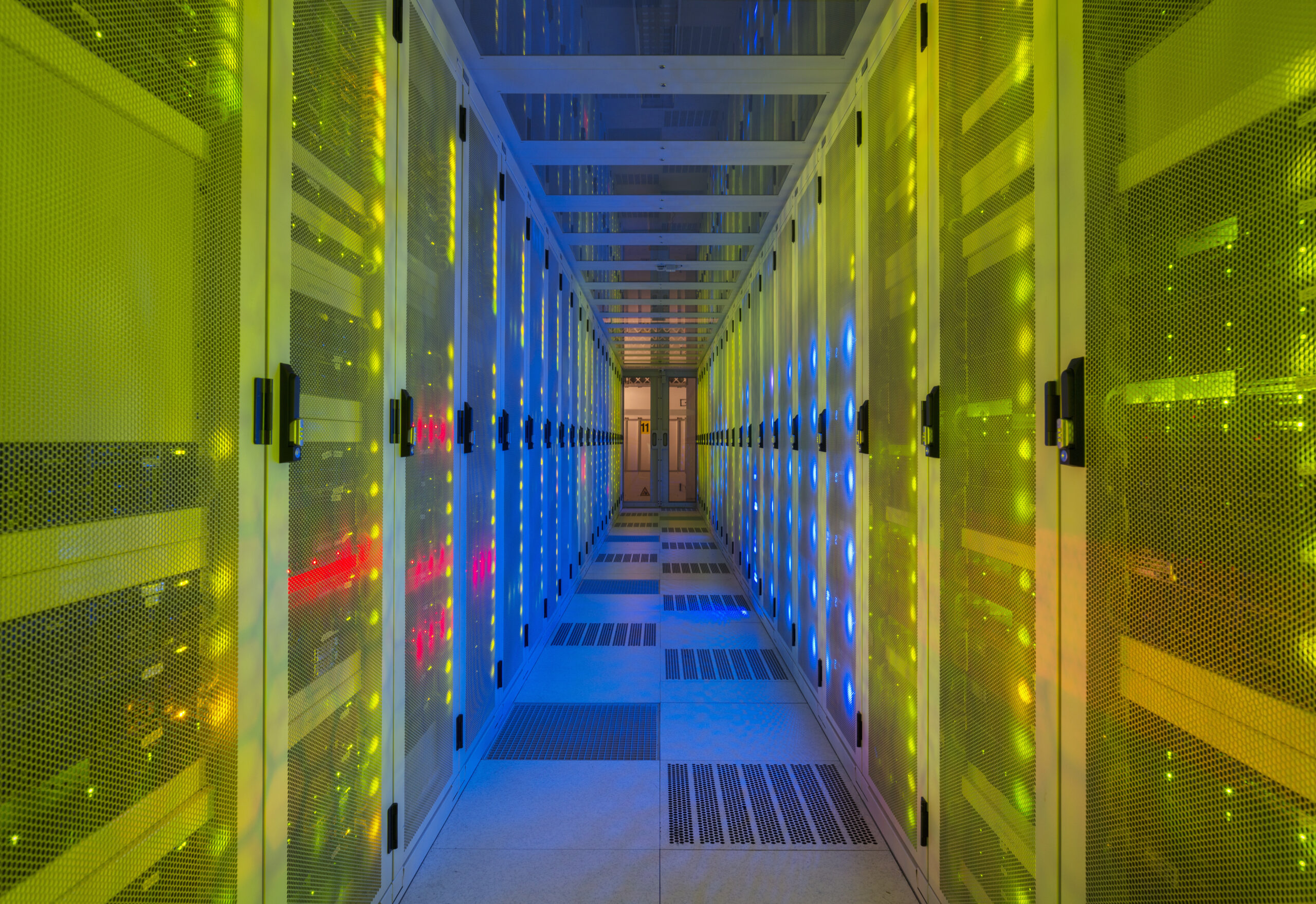
Finland is home to just over five million people and nearly three million saunas. Warmth here is not a luxury. It is part of daily life, embedded in culture, infrastructure, and identity. Now, the country that mastered staying warm through long, dark winters is applying that expertise to one of the fastest-growing challenges of the digital age: the heat generated by data centers.
As artificial intelligence and cloud computing drive a surge in data center construction, these facilities are becoming major energy consumers. Less discussed, however, is the vast amount of heat they produce as a byproduct. In Finland, that heat is no longer treated as waste. It is increasingly viewed as a resource.
Data Centers as Urban Heat Sources
Modern data centers convert most of the electricity they consume into heat. Servers, cooling systems, and power infrastructure all generate thermal energy, often released into the atmosphere through cooling towers or air systems. In colder climates, this represents a significant inefficiency.
Finland’s approach is to capture this excess heat and feed it into district heating networks that supply homes, offices, and public buildings. District heating already plays a central role in Finnish cities, covering a large share of residential heating demand, especially in urban areas (Wahlroos et al., 2018).
According to reporting by Bloomberg (2025), Helsinki now operates large scale heat pump facilities located deep underground that collect low temperature waste heat from data centers, upgrade it to a usable temperature, and inject it directly into the city’s heating network (cited in Luukka, 2025).
How the System Works
The process relies on industrial heat pumps. Waste heat from data centers is captured through liquid cooling systems and transferred to heat pumps, which raise the temperature to levels suitable for district heating. These systems are often integrated with existing energy infrastructure and operated in cooperation with municipal utilities.
Crucially, this model works particularly well in Nordic countries. Cold climates ensure year-round heating demand, while dense urban planning makes it easier to connect data centers to district heating networks (Huang et al., 2020). Finland’s electricity grid, which is stable and increasingly low carbon, further supports the economics of this system (Pettinen, 2025).
Why Finland Has an Advantage
Finland’s position as a data center hub is not accidental. Academic research highlights several structural advantages: reliable electricity supply, strong governance, political stability, and a climate well suited for energy efficient cooling (Pettinen, 2025; Luukka, 2025).
Equally important is institutional coordination. District heating operators, municipalities, and data center companies work within a relatively coherent regulatory environment. This reduces transaction costs and increases the likelihood that waste heat projects move from pilot phase to commercial deployment (Luukka, 2025).
Studies show that waste heat reuse can significantly improve overall energy efficiency and shorten payback periods for data center investments, particularly when integrated at the design stage rather than retrofitted later (Wahlroos et al., 2018).
From Passive Infrastructure to Energy Actor
This shift reflects a broader transformation in how data centers are viewed. Rather than acting solely as passive consumers of electricity, they are increasingly becoming active participants in energy systems. Beyond heat recovery, data centers in Finland are also exploring demand response, grid balancing, and participation in reserve markets.
Research on Nordic data centers shows that waste heat utilization is one of the most promising sustainable business model innovations in the sector, aligning economic incentives with environmental benefits (Luukka, 2025). When heat can be sold to district heating networks, data centers gain a new revenue stream while cities reduce reliance on fossil-based heating.
Limits and Trade-offs
Despite its promise, this model is not without constraints. Heat reuse requires proximity to demand, making it less viable for remote data centers. It also depends on long-term policy stability and public acceptance. In Finland, debates around electricity taxation and the social value of data centers show that legitimacy cannot be taken for granted (Pettinen, 2025).
Moreover, heat recovery does not eliminate the rising electricity demand driven by AI. It mitigates inefficiency, but it does not solve capacity constraints on its own. As several studies note, waste heat utilization should be seen as part of a broader energy and infrastructure strategy, not a standalone solution (Huang et al., 2020).
A Model Others Are Watching
Still, Finland’s approach offers a compelling example of how digital infrastructure and energy systems can be better integrated. By treating heat as a resource rather than a byproduct, Finnish cities are redefining what efficiency looks like in the age of artificial intelligence.
As data centers continue to expand across Europe and beyond, the Finnish model is increasingly cited as a reference point for sustainable urban energy planning. It shows that the challenge of digital growth does not have to be met only with more power generation, but also with smarter use of what is already produced.
References
Bloomberg. (2025). Finland turns data center waste heat into district heating. Bloomberg News.
Huang, P., Copertaro, B., Zhang, X., Shen, J., Lofgren, I., Ronnelid, M., Fahlen, J., Andersson, D., & Svanfeldt, M. (2020). A review of data centers as prosumers in district energy systems: Renewable energy integration and waste heat reuse for district heating. Applied Energy, 258, 114109. https://doi.org/10.1016/j.apenergy.2019.114109
Luukka, A. (2025). Opportunities For Sustainable Business Model Innovations in The Context of AI-Ready Data Centers in The Nordic Region. (Master’s thesis). Aalto University.
Pettinen, W. (2025). The global data economy: Finland as a data centre hub (Master’s thesis). Aalto University.
Wahlroos, M., Pärssinen, M., Rinne, S., Syri, S., & Manner, J. (2018). Future views on waste heat utilization of data centers in Nordic countries. Renewable and Sustainable Energy Reviews, 82, 1749–1764.