






European rail travel is experiencing a true renaissance. After years of underinvestment and overreliance on short-haul flights, the continent is now accelerating toward a cleaner, faster, and more connected transport future. The year 2026 stands out as a turning point: new sleeper trains, high-speed links, and ambitious long-distance corridors are reshaping how people move across borders.
Below are four major rail developments that capture this transformation. They are not just new “routes” but also symbol of a broader shift toward sustainable mobility, regional integration, and modern traveler expectations.
1. The Starline “European Tube”: A Vision for a Fully Connected Continent
One of the most ambitious projects making headlines is the proposed Starline network, a Copenhagen-based initiative often described as the “European Tube.” This is not merely a new route; it is a continental blueprint for a fast, metro-style rail grid linking major European regions.
Starline’s plan would connect 39 destinations across Europe, including long-distance links stretching to the UK, Türkiye, and Ukraine. The idea is simple but radical: treat Europe like a large metropolitan area, where trains move with metro-level frequency and reliability.
One flagship corridor imagines cutting the journey from Helsinki to Berlin from a full day to roughly three hours using ultra-fast trains travelling over 160 kilometers per hour or more. While the full network targets 2040, the early planning already influences multiple new 2026 rail initiatives.
Starline’s long-term goal is to reduce short-haul flights drastically, potentially cutting aviation-related emissions by up to 95 percent on key city pairs. For companies focused on sustainability and for Europe’s climate strategy, this future rail backbone is monumental.
2. The Paris–Berlin Sleeper Revival: A Flagship Return of Overnight Travel
Night trains have become the new symbol of climate-conscious travel, and no route embodies this better than the Paris–Berlin sleeper, returning in March 2026 under European Sleeper.
Just two months after SNCF cancelled Nightjet operations on the Paris–Berlin–Vienna corridor, Dutch operator European Sleeper stepped in to revive it. The new overnight connection will run three times per week, offering a seamless journey between two of Europe’s most important capitals.
This comeback is more than nostalgia. It signals:
- stronger cross-border cooperation
- renewed public interest in longer, flight-free travel
- and a shift toward overnight convenience instead of airport queues
As businesses prioritize carbon-conscious travel policies and travelers seek calmer, less stressful mobility options, sleeper trains are regaining relevance.
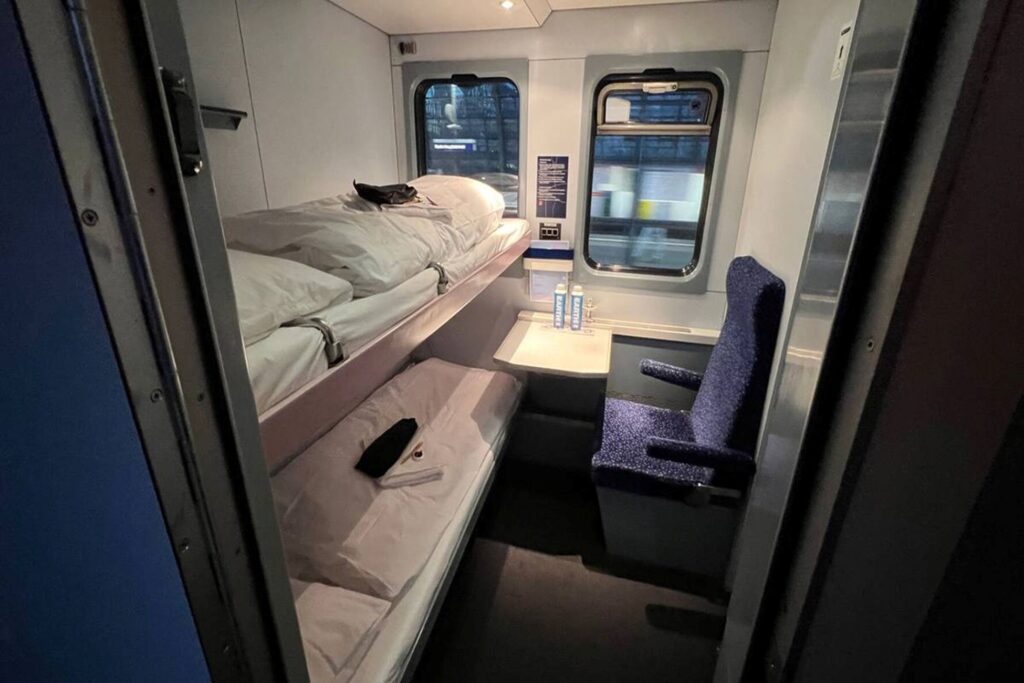
3. New North–South and East–West Overnight Routes: Connecting the Continent Like Never Before
2026 also brings a wave of entirely new overnight and long-distance services that had never existed in this form before.
Prague – Copenhagen (via Berlin)
Launching in May 2026, this route will introduce futuristic ComfortJet trains complete with bike spaces, family compartments, and even a children’s cinema; appealing to both leisure travelers and families. For Central Europe, it represents a long-awaited direct connection to Scandinavia.
Basel – Malmö (via Hamburg and Copenhagen)
This multi-country sleeper, operated jointly by SBB and RDC Germany, will run three times a week, linking Switzerland to Sweden through a single overnight ride. It brings a new north-south axis to Europe’s rail map.
Amsterdam – Barcelona
European Sleeper continues its expansion with a new night connection stretching from the Netherlands to Spain, passing through France’s major southwestern hubs. This route combines business travel, tourism, and lifestyle mobility in one corridor.
These services do not just move passengers. They strengthen labor mobility, support regional tourism industries and give businesses new environmentally friendly travel options across long distances.
4. High-Speed and Regional Upgrades: Paris–Munich, Vienna–Trieste, and a UK Expansion
Beyond the celebrated sleepers, Europe is also adding new high-speed daytime routes and regional improvements that will make daily travel faster and more efficient.

Paris – Munich High-Speed Link
A new high-speed service will significantly reduce travel time between France and Germany, two of the EU’s economic engines. This upgrade will benefit business travelers and strengthen corporate connectivity across Western Europe.
Vienna – Trieste Railjet
Austria’s Railjet is launching a daily direct service to the historic port city of Trieste, improving Central Europe’s access to the Adriatic coast and supporting tourism and regional supply chains.
London – Stirling (Lumo Budget Service)
In the UK, budget operator Lumo is expanding northward with a new long-distance service connecting London to central Scotland. This responds to increasing demand for lower-cost alternatives to domestic flights.
Central Europe Regional Upgrades
- New InterCity services between Prague and České Budějovice
- Improved Graz connections in Austria
- Additional ICE frequency in Germany
- Restored international services on Munich–Salzburg–Ljubljana–Zagreb
Why These New Routes Matter for Europe’s Future
Taken together, these developments reveal a profound shift in European mobility:
- Travel attitudes are changing; travelers want comfort, sustainability and seamless border crossing.
- Rail is replacing short-haul flights in many corridors, especially since it offers comparable travel times without the emissions.
- Businesses are paying attention; corporate travel policies increasingly favor rail to meet ESG targets.
- Regional economies benefit because improved mobility boosts tourism, student exchange, cross-border employment and local commerce.
Consequently, it shows that the rail renaissance is not a trend. It is a redesign of how Europeans will move for the next 50 years.

